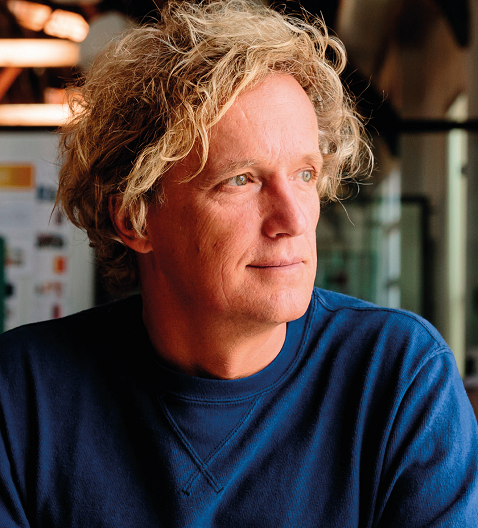












Listen to the audio version of this article. Duration: 5 minutes.
In this open-hearted conversation, world-known designer Yves Behar tells DM about the role of design as a catalyst for change and forward movement in a world often too comfortable with the known and safe, and too scared of the unexpected and new. He believes that, while technology, and AI in particular, can be useful as a tool, only humans can understand, and connect with human needs. In that, humans will always be better designers.
A strong supporter of hard work, he reveals how, as a young designer, he earned his place at the decision-makers’ table by showing executives their ideas sketched on paper. Read on to find out how he also believes that engaging creatively with traditional, local crafts and materials, can influence design at a global level.
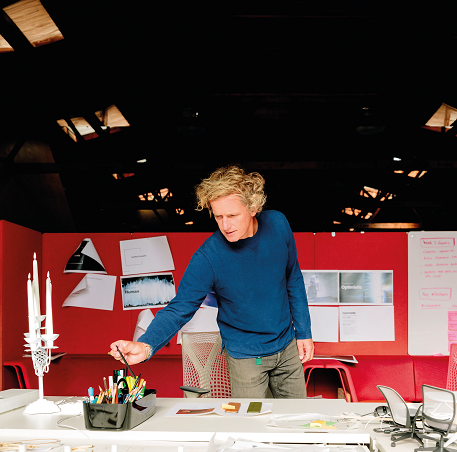
The soft power of human-driven design in making the world move forward.
In today’s multipolar world, how does design function as a form of soft power, and where is the line between design and activism?
What I’ve told myself, and always have practised, is this idea that as a designer, I’m able to move things forward when I create. And when I create, I’m also an example.
Design is for me a catalyst, the soft power of creativity in the sense that as designers we have to continue to create, to build, to show the future that we believe in. In the world we live in, a lot of the principles of what really makes design successful are interconnected: diversity, universality of ideas, generosity. In a way, activism is what design does, in a world that feels somewhat retrograde.
Are there cultural or geographical contexts where design can drive the most radical change? How do you design without imposing a “global style”?
Design is a mixture of global style and regional, local craft and making. Right now I’m speaking to you from Lisbon, which I fell in love with five years ago. Here in Portugal there’s still so much making, so much craft. I can easily access so many materials and craftsmen to partner with. That allows me to give a new direction to my practice.
“Activism is what design does, in a world that feels somewhat retrograde.”
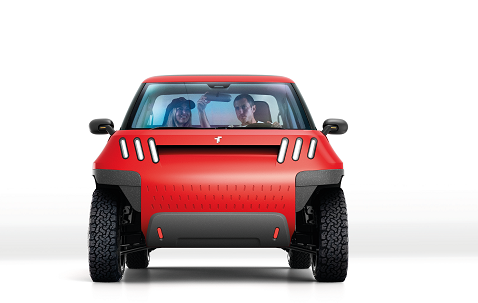
TELO Trucks: the MT1 is the world’s most efficient EV pickup, built for urban living and weekend adventures.
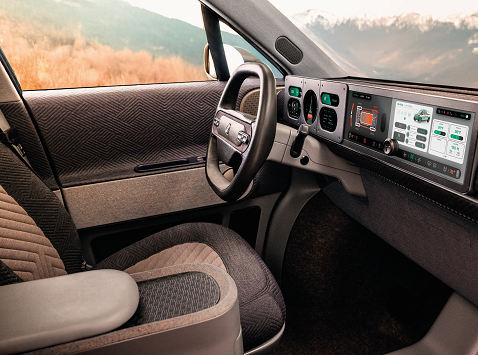
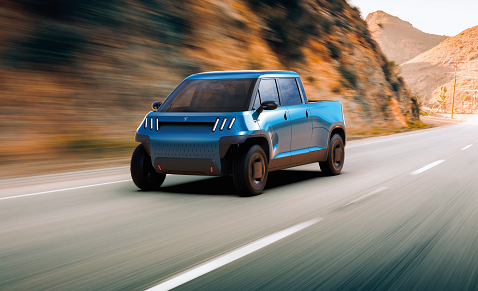
TELO Trucks: Fuseproject’s MT1 reimagines the pickup for city life: a compact, five-passenger EV that fits within the footprint of a two-door Mini yet packs a 60-inch bed and full-size utility – on par with a Toyota Tacoma while being about 40% more compact. The architecture maximizes interior and cargo space without the bulk, offering an agile, lower-impact alternative to traditional light-duty trucks.
For me, global and local, or “glocal”, is a natural state. The creative flow can come from local participation and involvement with craft. Here I’m working with cork and sustainable textiles, local resources influencing global practice. I’ve brought them into the TELO project, the truck we’re building.
We are now in the final stretch, focusing on details and homologation, and we have already produced two working prototypes.
I see an important role for the designer to motivate and engage creatively with traditional crafts that tend to die off unless renewed. The richness of craftsmanship, whether here, in Indonesia, or anywhere in the world, benefits from design, re-energised with new ideas. I like that role of the designer as a connection between the very local and the global.
How do you personally reinterpret the role of the designer with new technologies like artificial intelligence?
Technology is everywhere and AI is just another technology. Some are more disruptive than others, but I do not build projects or companies around a technology, but around human needs. The entrepreneurs, scientists, and technologists that I work with are all humanists.
The hype around AI and the almost monolithic thinking we see today is overblown. I have used AI since the late 2000s and it has been extremely useful. These projects are about education with the Moxie robot, about ageing with the companion ElliQ, and about supporting parents and babies with Happiest Baby SNOO. These embodied AI projects have made a difference by solving one-to-one needs that are personal and real.
AI becomes problematic when it removes the need to learn lifelong skills or abates the need for conscientiousness. Being a designer or a writer requires conscientiousness that AI makes you think you don’t need. In terms of design, AI is just a tool, and it’s terrible at designing. Design is not about stamping a predictable aesthetic everywhere. Design is about connecting to unique human needs.
There was a study where people were shown copies of artworks and then the originals. The emotional impact of the copies was ten times less. Machine-made is not authentic. Human-made is authentic. Without authenticity, we do not connect. Humans will always be better designers.
“I see an important role for the designer to motivate and engage creatively with traditional crafts that tend to die off unless renewed.”
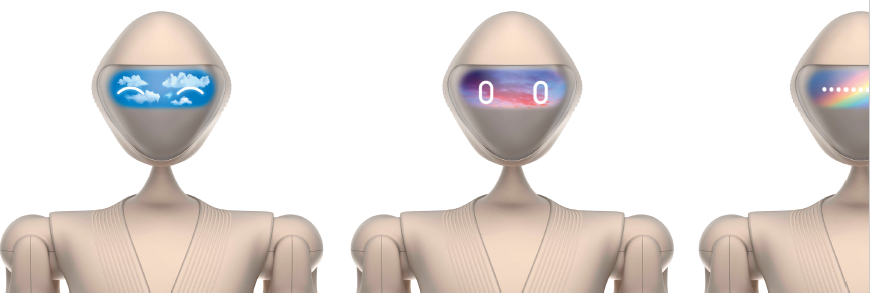
Kind Humanoid — MONA Billed as “the first friendly robot designed to navigate and assist in unstructured environments.” Fuseproject gives it an approachable character: a soft, diamond-shaped head with a mood-expressive display, a kimono-inspired torso, and a warm bronze palette—balancing technical capability with human-centered design.
Do you think multidisciplinarity is a success factor when it comes to design?
When I created Fuseproject, the name was about fusing different disciplines at the service of an idea. With a multidisciplinary approach, we are not saying one practice will be the solution. We are saying we don’t know where the big idea will come from.
Once the big idea is discovered, all the other disciplines are there to enhance it, to make it real. That is very different from specialised groups pulling in separate directions. A multidisciplinary approach creates greater opportunity for discovery and cohesiveness.
I have worked this way for 25 years since I founded Fuseproject, and I feel it is the ultimate way to design and collaborate.
How important is it to integrate design and brand strategy from the start of any project?
Since 2005 we have partnered with over 100 start-ups. Two out of three times we designed the brand and often even the naming of the company. Being part of the strategy, in collaboration with the founders, is a way to define the long-term presence of a company, how it is perceived and communicated.
I have found it very fulfilling, but also impactful in the long term, to create the core notions of the brand. Whether naming products or companies and creating the branding and presence of how they exist in the world, it has become fundamental to our work.
“Style has been a trap in design. Why should an aesthetic that is beautiful in one object be transferred to another?”
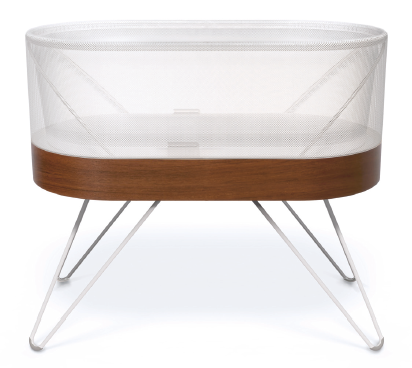
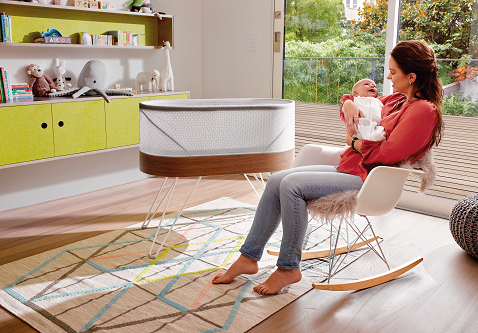
Snoo is the first robotic bassinet that soothes fussiness and extends sleep for babies and parents, offering an additional one to two hours of sleep per night. Clinical studies show it can reduce symptoms of postpartum depression more effectively than antidepressants, and it’s the first and only FDA-approved bassinet… keeping babies safely on their backs during sleep.
Emotion seems to play an important role in all this. In fact, you once said emotion prevails over aesthetics. What does this mean to you?
To me, beauty is important, but trend and style are not. What’s important is how an object connects emotionally with its user. It is not about throwing colours and shapes at the world. It is about creating the magic that happens through interaction with a product or an interface.
Objects around us can distract us negatively, but we can also design them to interact discreetly in the background, without interrupting. People find that magical, intelligent and emotionally satisfying.
That emotional intelligence is something we need to imbue in the work all the time. For us as designers, contributing to the world means putting things in front of people that fit in rather than interrupt.
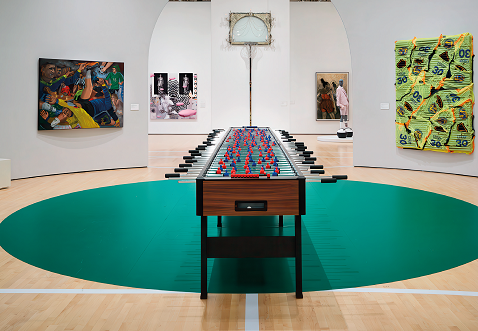
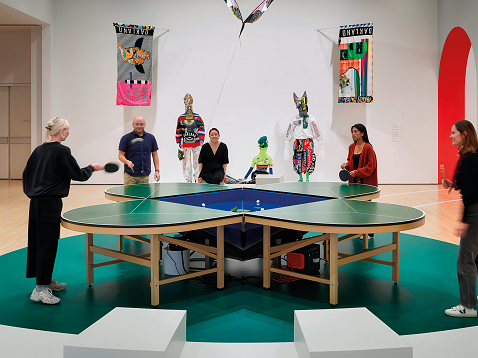
Get in the Game — SFMOMA
An exhibition that explored how art and design shape the role of sports in culture. Fuseproject organized 200+ works across 15,000 sq ft into themed zones—fandom, winning & losing, breaking records—within a cohesive, open flow, and a stadium-like entrance of stretched netting sets a high-energy tone for artworks, interactive installations, and athletic gear
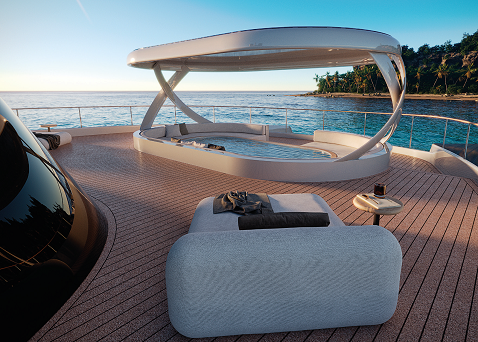
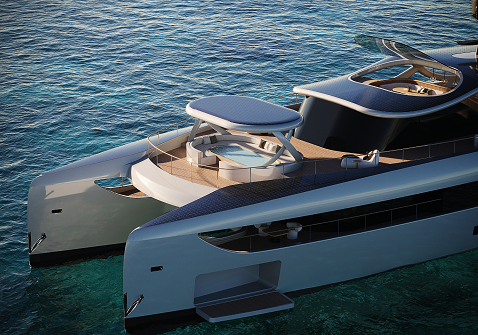
Fuseproject and Rossinavi’s Solsea is the first hybrid-electric catamaran superyacht, designed for silent nature exploration.
An eco-displacement yacht enabling 100% electric operation for day trips and up to 80% electric cruising during transatlantic crossings, and significantly reduced consumption and operating costs by 80% while cruising, and 100% during wintering.
Features include large surfaces for solar panels, including a dual-purpose pool cover that serves as a shading and solar surface and a full-width hydraulic rear door transforms into a beach club platform.
For this project, Behar used cork as an expression of sustainable luxury, and also designed all the furniture.
How do you reconcile that with visual brand language and brand identity?
When you are creating a brand, for example the TELO Truck we’re working on, you build a design language that will apply to the next vehicle in the family. That does not mean the language should force a product into being something it does not want to be. Context still remains important.
Style has been a trap in design. The idea of a signature style always feels contrived. Why should an aesthetic that is beautiful in one object be transferred to another? Designers should adapt a design language to fi t different forms.
What advice would you give to young people wanting to start a career in design?
Really focus on the skills of design. There is so much temptation today to learn everything, to be the accountant, the patent lawyer, the manufacturer, the business owner. Those skills will be learned in due time. The most important skill, the one that differentiates you, is the ability to take ideas and turn them into a reality: a drawing, a mock-up, a manufactured object.
When I was a young designer, I arrived in California from Switzerland, where seniority was very much a thing. But in my late twenties, I would be sitting in rooms with scientists, entrepreneurs and PhDs. They would all talk about an idea, and at some point they would turn to me and ask, “What do you think?” I would make a quick drawing, and suddenly they would see their idea in a new way. That was when I earned my place at the table, regardless of age, accent or background.
So my advice to young designers is to focus on this tremendous value you can bring as a creative, and learn all the other things in due time. If you do not build that capacity to be the best designer you can be, skilled at something so unique and so needed, you are missing out.
“AI is just a tool, and it’s terrible at designing. Design is not about stamping a predictable aesthetic everywhere.”
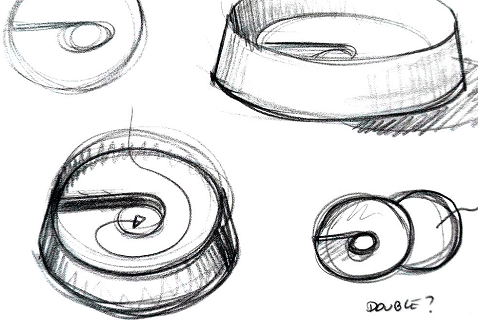

The first zero-emissions ceramic collection, fired in LAUFEN’s 100-meter electric kiln powered entirely by solar energy. The basin’s interior engineers a circular fl ow that mimics a river’s motion, enriching daily rituals while aiding conservation; the exterior echoes that movement and integrates LAUFEN’s large outlet system for uncluttered storage.
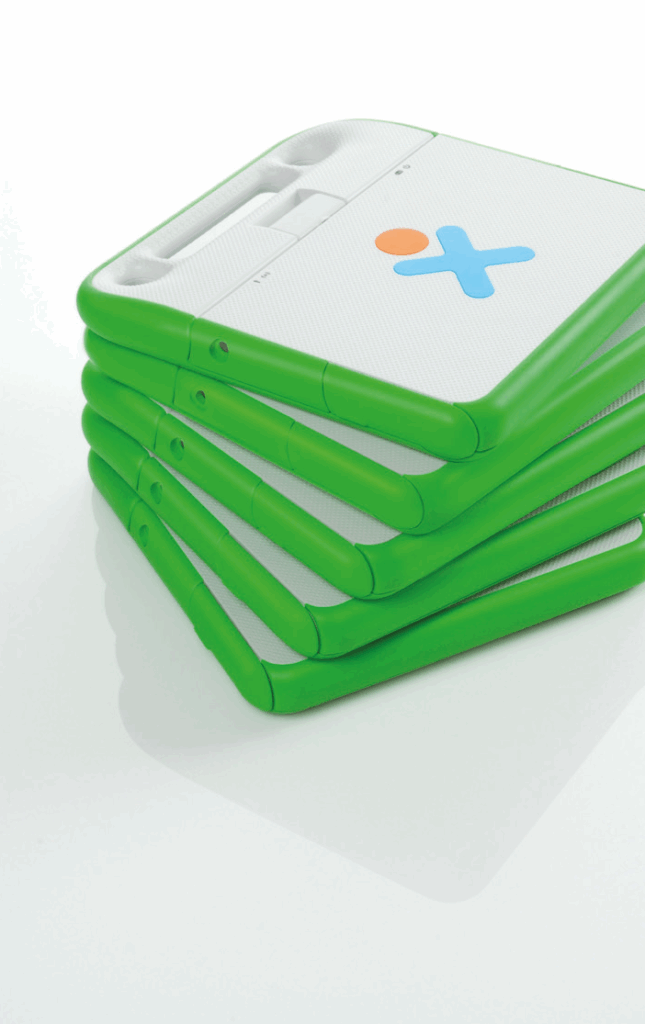

OLPC – One Laptop per Child – XO LAPTOP
Conceived as a durable learning tool for children in developing countries, it features a sunlight-readable display, a robust rubberized case, and dual Wi-Fi “rabbit-ear” antennas.
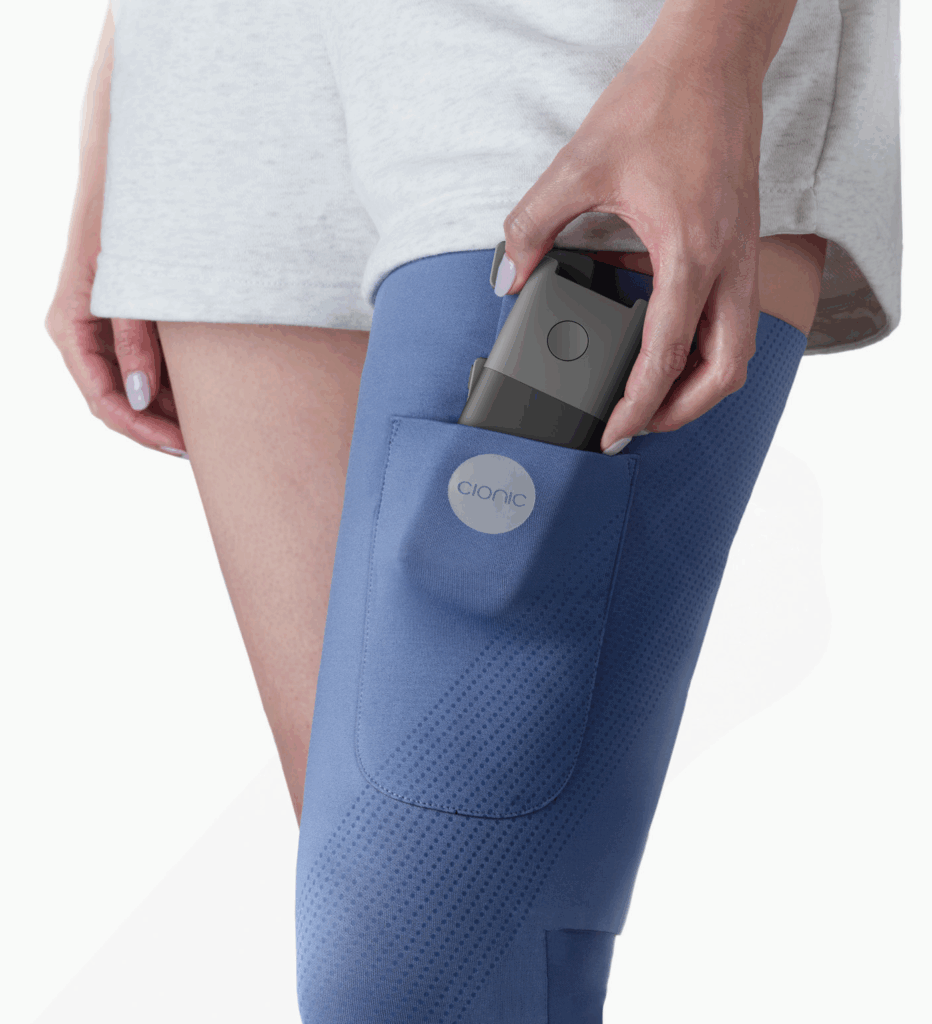
CIONIC – Neural Sleeve
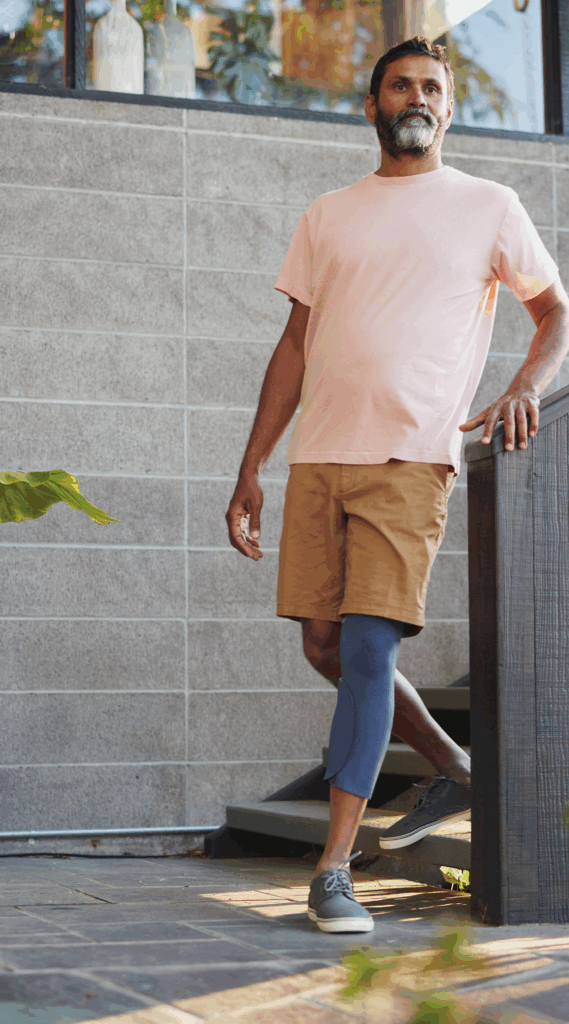
The first bionic clothing designed to improve mobility for people with neurological conditions: a wearable leg sleeve that analyses gait and delivers functional electrical stimulation timed to the gait cycle to activate the necessary muscles.
Are you a believer in hard work, like talent is not sufficient on its own?
This is actually a pet peeve of mine. I have had that discussion many times. When people do not understand what it takes to be excellent at anything, they say, “You have so much talent.” It always drives me crazy, because talent without hard work is wasted.
The idea that ability comes from the sky rather than from the ten thousand hours spent developing through trial and error, sweat and tears, is a terrible shortcut.
For me, talent is simply recognising the love of what I do. If I love design, I apply myself completely to it. That is the core of talent: recognising potential, then investing work to build it into something extraordinary.
I often quote Pablo Picasso: “Inspiration exists, but it has to find you working.” If you apply your brain to solving a problem, that problem will get solved because you are working on it.
“Inspiration exists, but it has to find you working.” (Pablo Picasso)
Yves Behar
BIO
Yves Behar (b.1967 in Lausanne, Switzerland) is a Swiss-born industrial designer and founder of the San Francisco-based design and branding firm Fuseproject. Educated in Europe and at the Art Center College of Design in Pasadena, he worked with Frog Design and Lunar Design before establishing his own studio in 1999. Fuseproject has developed a wide range of projects for companies such as Apple, Herman Miller, Microsoft, Coca-Cola, Puma, Samsung and UNESCO, combining multidisciplinary design with social innovation. Behar is particularly known for his humanitarian work with One Laptop per Child and for projects such as the Snoo smart bassinet and the August smart lock. His creations are held in the permanent collections of major museums including the San Francisco Museum of Modern Art, the Musée de Design et d’Arts Appliqués Contemporains in Lausanne, the Victoria and Albert Museum in London and the Cooper Hewitt Smithsonian Design Museum in New York. More recently he has launched a new venture in Lisbon, expanding his practice to include local craft and sustainable materials.
fuseproject.com
Copyright © Homa 2026
All rights reserved