












Listen to the audio version of this article. Duration: 11 minutes.
Simona Maschi on designing tomorrow’s connections, from Copenhagen to a 12th-century monastery in Italy’s rolling countryside.
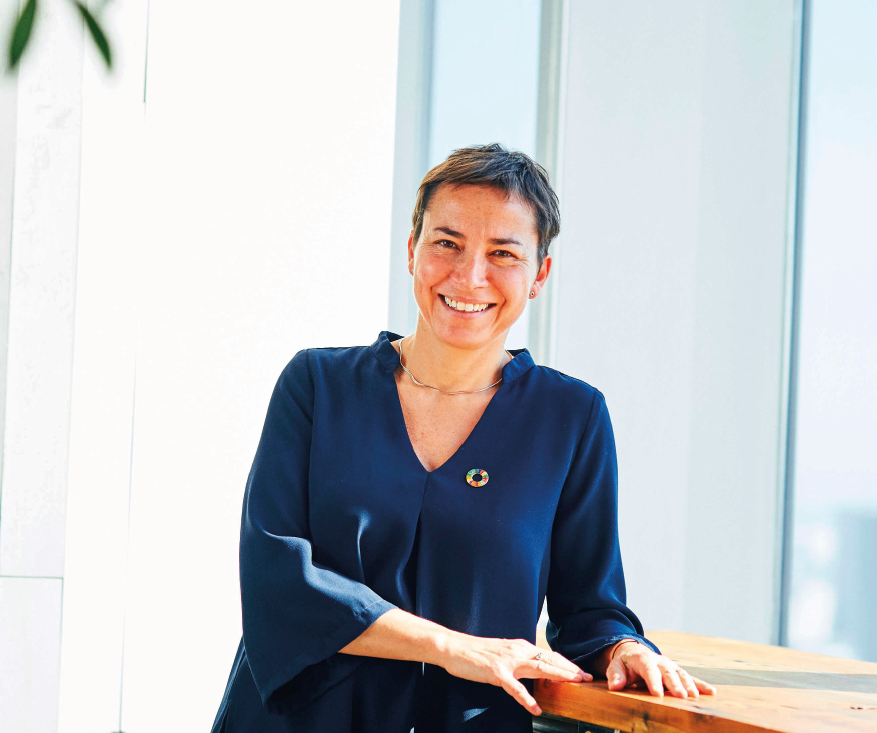
From the pioneering years at Ivrea in Northern Italy, where Olivetti helped launch Europe’s first school for the field, to nearly two decades leading the Copenhagen Institute of Interaction Design (CIID) which she co-founded, Simona Maschi has seen interaction design grow from a niche concept to a driving influence shaping systems, services, and environments worldwide.
Her vision reaches far beyond conventional thinking, enabling meaningful experiences between people, technology, and their surroundings. Now she is bringing CIID’s approach to Italy, establishing a new hub in a 12th-century monastery in Bergamo, Italy. In this fascinating conversation with DM, she reflects on the discipline’s journey and why its future may depend on learning from nature.
As a co-founder of the Copenhagen Institute of Interaction Design (CIID), what is your core vision for the role of design in shaping the future?
The interaction design practice emerged in the 1970s and 1980s, and matured in the 1990s and into the present century. It concerns the design of products, services, and environments, enabled by digital technologies. I say “enabled” intentionally because sometimes the technology is not visible. But the type of experience that a person or a group of people can have with a device, or in an environment like a hospital, an airport, a car, is enabled by digital technologies. Often you do not see the technology, which is interesting.
In general, “design” has traditionally been associated with aesthetics and functionality, with beautification, especially in Italy. People think about jewellery, fashion, furniture, lamps, and tables. In reality, it’s about laying the foundations for something that does not yet exist. It is an act, a practice, linked more to creativity and thinking of new things than to aesthetics. Design is thinking about future things that do not yet exist, supported by tools and approaches such as prototyping, because when you imagine something new, you have to communicate it. Interaction design carries all of this, along with the “interaction” aspect, which focuses on designing the interaction itself.
“Traditionally, design has been associated with beautification”
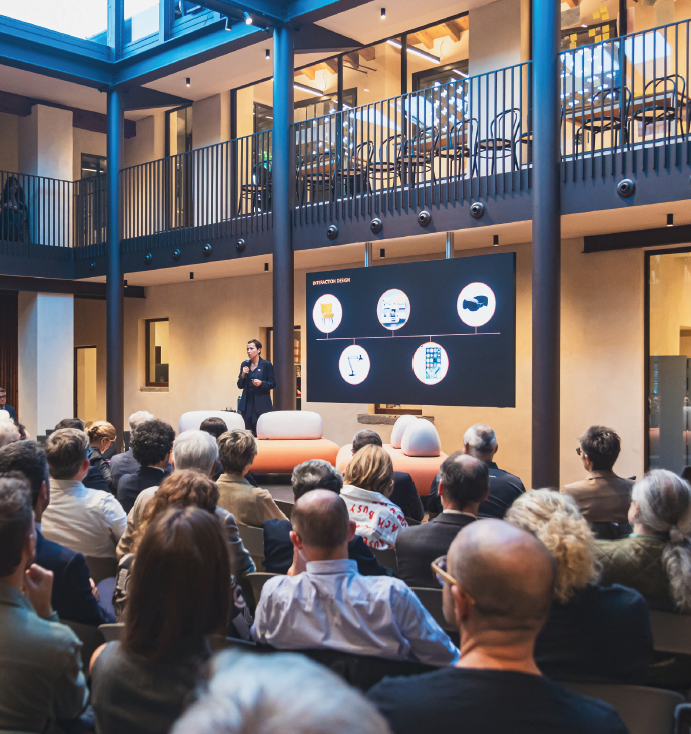
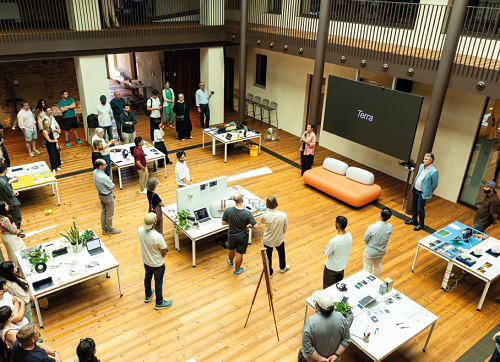
CIID embraces a world-class research & consulting lab, education programme, and soon a venture building platform: can you provide some insights on how you can make them interact for the best possible outcome?
I see the years in Ivrea as the birth of the interaction design practice. Ivrea is a small city in northern Italy, best known as the historic headquarters of Olivetti, the pioneering maker of typewriters, calculators and early computers. In the late 1990s, as the digital technology boom began, Olivetti, with Barbara Ghella and Franco Debenedetti, launched a school entirely dedicated to interaction design. The idea followed a visit to Silicon Valley, where this new discipline was already in use but had no dedicated school in Europe.
Small yet ambitious, the Ivrea school offered two-year programmes for just 25 students annually, backed by a €36 million investment. From this unlikely setting emerged groundbreaking projects such as Arduino, based on C++ and led by Massimo Banzi, and Processing, a programming language for designers.
The CIID years from 2005 to 2019, when we had the full-time course, are like the adolescence of the practice. We created the profile, the identity, the values, the ethics and established key processes for it.
Now in Italy, I see this chapter as the impact phase, the more mature stage after adolescence. Our great dream is to take the CIID blueprint and duplicate it in other continents and countries where we have significant alumni hubs, from India to Japan to America, and go to places where there is a need for impact.
Our new Italian base is in Bergamo, in a beautiful 12th-century monastery with a wonderful history. We invite everyone to visit. While our home remains in Europe and we will continue courses and projects there, we feel the responsibility to go where this kind of practice can have positive impact. We are always looking for talents from all over the world to join our one-year interaction design course.
Why did you choose a monastery for CIID’s new Italian base?
It is not by chance. The monastery was once home to Ambrosian monks, who were among the first to explore the relationship and balance between humans and nature. Being in such a place is a constant reminder that we are part of an ecosystem, and it inspires us to design in ways that respect and work within that system.
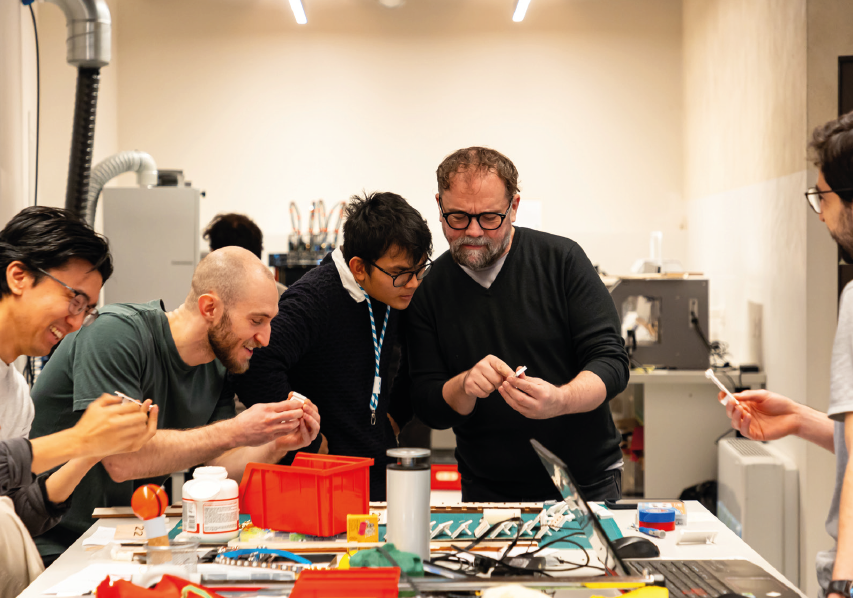
You’re passionate about creating design solutions with a positive impact. Could you share a specific example of a project at CIID where design interventions led to significant social or environmental benefits?
One example from the early days of this work is Arduino, which came out of the Ivrea school. Founded by Massimo Banzi, a close friend who teaches with us regularly, Arduino is an open-source electronics platform that allows people to create interactive projects. It has enabled designers, students, and makers worldwide to experiment, learn, and build solutions that can have real social and environmental impact.
“We are now in a phase of moving from human-centred innovation to life-centred innovation, a biocentric approach to innovation”
We are now in a phase of moving from hu-man-centred innovation to life-centred innovation, a biocentric approach to innovation. We learn from biomimicry, adopting dynamics intrinsic to nature to inspire the design of artefacts. From death to birth to nourishment, nature teaches us that everything that dies nourishes the rest, so circularity is profoundly inherent to nature.
How can design thinking methodologies be used to foster stronger collaboration between academia and industry, and what are the key ingredients for a successful partnership?
The Ivrea and Copenhagen experiences show that the right environment, shared values, and a willingness to experiment and prototype are crucial. Strong collaborations emerge when design is understood as more than form or aesthetics. It is about creating the conditions for new things to exist, informed by ethics, impact, and a readiness to evolve.
How can we ensure that technology is developed and implemented in a way that truly enhances human well-being and promotes social equity? What do you make of AI?
I am fascinated by this new phase of AI. It is a great opportunity, but one that must be understood and managed carefully, like all big innovations and paradigm shifts such as the internet. Leonardo da Vinci said inventions should reduce human fatigue, not effort. Effort can be regenerating. Fatigue is the draining, unproductive kind. That principle could guide how we design with AI, focusing on removing what is unproductive and exhausting, while keeping what is regenerating and transformative.
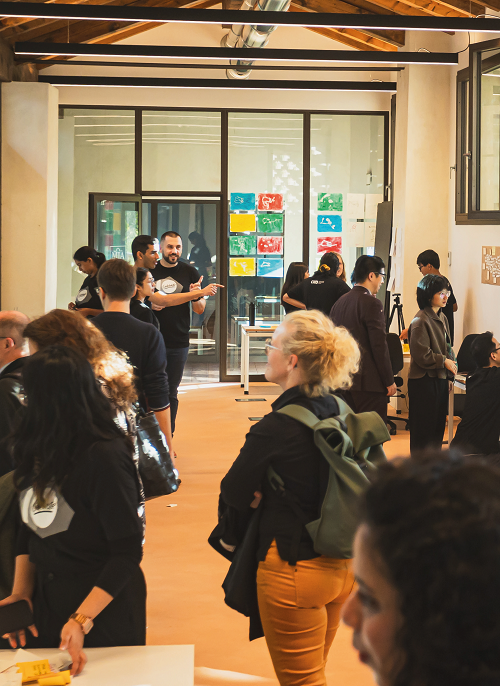
In today’s design landscape, one important challenge is integrating biocentric thinking into business strategies, understanding that the purpose of nature is not growth but evolution. Companies able to evolve based on the positive impact they can create on people & planet can create more value than those that only focus on expanding markets.
For businesses across sectors there are strategic and commercial opportunities in shifting from a focus on profit to a focus on impact.
What are the key skills and mindsets you believe the next generation of designers needs to cultivate? And a word on empathetic design?
We want our students to become leaders who understand the ecosystem concept and the role we have in it. Learning from biomimicry is central, observing and applying nature’s principles, not as plug-and-play solutions but as inspiration. The ability to evolve, to become the best version of oneself, can guide decisions in design and beyond. Empathetic design aligns with this, as it requires seeing beyond human needs to the needs of the larger system. For the next generation, this means cultivating creativity, prototyping skills, ethical awareness, adaptability, and the capacity to work with complex, interconnected challenges.
We use this approach with our partners including Lego, Rockefeller Foundation, Translated, Roche, and Volvo.
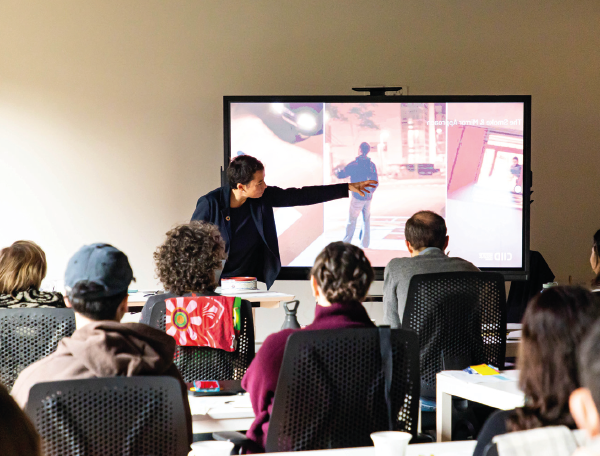
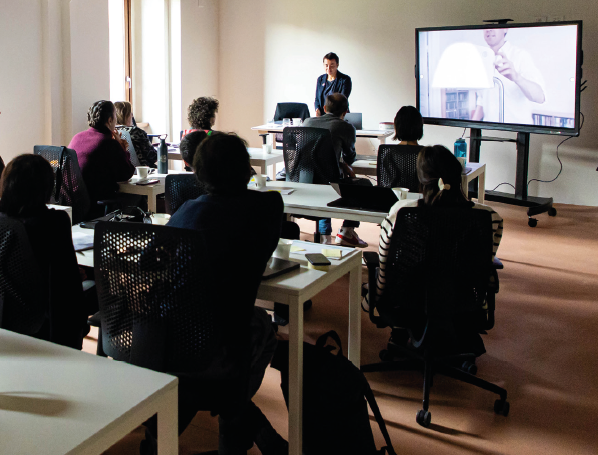
BIO
Simona Maschi is the co-founder and director of the Copenhagen Institute of Interaction Design (CIID), where she leads the overall organisation, heading a team that combines a world-class consultancy, an education programme, and venture-building platform. Born and raised in Italy, she earned an MA in Architecture (1996) and a PhD in Industrial Design and Multimedia Communication (2002) from the Polytechnic University of Milan. An expert in service design, scenario design, and design methods, she is passionate about solutions that create a positive impact through a design culture that works in collaboration with academia and industry. Her projects have addressed private and public transportation, health and wellbeing, sustainable housing, and smart cities, and she is a frequent speaker at international conferences. Maschi serves on the jury for the Don Norman Design Awards and is part of a board of experts developing new design strategies at the University of Macau in China. She has more than 30 years of teaching experience at institutions including Denmark’s Design School, the IT University in Copenhagen, and the Politecnico University in Milan, and was a visiting scholar at the Institute of Design, Illinois Institute of Technology, Chicago. Before founding CIID in 2006, she was an associate professor and researcher at the Interaction Design Institute in Ivrea, Italy

“The purpose of nature is not growth, but evolution”
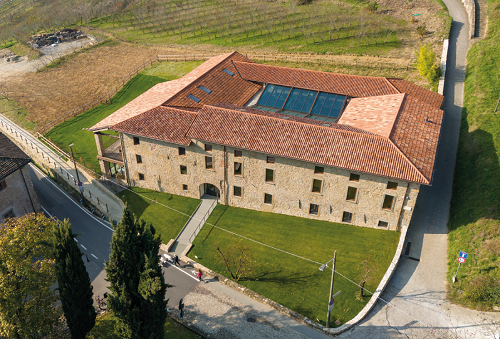
CIID in Bergamo: A New Home for Interaction Design
Amidst the monastic calm of Astino, the Cascina Convento has been reborn. This 12th-century treasure, part of the historic Mona-stero di Astino, has undergone a meticulous restoration thanks to the MIA Foundation and the Municipality of Bergamo, emerging as the new headquarters of the Copenhagen Institute of Interaction Design (CIID).
Fully equipped with contemporary furnishings and state-of-the-art technologies, the Cascina Convento hosts the Interaction Design Programme. Here, history and innovation meet: the ancient architecture provides a backdrop where students from across the world will shape the future of design, in a space that is both contemplative and experimental.
This place represents more than the conclusion of a renovation project. It represents a symbolic chapter in CIID’s journey—where centuries of cultural heritage embrace the urgency of contemporary design education, and where the past becomes a fertile ground for imagining the future.
Copyright © Homa 2026
All rights reserved