












Listen to the audio version of this article. Duration: 9 minutes.
An Interview with Professor Anjan Chatterjee

In this fascinating conversation with DM, Professor Anjan Chatterjee explores the emerging field of neuroaesthetics, the study of how our brains perceive and respond to beauty in its many forms. From art and design to natural landscapes and everyday objects, he explains how aesthetic experiences arise from the interplay between sensory input, emotional response, and the personal and cultural meanings we attach to what we perceive. Drawing on his concept of the “aesthetic triad” and his research into the psychological components of design perception, Chatterjee discusses the common principles that underpin our responses to beauty and the variations shaped by culture, background, and individual differences. Read on and discover an inspiring discussion ranging from evolutionary perspectives and mental health implications to ethical questions around predictive design and the practical meaning of empathetic design.
You have described neuroaesthetics and neuroart in your work. Can you give us a short definition and how it can relate to design?
We think of neuroaesthetics as a sub-discipline of cognitive neuroscience. Broadly speaking, cognitive neuroscience is trying to understand the nature of the human mind as implemented through the brain. Within that, one component is the fact that we value aesthetic encounters of different kinds. The scientific discipline asks: what is the nature of those encounters? How is it implemented in the brain? How malleable is it? And ultimately, why does it matter?
We think about how the brain carves out the world, into people, places, and things. We have aesthetic experiences of people: what they look like, why we find some beautiful and others less so, and how that influences interactions and behaviour. We have aesthetic experiences of places, both nature and the built environment, and of things, which might be consumer products. We are also interested in art, and the fundamental question of why we care so deeply about paint on a canvas when we cannot eat it or have sex with it, and yet it matters to us.
Within this, design, especially our relationship to the built environment and its relation to nature, becomes particularly prominent.
Aesthetic experiences extend beyond art to objects that are not art. Most people, if you ask them about profound aesthetic experiences, will recall moments that can be deeply moving, even transforming: sometimes in nature, sometimes in architectural spaces, sometimes with music, art, or dance.
These experiences are not utilitarian. They are intrinsic, giving us well-being and a spectrum of emotions, including pleasure, joy, wonder, and awe, that give life texture and meaning. They are not moments we pursue in order to make more money or impress others, but because of the intrinsic value of the experience itself.
Is there a primary driver behind why we find something beautiful?
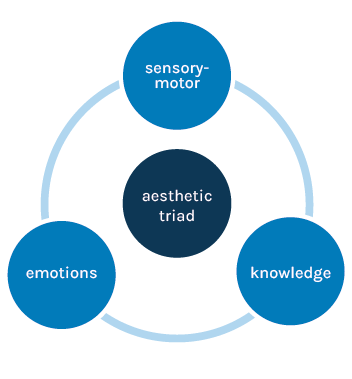
I wish the answer were yes, it would make our work easier. We frame the domain as the “aesthetic triad”:
The first component is sensory-motor: sensations and their properties, light, shadow, form, smell, texture, sound, the underpinnings that can trigger an aesthetic experience.
The second is emotions. Beauty often involves pleasure, but also mixtures: the sublime or awe may include a slight sense of anxiety, feeling small before something vast.
The third is knowledge and meaning: education, background, culture, historical context, all shape how sensations map onto emotions.
Beauty varies by category. People are more consistent about natural kinds, such as faces, bodies and landscapes, and more variable about human artefacts like art, architecture or interior design. This variability challenges scientists, but we believe beauty is in the brain of the beholder, and brains are more similar than different. What triggers wonder may differ between individuals, but once in that state, brain activity is remarkably similar. We see this in studies where participants view paintings that move them deeply. The specific works that provoke the response vary from person to person, but when in that state, the same brain networks, such as the default mode network, are activated consistently.
“The brain carves out the world, into people, places, and things.”
“We believe beauty is in the brain of the beholder, and brains are more similar than different.”

Antonio Canova, Amore e Psiche (Psyche revived by Cupid’s kiss)
Would you consider beauty universal, or culturally modulated, and beyond that, shaped by individual experience?
We ask: beauty of what? Focusing on design as a human artefact, there is variability. Our lab has found three psychological components to our response to design. One is coherence, meaning how legible and comprehensible a space is. The second is fascination, referring to its informational complexity and the way it evokes exploration and curiosity. The third is homeliness, which is the feeling of being comfortable and belonging in a space.
These occur for everyone, but triggers vary. Coherence and fascination show more agreement, while homeliness is highly cultural and idiosyncratic. For example, people on the autism spectrum may react differently to fascination, since complexity can overwhelm, leading to avoidance rather than attraction.
This points to the importance of recognising both universal psychological states and the variability of what triggers them.
Does beauty play an important role in human evolution?
I believe so. In The Aesthetic Brain (2014) and in my current work, I consider evolutionary factors. Individuals who preferred environments with certain features, such as prospect, meaning a view to detect danger, refuge, meaning safety and nourishment, and mystery, inviting exploration, may have been more likely to survive. These features still shape how we respond to and create our surroundings. Mystery in particular connects to fascination, reminding us that once our basic needs are met, we look for stimulation and novelty.
Is there a link between the built environment and mental health?
Absolutely. Our collective lockdown experience is telling: people became acutely aware of their surroundings. For children, differences in home environments, space, quiet, internet access, had clear impacts on learning.
In our work, the brain responds to coherence, fascination, and homeliness even unconsciously. All three can contribute to overall well-being, though the optimal mix depends on the setting, whether a study, bedroom, office, museum, airport or stadium. Biophilic design, incorporating nature, may reduce stress or enhance creativity. We are testing this in a clinical “refresh room” for people recovering from substance use disorders, to help them self-regulate emotions.
If brain-based data could predict emotional responses, what are the ethical implications of “predictive design” ?
I would be delighted if we had enough data to make such predictions. Designers already predict future responses intuitively, but rarely check after the fact if those predictions hold true. Neuroscience emphasises prediction error, adjusting our expectations when new information differs from our hypotheses. Without collecting post-design data, we miss opportunities to improve. One could even ask: is it ethical not to collect such information?
What about empathetic design? Does it make sense to you?
We do not use that term in our work, as its meaning is unclear. If it means designing inclusively for specific populations, for example, people on the autism spectrum, then yes. I have seen low-stimulation rooms in some European museums, offering restoration for those overwhelmed by high-fascination spaces. Accessibility for older people, those with low vision, or mental health conditions could also fall under this. If “empathetic design” simply means design that helps people flourish according to their abilities and constraints, then it makes sense to me.
It seems that background and context, personal, cultural, historical, are central to all of this.
Yes, context shapes everything. I would add that we are at the very early stages of this research. We have a “table of contents” but need to write the chapters. Neuroscience claims are provisional, context-dependent, and incremental.
We are just scratching the surface.
BIO
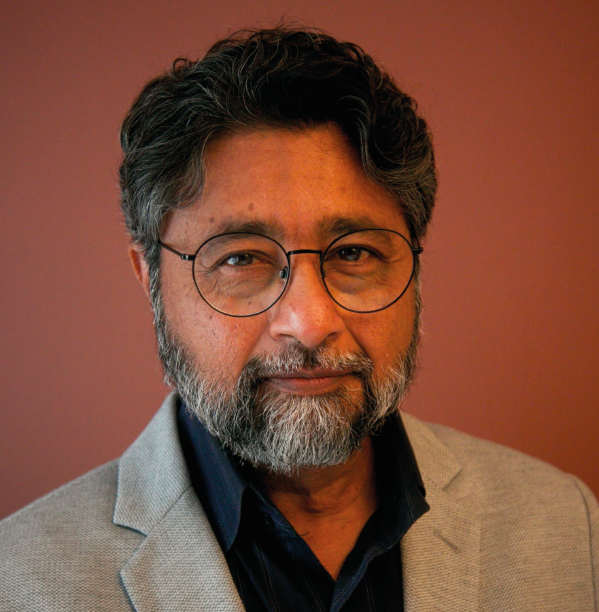
Anjan Chatterjee, born on 22 October 1958 in Bhopal, India, is Professor of Neurology, Psychology, and Architecture at the University of Pennsylvania and founding Director of the Penn Center for Neuroaesthetics. He obtained his BA in Philosophy from Haverford College in 1980 and his MD from the University of Pennsylvania in 1985, followed by training in neurology at the University of Chicago and research fellowships at Case Western Reserve University and the University of Florida. His research spans spatial cognition, neuroaesthetics, and neuroethics, and he is the author of The Aesthetic Brain as well as co-editor of several volumes on neuroethics and cognitive neuroscience. He has served as president of both the International Association of Empirical Aesthetics and the Society for Behavioral and Cognitive Neurology, is a founding board member of the International Neuroethics Society, and has received awards including the Norman Geschwind Prize in Behavioral and Cognitive Neurology and the Rudolph Arnheim Prize for contributions to Psychology and the Arts.
Prof. Chatterjee’s selected books:
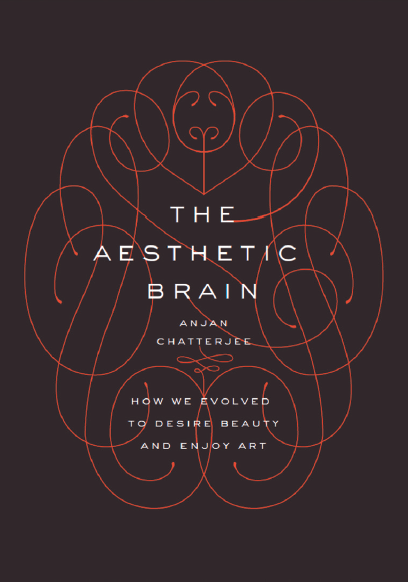
A neuroscientific journey into how beauty, pleasure, and art are rooted in the human mind, exploring why aesthetic experiences are central to our lives.
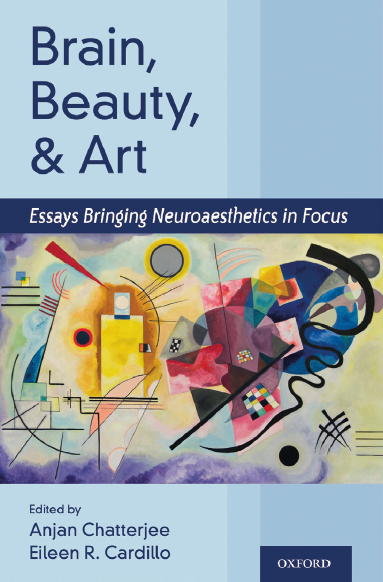
A collection of essays from leading scholars that trace the origins and future of neuroaesthetics, investigating how we perceive and respond to beauty and art across disciplines.
Copyright © Homa 2026
All rights reserved