











Listen to the audio version of this article. Duration: 10 minutes.
A conversation with Ziyuan ‘Zoey’ Zhu on designing across disciplines, balancing empathy and tech, and embracing the beauty of the incomplete.

Zoey Zhu is not interested in perfection. Trained across design disciplines and cultures, she operates in the fluid space where empathy meets technology, and where local rituals confront global systems. In this interview, Zhu reflects on working with AI micro-taskers in South Africa, the pressures of serving global e-commerce clients in Asia, and why young designers should balance novelty with responsibility. She believes design is a continuous conversation, not just with clients, but with the world itself. What emerges is an approach that prizes incompleteness as a strength and uses design to ask the right questions, rather than provide easy answers.
How does technology move beyond a mere tool to enhance design, especially in interactive spaces and urban environments?
The projects I love the most are about people, the people I interview, the people I design for. There’s one project I’d like to share. It was a small project, but it really left a deep impact on me. We were de-signing for micro-workers in the Global South. A micro-worker is someone who does AI annotation in the backend. When you see powerful AI tools, the data behind them is manually labelled by people. For example, if there’s a picture, they’ll circle the car or the person. That’s basically what they do every day.
From my perspective, I thought: this is insane. They get paid really badly. But some of them actually enjoy doing it.
Also, this kind of micro-work gives them a way to live more freely, because they can do freelance jobs on the platform.
This project really challenged my personal beliefs. But in the end, it was clearly good for the people. We were using technology, specifically blockchain. in that case, a more stable digital payment system helped. We paid them in cryptocurrency at the time. The platform could support them better than if they were paid in the local currency, which was very unstable because of inflation.
It became one of my favourite projects. It was short, only two weeks. So for me, that’s an example of how technology is more than a tool. It interacts with social systems. It has consequences.
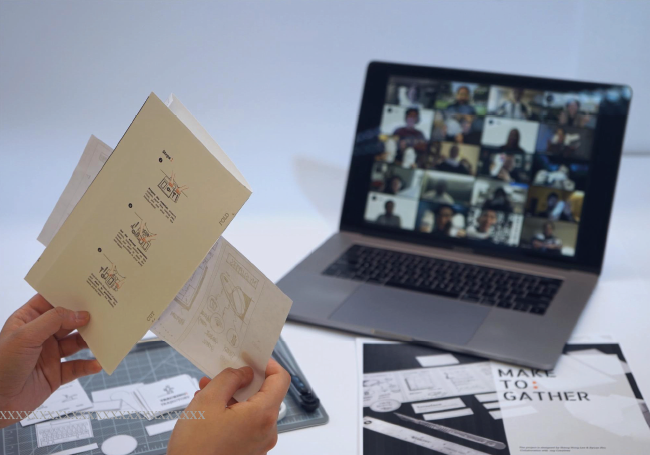
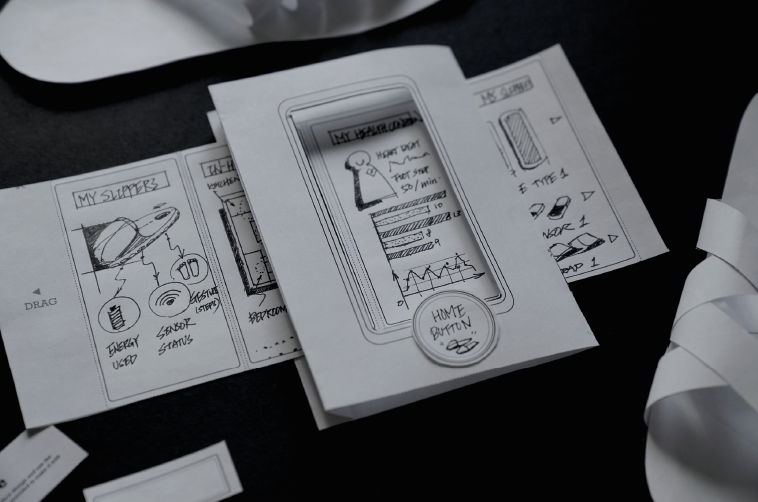
Make To:Gather is an award-winning initiative focusing on digital & physical co-creation
“Technology is more than a tool. It interacts with social systems. It has consequences.”
Do you see today’s designer as a mediator between technology and human experiences, bridging physical and digital dimensions?
Yes, absolutely. I think designers now more than ever are this kind of translator. It’s no longer just: we design a product, and that’s it. We have to understand the logic of the system. We are not only working with engineers but also with the people who are interacting with the results. So we are always in between.
You need to make sense of how a technology works, and at the same time think: how will this feel for people? What will this change in their life or their habits? You always move between different logics. And you try to bring some kind of harmony to that.
How is AI transforming the relationship be-tween objects, people, spaces, and services? Specifically, how does it enrich your design workflow without replacing the designer?
I think AI is not a thing to be scared of but a tool to be leveraged. It’s not like: here is AI. It’s more hidden. It’s embedded in the process. Sometimes I use it to analyse patterns, like user behaviour, or how people interact in space. It helps to make some predictions.
“Empathy is not about being nice. It’s about really listening and accepting that your idea might be wrong.”
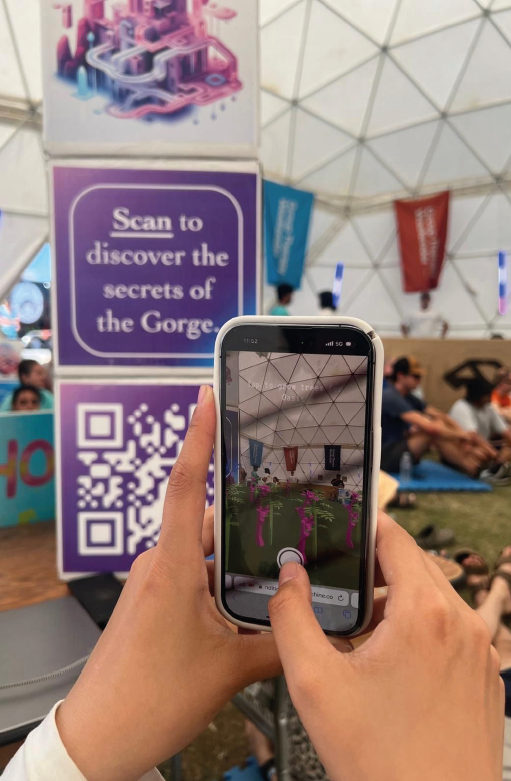
From 2022-2024, Zoey collaborated with MIT Environmental Initiative and Anjunabeats, the music label from London, on iimmersive climate installation
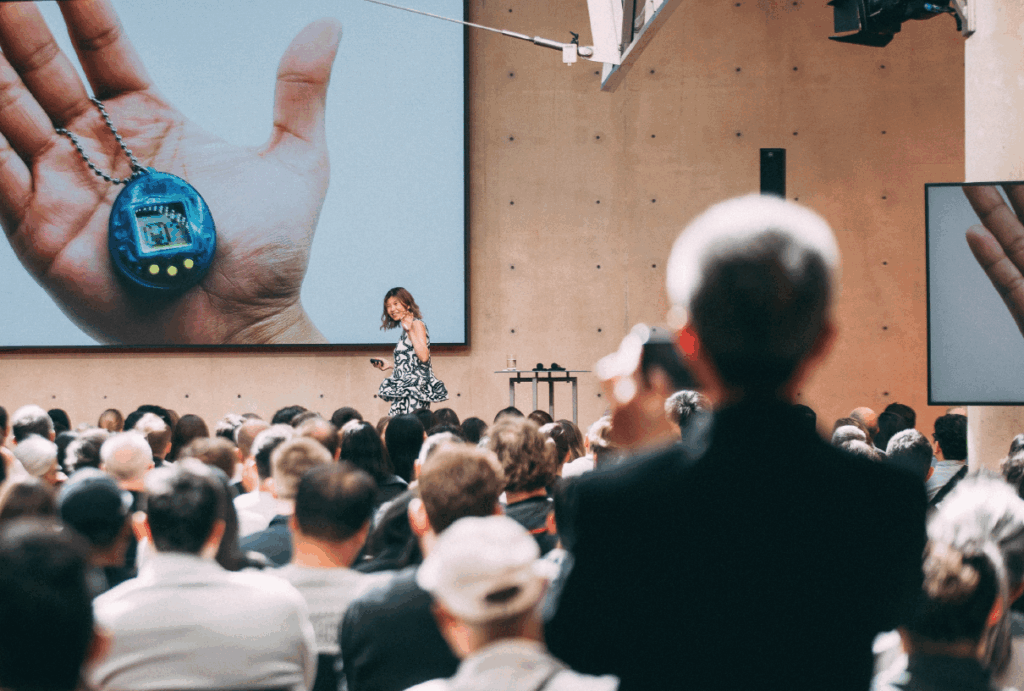
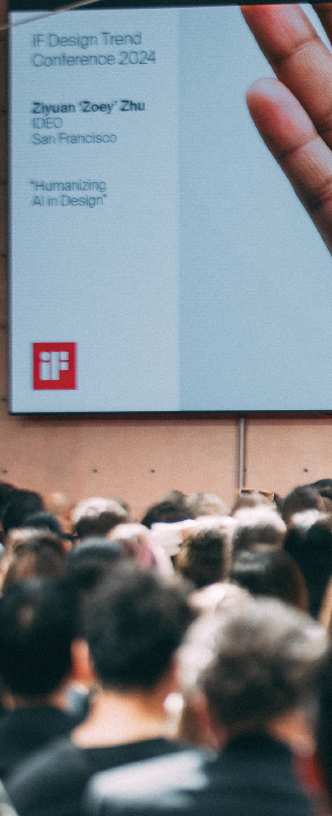
iF Design Trend Conference 2024: “Humanizing AI in Design”
“Designers can’t wait for someone else to define the rules. Because by the time the rules come, the damage may already be done.”
But I don’t think it should replace the designer. I think the important thing is that it supports your work. It gives you information, but it doesn’t tell you what to do. The choice is still human. So, in my workflow, AI is like a support system, it helps reduce repetition, explore different scenarios, but the values, the judgement, are still ours.
For project recipients, what does an empathetic, human-centred design approach concretely mean in practice?
Empathy is not about being nice, It’s about really listening and accepting that your idea might be wrong. I’ve had this experience a few times. Like in the project in South Africa, I thought the work was horrible, that they were being exploited. But after I talked to them, I realised that for them, it was a real opportunity.
So in practice, empathetic design means letting go. Letting go of what you think is right. Being flexible. Adapting. You try not to impose. You cocreate. Even if it’s a small project or a short time, you try to include people in the thinking process. You don’t make assumptions.
As physical and digital spaces converge, what role do rituals and habits play in shaping meaningful interactive experiences? Can de-sign help reframe them?
I think rituals are what make experience human. They are not just actions, they have rhythm, memory, expectation. So when we design hybrid experiences, we have to consider these layers.
For example, when I work on interactive installations, I try to think: what is the first gesture some-one makes? Do they hesitate? Do they touch?
These small moments are part of a bigger ritual. Sometimes design can shift these rituals, reframe them, but it has to be done gently. People resist too much change. So I think the power is in subtlety. You don’t erase rituals, you build with them.
In your view, how can designers actively shape ethical frameworks around emerging technologies, rather than merely adapting to them?
Designers can’t wait for someone else to define the rules. Because by the time the rules come, the damage may already be done. We are at the be-ginning of the process. We have to be critical. We have to ask: what is this for? Who does this bene-fit? What are the consequences?
Sometimes it means saying: no, I don’t want to work on that. Or: I want to ask more questions before I agree. That’s hard, especially when there is pressure. But I think design has a role to slow things down. To reflect. To ask difficult questions. Not just make things look nice.
Your working method integrates technology, ecology, and creativity. How do you integrate these three aspects in your process?
To me, they are not separated. Technology is not neutral. Ecology is not just nature. Creativity is not just aesthetics. They all mix.
For example, in one project we used waste mate-rials, scraps from production. We upcycled them. But we also used digital tools to visualise how the material would age or be reused. So there’s this dialogue between ecology and simulation. Creativity is how you make that connection visible. It’s the way you tell the story. I always ask: what is the footprint of this thing? Not only the environmental one, but the cultural one. Why are we making this? That’s the centre of my process.
“If everyone thinks the same way, you get predictable results. Bringing together different disciplines, you get friction, but also new forms of value.”
How important is interdisciplinary work in your design practice?
It’s vital. I don’t believe in working alone. I work with artists, coders, researchers, sometimes even farmers or activists. Everyone has something they know deeply. When you bring them together, it becomes complex, but also powerful.
It’s not always easy. People have different languages, different ways of thinking. But that’s where surprises come from. If everyone thinks the same way, you get predictable results. Bringing together different disciplines, you get friction, but also new forms of value.
You’ve noted how different cultures approach design. From your diverse experiences, what cultural influences shape your work, and how do you choose your focus amidst so many global inspirations?
I think culture shapes things. When I worked with clients, and sometimes there is this feeling of rush, like everything has to be new, fast, surprising. In branding especially, there’s this drive to al-ways change. It can be exciting, but it also makes it hard to build something that lasts.
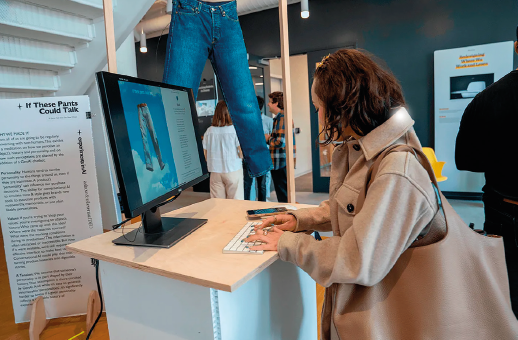
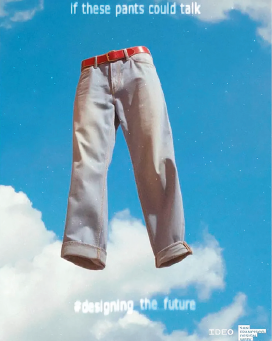
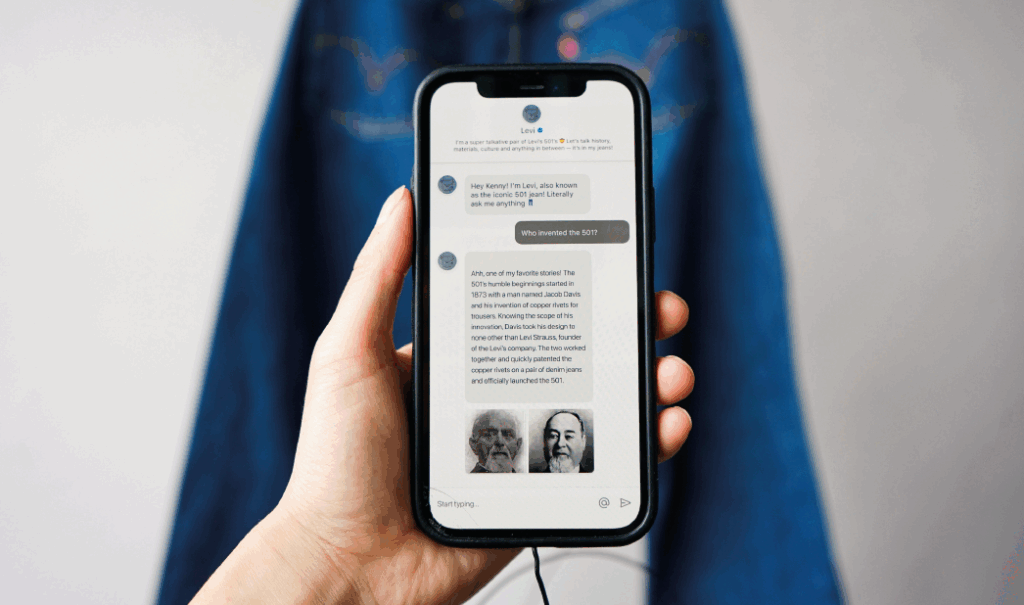
Talking Pants is a speculative design project exploring human-AI interaction in daily objects
In contrast, in some other cultures, there is more space to slow down. People talk more about coherence, about history, about long-term meaning.I try to learn from both. I don’t think one is better, but they are different ecosystems.
So when I choose my focus, I think about the values I want to bring to the table. Not just the aesthetics, but the way of working.
What advice would you offer to young designers starting their careers?
Don’t chase perfection. The aesthetics of imperfection is something I really believe in. Things don’t need to be perfect to be meaningful. Actually, sometimes the cracks, the flaws, they are where the beauty is.
Also, don’t try to do everything. It’s OK to go slow. To be confused. To ask questions. And don’t believe everything you see on social media. That’s not the whole story. Design is not just images. It’s context. It’s ethics. It’s relationships.
Work with others. Listen. Be curious. Be critical. And take care of yourself. It’s a long journey. You don’t need to have it all figured out.
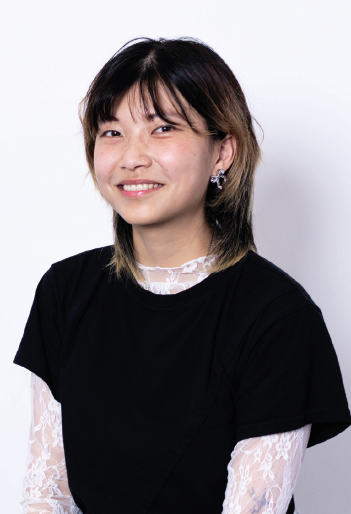
Zhiyuan Zhu
BIO
Zhiyuan ‘Zoey’ Zhu is a senior creative technologist at IDEO, based in San Francisco. IDEO is a global design and innovation company recognised for pioneering human-centred design. Her work lies at the intersection of design, emerging technology, education and sustainability, creating both physical and digital objects to explore and communicate the relationship between people and their built environment.
She holds a Master of Electrical Engineering and Computer Science (EECS) and a Master of Science in Architecture Studies from the Massachusetts Institute of Technology, completed in 2022. She also studied Environmental Studies and Architecture at the University of Stuttgart in 2018, and earned a Bachelor of Engineering in Architecture from Dalian University of Technology in 2019. Zhu is the recipient of several awards, including the IDA, Spark Design and SOM China Prize. She has received international art and research fellowships from institutions such as Ars Electronica, Technion, the University of Stuttgart and the MIT Council of the Arts. She has also been invited to speak at numerous international events, including SXSW, the iF Design Trend Report Conference, PODIM, Design Museum Week, the International Design Conference (IDC), IDSA, Pratt, IIT, Telkom University and the Bandung Biennale.
Copyright © Homa 2026
All rights reserved