












Listen to the audio version of this article. Duration: 5 minutes.
How the colours around us shape perception, emotion, and design
How empathic design blends identity, regeneration, and wellbeing to put people at the heart of projects
A guide to human-centred design, looking towards and beyond 2026, in which designers and companies are called to place individuals at the heart of every project, for their wellbeing and for that of society. A well-designed space can bring on emotions, support mental health, and contribute to cultural transformation.
Beyond function, working through emotions, which comes before aesthetics
This is the path an increasing number of designers and companies are following: seeing use as an organic dimension that benefits both the individual and the community. How is this achieved? Through empathy, understood as a genuine design competence. It is about a design approach that can listen, interpret, and even heal. And it follows one essential rule: put the individual at the centre of the creative process. This is what we call empathic, or emotional, design. As the designers and creative professionals we spoke to for this issue testify, it has become a true instrument for aesthetic, cultural, and environmental transformation. In an increasingly complex, interconnected, and sensitive world, the designer is expected to create experiences that are meaningful, aligned with users’ values, and capable of generating genuine emotional impact.
When we enter a home, a room, an office, or any public or private space, the first thing we perceive is its emotional impact. It is inevitable. So let us recognise it, embrace it, and make the most of it. Light, sound, colours, scents, furnishings, textures, materials, the arrangement of space, fullness and emptiness: all shape our emotional state, influencing our wellbeing or discomfort and, in turn, our decisions and actions.
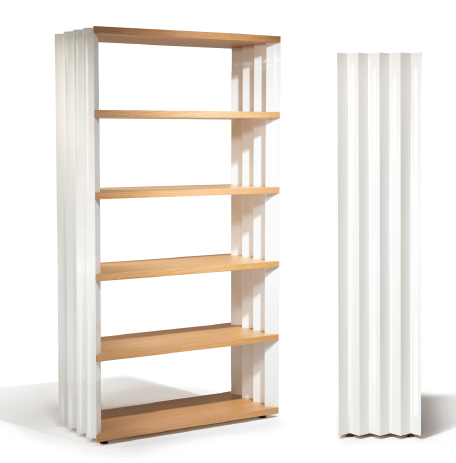
Z24 Books Bookcase by Muller Van Severen – Zanotta Placed against the wall or positioned in the middle of the room as a divider, the Z24 Books is a new self-standing bookcase with remarkable versatility. The glossy lacquered metal sides reprise the iconic zig-zag motif, creating a sculptural visual impact, while the fixed shelves in natural oak provide a material contrast between the solidity of wood and the visual lightness of metal. The interplay of light and shadow enhances the perception of depth and dynamism. This bookcase adapts easily to different settings, from the living area to the bedroom.
What is empathic or emotional design?
Empathy in design is the ability of the designers to understand and share the emotions, needs and perspectives of the people they are designing for. It means immersing oneself in the user’s world to create solutions that truly respond to their needs, moving beyond surface-level understanding to uncover the motivations behind the project. This is possible only with the awareness that the environment we inhabit influences not just our gestures and movements, but also our inner life, our balance, energy and sense of fulfilment. Once we leave our “fingerprints”, objects retain a trace of our experience, becoming imbued with meaning in an emotional exchange that turns into a narrative code of lasting eloquence.
The first essential step in this creative journey is active listening: gathering continuous feedback, observing behaviours, and understanding the user’s context. But this is not marketing; it is a genuine relationship. Choosing the empathic approach means recognising that design is, above all, an emotional matter, even before being an aesthetic one. Its aim is to generate a seamless interaction between people and the objects or spaces they inhabit. This requires understanding that emotions shape our thinking and profoundly influence our lives, forming the basis of how we make decisions.
The empathic approach treats design as a process, a continuous interaction with its users
Identity, environment and mental wellbeing
The empathic approach views design as a continuous process, in constant interaction with its users, to create solutions that are not only functional but also rich in value and meaning for individuals and communities. Within this framework, the designer works across three further paths: geo-cultural design, regenerative design and neurodesign, each focused on identity, environmental responsibility and mental wellbeing.
By its nature, empathic design can connect these three aesthetic, creative and functional dimensions, enabling experiences that are emotionally, cognitively and socially meaningful. It is a way of designing not just for the users, but with the users, recognising them as an active participant in the process.
In practice, empathic design releases its transformative potential by integrating the perspectives of geo-cultural design, regenerative design and neurodesign. Geo-cultural design translates local aesthetics into global languages. Regenerative design goes beyond simply reducing consumption or using recycled materials, embracing systemic regeneration that turns design itself into an ecological infrastructure. Neurodesign focuses on emotional and cognitive well-being, creating spaces and objects that support a better quality of life. Empathic, or emotional design places the human being at the centre, creating solutions that are not only functional but also able to generate value and meaning in people’s lives.
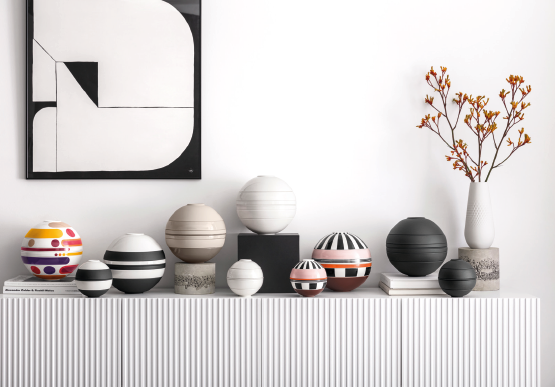
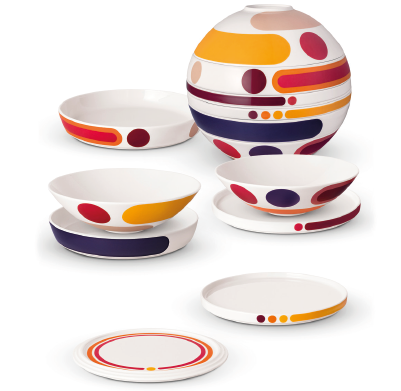
La Boule Miami – Villeroy & Boch’s
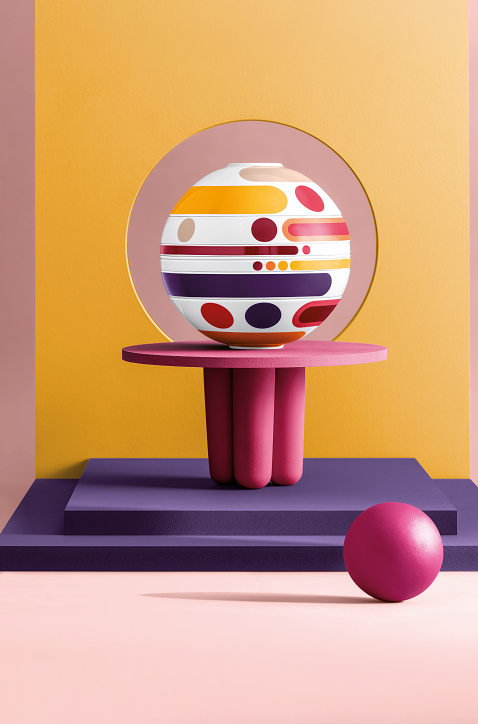
Villeroy & Boch’s La Boule is a reinterpretation of the tableware collection created in 1971 by designer Helen von Boch, which was awarded the Red Dot Award. Conceived as a table set for two, it consists of seven stackable pieces which, once combined, form a compact sphere: two flat plates (24 cm), two deep plates (approx. 500 ml), two bowls (approx. 620 ml) and a serving plate, all made of premium porcelain in Germany. With a total of eight carefully crafted designs for La Boule and five for La Petite Boule, the collection offers a broad palette of colours and a variety of decorations ranging from classic and elegant to modern and bold.
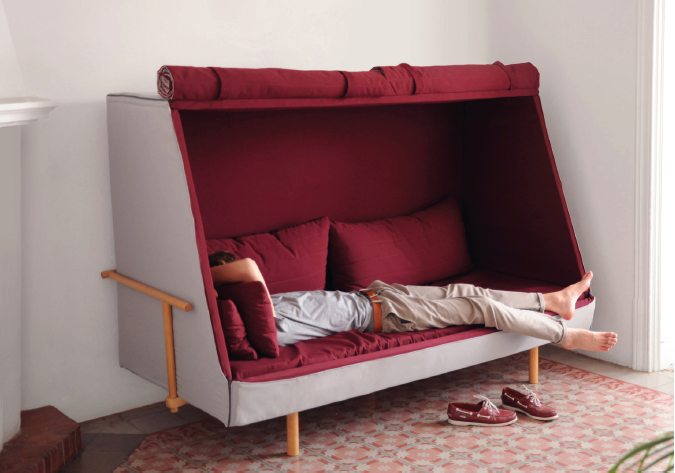
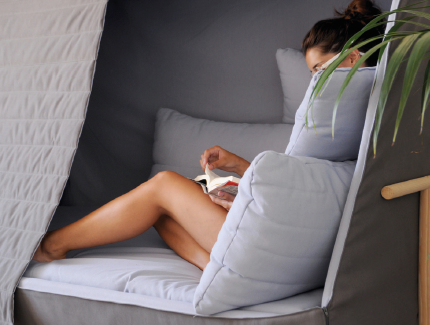
Orwell – Goula/Figuera Studio
Orwell is a piece of furniture halfway between a sofa, a bed and a “cabin.” Named after the author of the famous dystopian novel 1984, the design concept is to recreate a sense of intimacy that can sometimes be lost, even within our own homes. Orwell invites you inside to relive childhood memories, as if entering a “den.” Its heavy quilted curtains block out noise, while its bed-like dimensions allow it to be used either sitting or lying down.
This human-centred approach calls for interdisciplinary training that reaches beyond traditional design skills, drawing on ergonomics, environmental psychology and the social sciences to fully understand how people interact with their surroundings. In doing so, empathic design can bring about projects that are ethical, sustainable and effective, generating experiences that enrich our relationships with ourselves, with others and with the world.
Geo-cultural design: where empathy is not the projection of one’s own world
Empathy is not a universal emotion expressed in the same way everywhere. It is a localised practice, shaped by the symbolic codes, values, and emotional languages of each culture. How, then, does the empathic experience change according to cultural background?
Geo-cultural design offers an answer. It is an approach that considers local cultural and geographic specificities. While not a formal technical definition, it is a perspective that stresses the need to localise design within its environment, taking into account traditions, local resources, climate, and the needs of the community. The aim is to create solutions that are appropriate, sustainable, and meaningful in their specific context.
If empathy is a relational practice, what happens when the “other” belongs to a cultural world different from our own? How can we listen, interpret, and design empathically without imposing our worldview or mistaking empathy for projection?
Empathic Design in a nutshell
- Born from a full understanding of human emotions
- Not the identification with, or projection of, one’s own values onto the user
- Ensures social survival
- Places emotion before aesthetics
- Cannot exist without the human being
- Before it becomes a technique, it is a relationship
- By nature, it is interactive and interdisciplinary
- Participatory, thus facilitating social transformation
- Always integrated into context
- Creates a continuum between exterior and inner life
- Meets and fulfils real, not induced, needs
- Not a phase of design, but its complete expression
- For a project to exist, there must be a process
- Generates physical and mental wellbeing
- Transforms the object into a subject
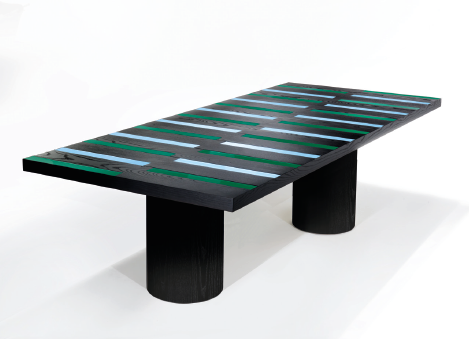
Riga-riga by Pierre Charpin – Zanotta
The Riga-riga collection is defined by a handcrafted inlay pattern, where the choice of materials is intended to translate shapes and colours into sensations. The contrast between ash wood and polished coloured glass elements creates rhythm and three-dimensionality.
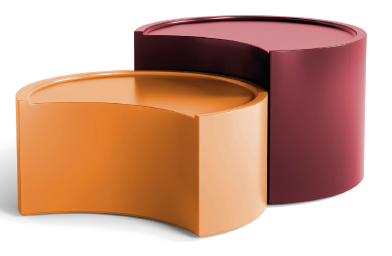
Low Bol by Zaven – Zanotta
The new Low Bol coffee tables are characterised by the same concave form, which allows them to be placed side by side and combined in different ways. Available in two heights, they make it possible to create dynamic and personal configurations within the home.
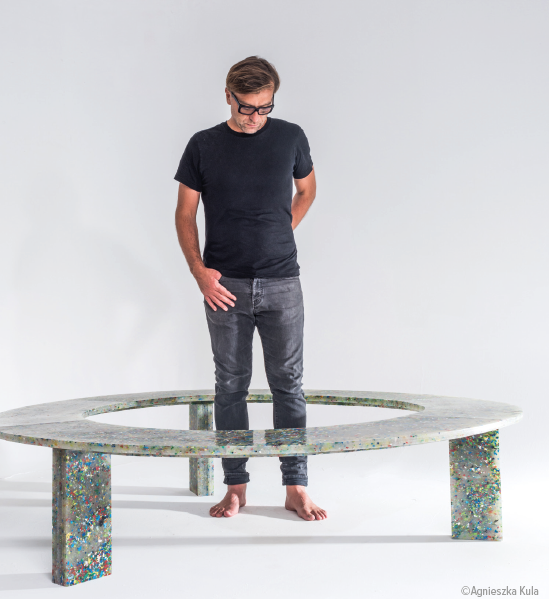
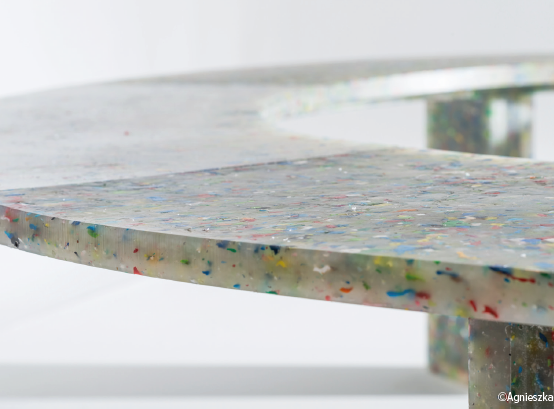
Circula is a seating system designed to provide a symbolic and functional space for dialogue and to encourage direct social interaction. Made of three interlocking modules and with a seat supported by three legs, it was originally commissioned to stimulate social interaction among school-children. It represents a synthesis of style and concept in the circularity of design. Produced in three versions, spruce or pine wood, recycled plastic, and phosphated steel, all from recycled materials. Circula is currently available in three sizes, with diameters of 2600 mm, 3000 mm and 5800 mm, accommodating from 2 to 20 people.
For the designer, the first step is to pay attention to local traditions, weaving cultural and artisanal elements into the process in order to strengthen heritage. This involves using local resources, testing materials, techniques, and skills available on site, while reducing environmental impact and supporting the local economy. It also requires a readiness to collaborate with cultural mediators, to co-design with local communities, and to draw on indigenous materials, symbols, and rituals without exoticising them.
Sometimes it even calls for dismantling one’s own model of empathy. What we see as “warm” or “welcoming” may elsewhere be considered intrusive or cold. The aim is to learn the emotional grammar of others by observing their codes, silences, and gestures.
Empathy across cultures
In many Asian cultures, empathy is often implicit, discreet and indirect, with social harmony and respect for roles taking precedence over overt emotional expression.
Sensitivity is communicated through shared silences, ritual gestures and subtle non-verbal signs of care. In this context, empathic design must remain understated and respectful, attuned to the unspoken.
It should create environments that welcome without imposing, suggest rather than assert, and honour spiritual and communal dimensions.
In Northern European and Anglo-Saxon cultures, empathy is generally sober, contained and rational. Listening is respectful, eye contact is direct but not intrusive, physical proximity is moderate and gestures are minimal, with words serving as the main vehicle. Showing excessive emotion may be seen as inappropriate or intrusive. In this context, empathic design values privacy, discretion, autonomy and quiet comfort, favouring neutral, warm materials and spaces that safeguard emotional boundaries.
In Latin American, Arab and Mediterranean cultures, empathy is often expressed through physical engagement, open emotional sharing and close proximity, which serve as direct vehicles of solidarity and recognition. In these contexts, empathic design builds on this relational energy with warm materials, embracing forms and spaces that encourage social interaction, such as large tables, intimate seating clusters, warm lighting and tactile textures.
Understanding these differences is not an optional intercultural exercise but the foundation of a truly responsible empathic design. Good intentions alone are not enough; it is essential to read emotions as they are culturally encoded and socially shared, while avoiding projections, stereotypes and oversimplifications.
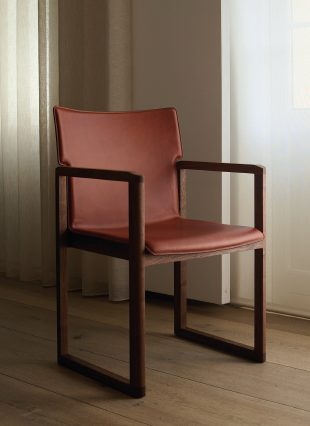
The Chair by Neri & Hu – De La Espada
The walnut frame conveys solidity and a sense of permanence, while the soft leather upholstery, malleable and responsive, invites the body to leave the trace of its transient presence. This chair, seemingly simple, has been designed to be more than just a piece of furniture: it is an invitation to embrace transformation and to engage with change.
From waste to wonder: the emotional side of regeneration
Regenerative design is about much more than recycled materials. It is about creating production cycles that restore value to the ecosystem, respecting and “feeling” the environment. Biofabrication, integrated supply chains, advanced biomaterials, and industrial upcycling are all valid tools, but they must be part of processes that are genuinely circular.
The question is: how can empathy shape and transform regenerative design? How can we see ecological regeneration not only as a technical solution but as an act of care for the environment and for future generations?
Regenerative design goes further than sustainability understood simply as “damage reduction”. Its aim is to restore, nourish, and reactivate life cycles, creating systems that grow stronger over time, both ecologically and socially. When regeneration meets empathy, the environment is no longer an object to be fixed but a subject to relate to.
Empathy extends to soil, trees, water, animals, and living infrastructures. It becomes an ecocentric, interspecies empathy that listens to natural rhythms and treats the Earth as a living organism.
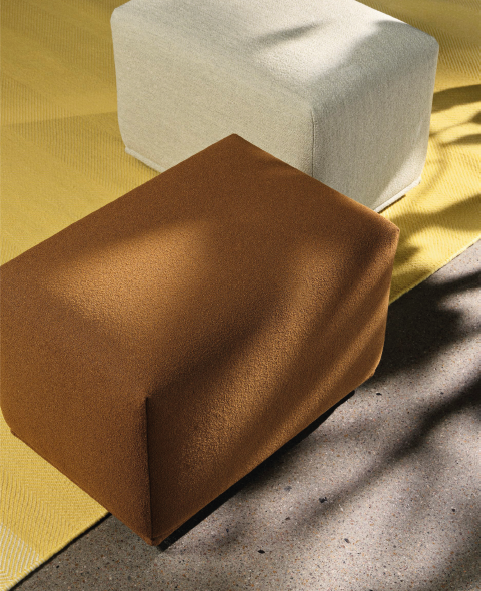
Eco Pouf – Muuto
Versatile and comfortable, it is made with soft padding and a durable fabric cover, resting on elegant legs that give the impression of light floating. It combines Scandinavian simplicity, immediate comfort and a touch of visual lightness, making it perfect as an extra seat, a footrest or even a decorative element in understated and welcoming interiors.
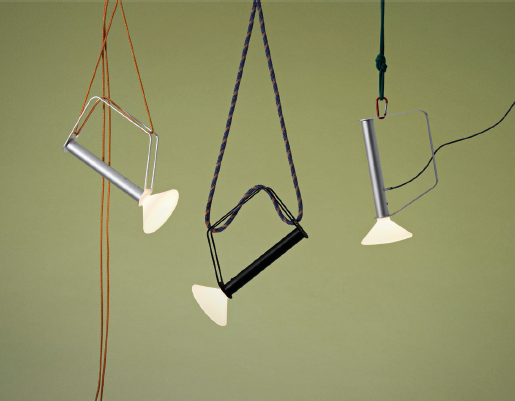
Piton Portable Lamp – Muuto
The Piton lamp is a rechargeable torch that combines out-door aesthetics with urban functionality. Made of anodised extruded aluminium and plastic, it offers three lighting orientations: from above, from below or sideways. It can be hung or carried thanks to its handle. The battery lasts for around six hours at maximum brightness (210 lm) or 13.5 hours at 50 percent intensity.
In this sense, environmental empathy is the key to a regenerative design that is respectful, sensitive, and intuitive. It facilitates not only functionality but also emotional and even spiritual bonds with places. A green roof, for instance, is not only a surface that reduces urban heat; it is a meeting point between architecture and ecosystem, between people and biodiversity. This approach also redefines the role of the designer, who is no longer just the director of circular solutions but a mediator between human and non-human, between present needs and future visions. The questions change from “How much energy does this object consume?” to “What relationship does it create? What emotions does it generate? Does it encourage respect, coexistence, and harmony?”
A truly empathic regenerative design gives voice to the unborn, to future communities, and to landscapes yet to come. It recognises that every material and formal choice leaves both an ecological and an emotional imprint. It listens to environmental trauma and responds not only with technical fixes, but with emotional regeneration that restores the land and our sense of belonging to it.
Designing for the feeling brain
The third strand of empathic design is neurodesign, based on a simple but powerful idea: the human brain is not just a rational processor but an emotional, sensory, adaptive system. It reads every space, form, light, colour, sound, and texture in terms of safety, stress, attraction, calm, or stimulation.
When empathic design meets neuroscience, its scope deepens. It moves beyond observation and listening to address the perceptual and emotional workings of the human mind. Neurodesign provides tools to understand how the brain responds to environmental stimuli, enabling spaces that connect directly with the nervous system through senses as well as reason.
In an age of stress, distraction, and anxiety, designing for cognitive and emotional wellbeing is a cultural act with real impact, reaching the biological level even before the symbolic dimension. Natural light through a window, the curve of a corridor, the texture of a wall, background noise: the brain reads these signals in milliseconds as either threats or comforts.
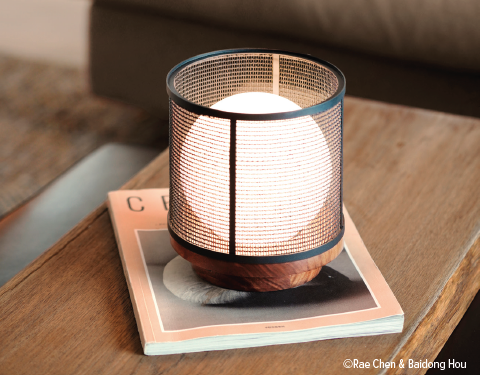
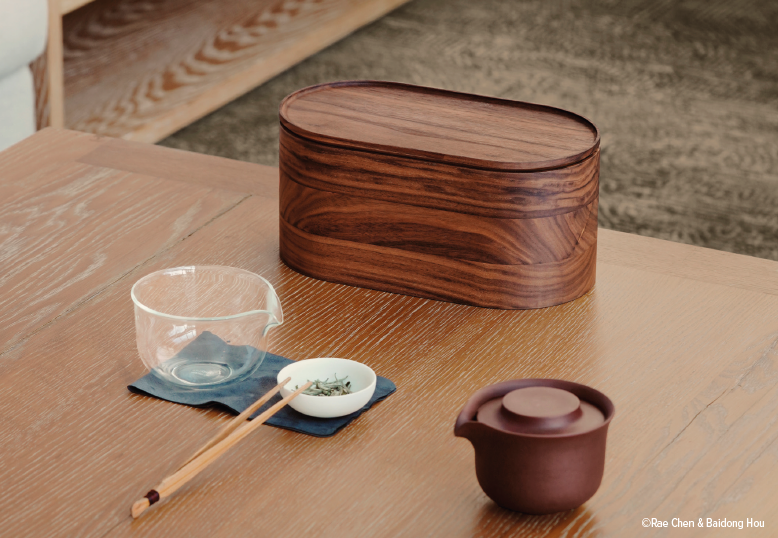
Neri&Hu for NIO Life – Tea Set and Portable Light
This collection is designed to help users adapt naturally to the fast-paced rhythm of modern life, maintaining balance and flexibility within the intensity of the urban lifestyle. It does so through natural materials, fluid forms and direct, intuitive usability.
Empathic design listens to the body before it speaks. It creates environments that lower stress, improve focus, and encourage mental and physical recovery. It also touches the affective dimension: how a space or object can trigger memories, evoke bonds, and build emotional connections.
Neurodesign also embraces neurodiversity. Designing for everyone means recognising different cognitive sensitivities and creating spaces that are legible, accessible, and supportive rather than overwhelming. There is also a deeper form of empathy at play, reaching the nervous system before conscious awareness: spaces designed in tune with biological rhythms, heartbeat, and breath.
Empathy becomes an invisible form of care: design that does not impose but supports; that may go unnoticed, yet is deeply felt. Empathic neurodesign is, ultimately, design that heals the mind through space, a true design of care.
Neurodesign offers tools to understand how the brain reacts to environmental stimuli, enabling design that tunes directly into the nervous system, not only through rationality, but through senses and emotion. It is the first true “design of care”.
How science explains empathy in design
Empathy is a complex neurological mechanism that has helped us survive as a species. It was studied in depth after the discovery of mirror neurons in the 1990s, which activate both when we perform an action and when we see someone else perform it.
At its core, empathy is about human connection. It is not just “putting yourself in someone else’s shoes” but entering into a genuine and profound relationship with others, and even with objects, as part of everyday life. In this sense, empathy is a vital tool for social survival.
What does this mean for design? It means the chance to create objects or spaces that people do not only use but also care about. Don Norman, one of the pioneers of UX design, explains in Emotional Design that every interaction with a product happens at three levels of empathic processing:
Visceral level, triggering an immediate, instinctive response
Behavioural level, relating to the practical use and functionality
Reflective level, tied to a deeper meaning
It is not enough to understand what users do (behavioural level); we must understand what moves them emotionally (visceral level) and what gives meaning to their experience (reflective level).
Norman writes:
“Today, we cognitive science scholars understand that emotion is a necessary component of life, as it influences the way we feel, behave, and think. In fact, emotion makes us more intelligent […] Without emotion, our ability to make decisions would be compromised […] One way emotions work is through chemical mediators that affect specific centres of the brain, altering perception, decision-making ability, and behaviour […] When we are relaxed and happy, thinking processes expand, gaining creativity and imagination […] Products can be more than the sum of their functions, their true value lies in satisfaction, because one of the most important human needs is to establish our self-image and our place in the world.”
Another key reference is the paper “A framework for empathy in design: stepping into and out of the user’s life” (Journal of Engineering Design, 2009). It redefines empathy from being an innate personal trait to an active, structured process that any designer can develop and apply systematically. The authors outline three stages, research, communication, and ideation, to show how designers can engage with users’ experiences. Their work demonstrates that empathy in design is neither a gift nor a simple skill. It is a competence that must be cultivated, enabling designers to look beyond the obvious and create solutions that genuinely improve people’s lives and benefit society as a whole.
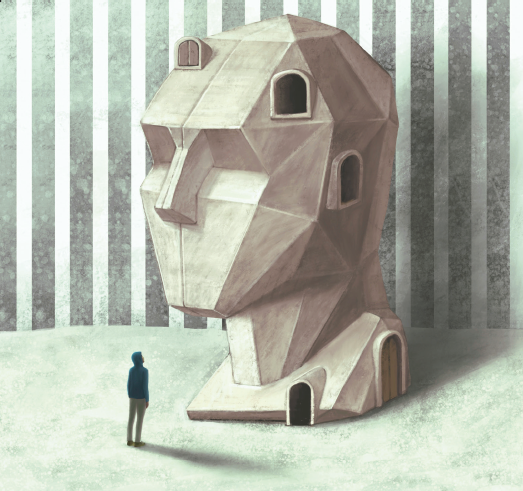
The home that speaks to the senses
Home feels truly welcoming when, the moment we step inside, we sense its beauty and comfort. And how does this feeling reach us? Through our senses. Increasingly, research in perceptual psychology confirms just how deeply they shape our experience.
Beyond sight, sound and scent, touch plays a greater role than we often realise. This is why designers pay close attention to textures and materials. Multisensory design helps us absorb information, explore our surroundings, and meet our most basic needs.
Natural wood, felt and suede, soft, warm and tactile, create comfort and a sense of safety. In contrast, cool and smooth materials like steel or glass can suggest distance, discipline and rationality, making them well suited to spaces where focus or professionalism is required.
Certain materials also stir personal or shared memories, evoking stories, landscapes or traditions: porcelain, bamboo, jade, terracotta, linen. Natural, irregular textures offer visual richness and stimulate the limbic system. Overly artificial or flawless surfaces may feel neutral or even cold. By contrast, imperfections speak of care and authenticity, striking deep emotional chords.
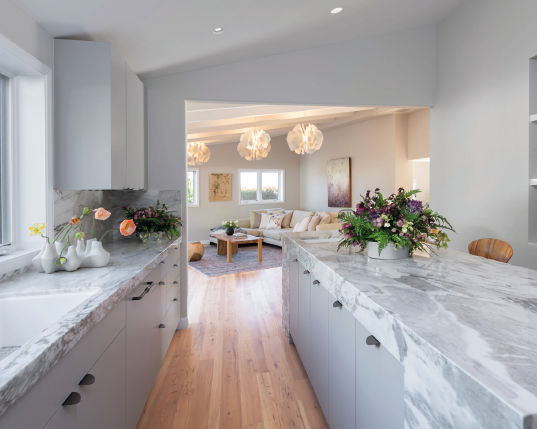
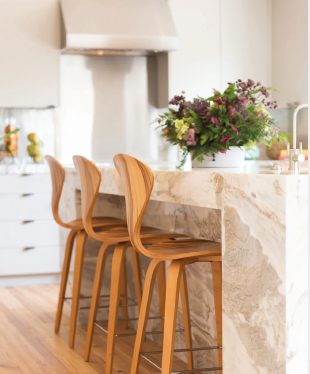
Designing for the Human Experience: A Compassionate Approach. The kitchen is often the heart of the home, which is why the design here is conceived as a spatial flow that encourages intuitive movement. Natural materials such as stone and wood from sustainably managed forests have been selected. Embracing the paradigm of neurodiversity, the furnishings incorporate solutions such as soft-closing drawers and acoustically designed walls that reduce sound intensity. Ergonomic storage solutions promote order; the lighting system is layered and adjustable, while biophilic design elements help regulate mood and energy. Finally, the spaces for both adults and children are as personalised as possible, with views to the outdoors.
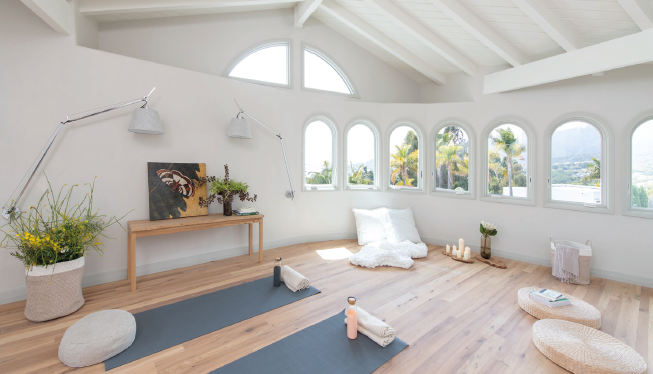
Lines shape the emotional tone of a space too:
- Horizontal lines suggest calm, stability and rest
- Vertical lines evoke authority, aspiration and growth
- Diagonals and obliques convey dynamism, tension and movement
- Broken or zigzag lines express nervous energy and fragmentation
- Curves are the most comforting, signalling softness, approachability and warmth. Even infants prefer curves, hinting at a primal link between curvature, safety and comfort.
Geometry adds another layer.
Balanced tensions arise when dynamism meets complexity. Circular or rounded forms suggest harmony, completeness, protection, relaxation and trust. Sharp, angular forms suggest precision, power and logic, but may also feel cold or demanding.
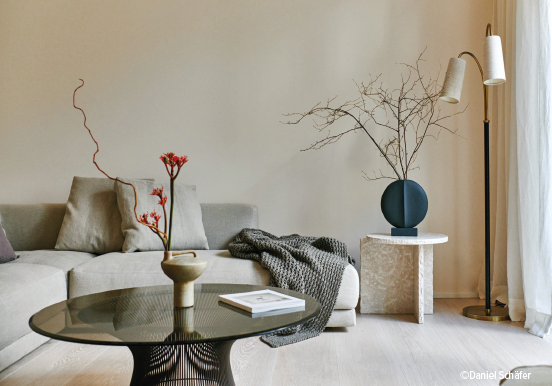
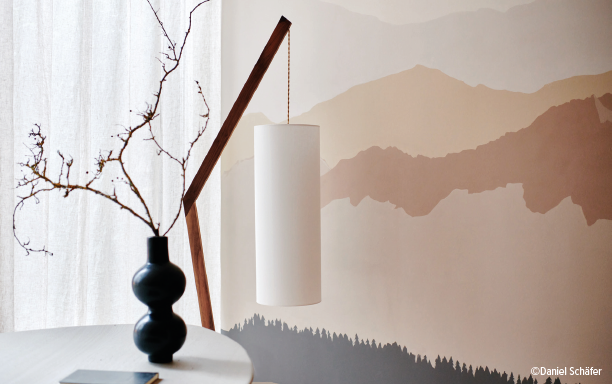
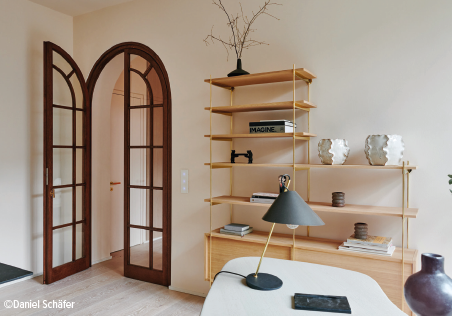
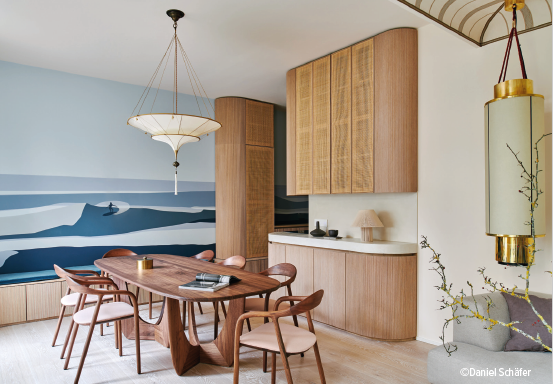
Carlo Berlin – A Guest Lodge
The Guest Lodge was conceived to bring back, through space, the unique emotions of holidays. It is inspired by the family’s most cherished childhood memories: the Swiss Alps and the waves of the Spanish Atlantic coast. Two large murals by artist Anna Talens welcome guests with symbolic landscapes of mountain and sea, while curves and natural materials such as wicker in the kitchen, Moroccan Tadelakt in the bathrooms and a cave-shaped shower continue the narrative with tactile qualities and scents borrowed from nature. Every space is designed to relax and surprise, from hand-upholstered furnishings in Parisian fabrics to monolithic natural stone basins by Salvatori, and sophisticated lighting.
Some materials awaken personal or shared memories, evoking gestures, stories, landscapes and cycles of nature, from porcelain and bamboo to jade, terracotta and linen.
Copyright © Homa 2026
All rights reserved