












Listen to the audio version of this article. Duration: 5 minutes.
How semiotics helps design speak through symbols, meanings, and narratives
Objects are not merely goods; they have a life of their own. It is the designer’s task to communicate their voice, meaning, and value, making design both a creative and strategic asset, as it serves as a privileged channel for empathy.
If we recognise that objects have a presence, a value, a meaning, and therefore a kind of life, semiotics amplifies the relationship between creativity and functionality, positioning itself as a privileged channel for empathy.
Every design object is not just functional but also a signifier, something that communicates and carries meaning. This is where semiotics comes in, the branch of philosophy that helps us understand what an object says and how it says it, as well as why its meaning can be perceived differently by each of us. In design, semiotics is the study of signs, meanings, and communication within objects and spaces. In other words, it examines how design “speaks,” what messages it conveys through shapes, materials, colours, and visual languages, and how these messages are interpreted across different cultural contexts.
Understanding semiotics enables designers to create objects that are readable and understandable, to design experiences consistent with the intended meaning, to avoid cultural or interpretative ambiguities, and to control the visual communication of a project. It also helps answer questions such as: What additional meaning does a designer’s intervention give to an object? How do design objects shape the organisation of public and private spaces?
If we recognise that objects possess presence, value, and meaning, and in this sense a kind of life, semiotics strengthens the link between creativity and functionality, establishing itself as a privileged channel for empathy. According to the classical theory of Charles Sanders Peirce and Roland Barthes, semiotics operates on three levels. The first is form, understood as the relationship between proportions, symmetries, rhythm, and geometries.
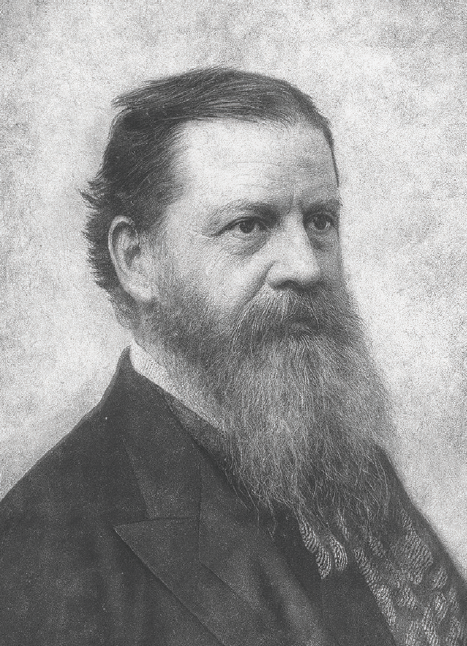

Charles Sanders Peirce and Roland Barthes — pioneers of semiotics, from the triadic model of signs to the analysis of denotation, connotation and myth.
A round table, for instance, symbolises unity, harmony, and family. A minimalist chair may communicate order, control, and restraint in the West, while in the East it can also be read as a sign of humility, harmony, or a return to the essential.
The second level concerns the link between a sign and what it signifies. For instance, bright red may suggest passion, danger, or warmth depending on the context, but it can also symbolise happiness and good fortune. A red velvet sofa with brass details might evoke status and prosperity.
The third level is interpretation, which is shaped by culture, experience, and context. For example, a recycling symbol is seen as an ecological gesture in Europe and the United States but may not carry the same meaning elsewhere. Similarly, a natural bamboo modular storage unit with clean, light lines may feel perfectly at home in an Asian setting.
Semiotics shows us that objects are not just things, commodities, or tools for use; they carry cultural and symbolic value. As Barthes wrote in Mythologies, the Citroën DS was more than a car: its wind-defying curves embodied the myth of technology set against Nature.
And consider his prescient insight into plastic: its potential for endless reuse and its capacity to make objects easy to produce and accessible to all, ushering in a form of democratisation that encouraged products to be created for the sheer pleasure of use. This is the same path Apple later followed, moving beyond grey computers to suggest a break from the uniformity of the average consumer.
Semiotics is an essential tool in every designer’s “toolbox,” because each product also requires the design of its narrative and its social impact. If an object carries meaning, then design becomes a relationship, effective only when it stems from a correct reading of signs.
In this sense, semiotics is a strategic resource, exploring how an object takes on not only a structural or functional role but also a symbolic one. This perspective fits closely with the empathic approach, where the focus is not just on the finished product but on the process of its creation.
How design speaks today
Today, the application of semiotics to design takes a cross-disciplinary approach, intersecting with fields such as UX design, visual anthropology, ethnography and intercultural marketing. By uncovering the deeply human foundation of these disciplines, semiotics helps designers understand how visual signs, shapes, materials and colours are read, interpreted and experienced across different cultures.
A key example is the design of digital interfaces (UI/UX). In Western contexts such as Europe and the United States, the ideal of visual clarity is expressed through minimalist layouts, white space, intuitive icons and sequential navigation. In many East Asian countries, by contrast, interfaces tend to be denser and more information-rich, with abundant text, layered symbols, bright colours and animations. This reflects a different perceptual grammar rooted in the centrality of writing and a culture of semantic abundance.
Knowing semiotics enables the designer to control a project’s visual communication, create objects that are easy to read and understand, design experiences that align with the intended meaning, and avoid cultural or interpretative ambiguities.
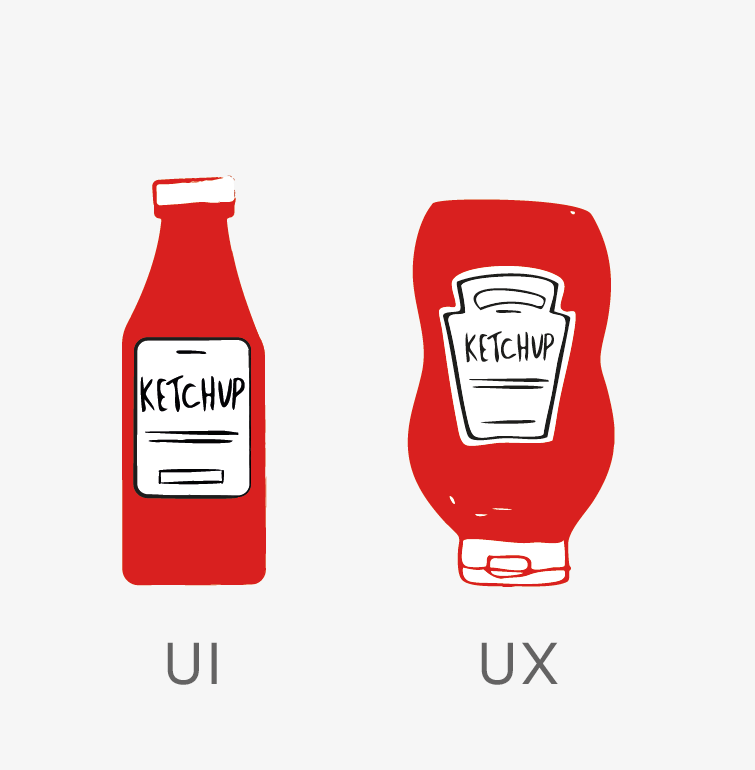
Looks nice, but does it work? Without user experience, design speaks only of aesthetics and function. With it, objects and interfaces gain meaning, empathy, and resonance.
The same design gesture therefore carries different meanings depending on the cultural context in which it is interpreted: what appears “empty” and legible in the West may seem “bare” or disorienting in Asia, and vice versa. These are not “aesthetic preferences” but actual grammars of meaning.
Another example is the Samsung Galaxy Z Flip, whose foldable form recalls the clamshell phones of the 1990s. In Asia, it is seen as a futuristic revival of a familiar design, while in the West it is more often regarded as a novelty. In Chinese and many other East Asian cultures, the semiotics of design is layered and narrative. Decorative motifs, materials, colours and spatial arrangements carry deep, shared symbolic value: they are not just aesthetic choices but representations of the world, the family and cosmic harmony.
The use of red, gold, circles, calligraphic characters, dragons or plum blossoms is never neutral. Each element carries memory and symbolic meaning, which must be respected and understood, even in contemporary design. The concept of “emptiness” is also seen as positive and dynamic, representing a potential space for welcome and transformation.
In the West, particularly in European and North American design, semiotics tends to emphasise the universality of signs, clarity of message, and simplified communication. Dominant codes include official visual systems, standardised iconography, clean lines, and functional symmetries. Forms are often created to be self-explanatory and to work independently, an approach rooted in modernist, rational, and systemic visions of design, influenced by structuralist thinking and the avant-garde movements of the 20th century.
In countries such as India, and across African and Latin American contexts, the semiotics of design is often fluid, composite, and hybrid. Traditional codes – religious, ethnic, or ritual – coexist with globalised languages of technology, branding, and digital media. The result is a syncretic and visually intense aesthetic, where design becomes both a marker of identity and a tool for political storytelling.
“For the science that studies processes of signification, what matters are the relationships […] it conceives of design as the act of shaping a network of relationships that goes beyond the product itself, even if influenced by it […] To understand contemporary society, to reconstruct its practical functioning, and above all the social and relational system that makes it work, we cannot overlook objects. Or rather, as we would say, artefacts, and thus design itself. This is because the social fabric is made up not only of individuals, human beings who interact on the basis of their presumed nature, but also of artefacts, which create networks no less complex and intricate than the first. Alongside intersubjectivity, in other words, we must also consider interobjectivity, conceiving of societies as societies of objects as well as subjects. Above all, we must look at how humans and non-humans interact, and at the consequences these relationships have on both.”
—Dario Mangano, Stories of Semiotics and Design, in Ais/Design Journal
When objects speak

Vitra “Panton Chair“ (1960):
An icon of modernist design that embodies freedom, experimentation, and the optimism of the 1960s. It has become a cultural symbol, firmly embedded in the Western design lexicon.
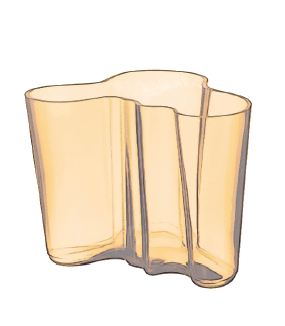
Aalto Vase by Iittala (1936):
Its form was inspired by Finnish lakes, making it a cultural symbol rooted in the landscape. It evokes nature, organic forms, and Nordic identity, and has come to function as a national myth abroad.

“Rompitratta“ switch (1968):
Castiglioni brothers changed the way switches were conceived.An example of “overcoding” in Eco’s terms: a simple, familiar object re-designed with new technical and semiotic functions.
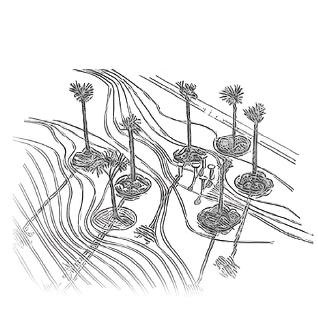
“Superkilen“ Park, Copenhagen:
Every item of urban furniture, from benches to signs and fountains, is imported from a country represented within the local community. The park becomes a multicultural visual atlas .
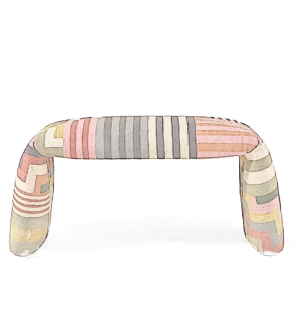
Patterns inspired by Berber, Mapuche, and nomadic Asian iconography. Each rug is a layered semiotic surface, preserving and updating ancestral symbolic codes.
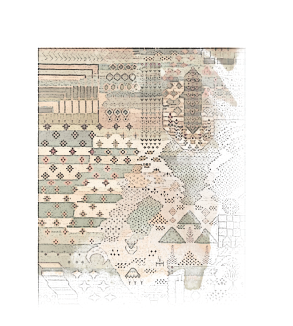
Each rug tells a story; the patterns are not abstract decorations but symbolic signs, rooted in Indian traditions and cultural narratives.
Copyright © Homa 2026
All rights reserved