












Listen to the audio version of this article. Duration: 8 minutes.
The next frontier in design isn’t in our pocket, it’s on our body.

Wearable devices are redefining the concept of personal and professional space, adapting to the increasingly hybrid environments in which we move. This is because people experience mobility both outside and inside the home, and need daily life tools that are as flexible and connected as possible.
We are used to thinking of smartphones as an extension of our arms, but how long will it take us to get used to wearing devices that perform our smartphone’s functions in an even more integrated and comfortable way… almost as if they were an extension of our brains too? Hold on… that integration has already happened! Integration is, in fact, the key word for understanding the central role wearables now play in contemporary habits. They are the result of increasingly powerful hardware being built into ever smaller devices. Smartwatches, smartbands, fitness trackers, smart glasses, hearables and smart rings, all synchronised with smartphones via Bluetooth or Wi-FI, offer an extraordinary range of on-body tech versatility. We even now have garments with integrated sensors to monitor biometric and environmental data.
Wearable devices are therefore redefining the idea of personal and professional space, adapting to the environments in which we live and move. The blending of hybrid spaces and mobility is fuelling the adoption of this technology, making the boundary between work, home and leisure ever more fluid. Wearables are the response for those who live mobility as the hallmark of their everyday life, both inside and outside the home, because design is delivering devices that are ever less visible and ever more personalised. In a word: integrated with our body, our habits and our needs.
Minimalist standard
The evolution of wearables has followed the minimalist trend, where discretion becomes a guiding principle. First, miniature components make devices less bulky and more comfortable to wear, while collaboration between engineers and designers ensures that advanced functionality pairs with refined aesthetics.
Some now speak of a “technology of beauty,” where the surface of the body becomes an interactive platform, enabling interaction with the digital world without interfering with daily activities. Designers are aiming to develop more intuitive interfaces that enable seamless and natural interaction with technology, always highly personalised. Environmental sustainability is also a key focus, with ecofriendly materials and ethical production processes.
Artificial intelligence on your skin
That AI is no longer just a tool but an active agent is demonstrated by the new devices that already hit the market, where design and aesthetics are now inseparable. AI is transforming wearable devices into increasingly smart systems that can analyse data in real time, learn from user behaviour and provide personalised feedback.
For instance, Bee Pioneer by Bee AI is designed to act exactly like a personal assistant. Worn like a bracelet, it uses microphones to continuously listen to the user’s conversations, turning them into transcriptions, summaries and personalized reminders, available in 40 languages.
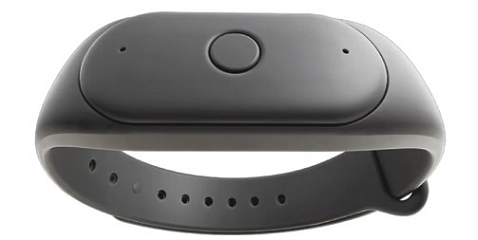
https://bee.computer/
Devices like these represent current trends:
- Predictive analysis and advanced monitoring, as wearables now go beyond simply collecting biometric data (like heart rate, blood oxygen or steps) by using advanced algorithms to predict potential health issues.
- Voice assistants and human-machine interaction, with smartwatches, glasses and earbuds incorporating increasingly sophisticated voice assistants like Siri, Alexa and Google Assistant.
- AI-powered wearables for fitness and rehabilitation, able to analyse recovery and suggest optimal training plans.
- Advanced sensors and deep learning, using machine learning to process biological signals in real time.
Before Wearables: Aspen Movie Map and the Birth of Spatial Experience
Long before wearable tech wrapped the body in sensors and screens, a team at MIT imagined a different kind of immersion, one that allowed users to “wear” a city. In 1977, the Aspen Movie Map became one of the earliest experiments in simulating movement through a real-world environment. Developed at MIT, the interface digitally recreated the entire town of Aspen, Colorado, allowing users to navigate it freely, street by street and season by season.
At the time, there were no headsets, no GPS, no cloud rendering. Yet the experience was remarkably physical. Movement occurred in ten-foot increments, controlled via a touchscreen that let users adjust both speed and viewing angle. A city became an interface, and the interface became a kind of wearable shell.
Aspen wasn’t just a precursor to Google Street View. It was the first public prototype of what wearable designers now call “embodied computing”, digital experiences that respond to a body’s presence, orientation and intention as it moves through space. What we now wrap around our wrists, faces or chests was, back then, embedded in the fabric of a city.
The logic has not changed, only the scale.

Integrated health and wellbeing
Wearables today offer multiple functions that contribute to physical wellness. Sleep monitoring is one such function: tracking sleep phases and quality can help detect disorders and improve rest habits. Physical activity tracking is becoming more detailed: from calories burned to distance covered and heart rate. Smart rings that monitor heart rate are even active at rest.
Some wearables also measure blood oxygen levels, useful for monitoring saturation during sleep or for respiratory conditions. Another essential function is stress detection via the analysis of heart rate variability.
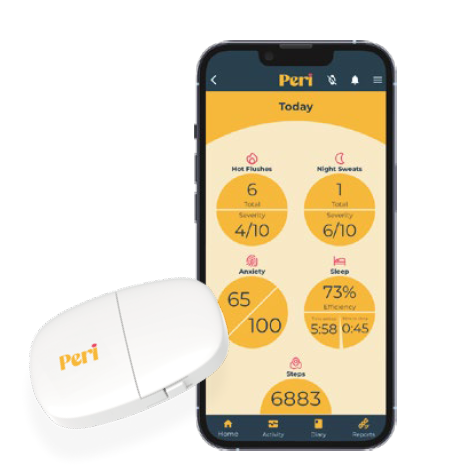
And for women, new wearables are emerging that help track the menstrual cycle, providing predictions and fertile window alerts, and more. Set to launch in mid- 2025, Peri is a wearable designed to monitor and manage menopause early symptoms. Created by the startup identifyHer, it is worn on the torso, where hot flashes and night sweats are strongest. Its mission is to bring clarity to women’s reproductive health, an area long underrepresented in medical research.
New research is opening interesting possibilities for the future of wearables, including devices that may function without batteries. A new system called Power-over-Skin uses the body’s natural radiofrequency energy, meaning it does not require direct skin contact. The human body is efficient at producing radio waves at 40 MHz, which can be captured by a receiver and used to power devices without invasive methods.
Early experiments have shown that this method works with Bluetooth rings, suggesting that the best smart rings could adopt this technology sooner than expected.
Meanwhile, the Boston-based company Neurable has announced the European launch of its smart headphones, MW75 Neuro. The device uses electroencephalography and artificial intelligence to track concentration levels by reading brain waves. Data is sent to a mobile app designed to help users manage workload, reduce burnout and improve daily performance, offering insights into cognitive health and suggesting breaks when needed.
A worldwide boom in sales
In 2024, the global market for wearable devices saw a significant growth. According to the International Data Corporation (IDC), global shipments of wearables increased by 8.8 percent in the first quarter of 2024 compared to the previous year, reaching 113.1 million units. On a yearly basis, global sales of wearable devices in 2024 were estimated at around 538 million units, a 6.1 percent increase from the previous year.
However, not all wearable categories followed the same trend. The smartwatch market in particular shrank by 7 percent in 2024 compared to the previous year, the first decline in the history of this sector. Despite this drop, Apple maintained its leadership in the smartwatch market, accounting for 22 percent of global shipments in 2024, although it saw a 19 percent decrease in shipments compared to 2023.
Conversely, other segments of the wearables market showed positive growth. For example, hearables represented over 60 percent of the market in 2024, with a projected increase of 10.2 percent, reaching 342 million units sold. Additionally, devices such as screenless smart rings and smart glasses recorded significant growth in 2024, with projected sales of 1.7 million and 1.8 million units respectively, representing increases of 88.4 percent and 73.1 percent.
OMI
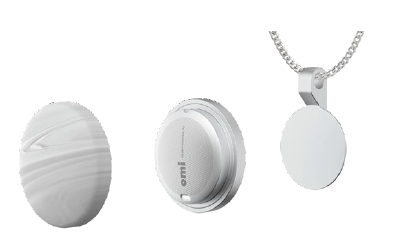
OMI is a wearable device designed to support personal productivity and wellbeing through AI. It can be worn in two ways: like a pendant around the neck or applied to the side of the head, near the temple. Thanks to a built-in EEG (electroencephalogram) sensor, OMI can detect the user’s brain activity and analyse their mental state. This information is used by the app to suggest helpful actions, such as creating a to-do list, interacting with a virtual persona or summarising a conversation. The device is designed to function without direct input. It listens passively, collects contextual data and activates when it senses the user’s attention or need. It aims to reduce cognitive load and offer discreet support in daily life, without interrupting it.
omi.me

Neurable Listening to the Mind
Developed in collaboration with Master & Dynamic, the MW75 Neuro is the first consumer-grade brain– computer interface (BCI) headphone. Featuring twelve integrated EEG sensors, it monitors brain activity in real time to track focus and detect signs of mental fatigue, prompting timely breaks before burnout sets in.
Despite its advanced neurotechnology, the design remains elegant and understated. Anodized aluminium, tempered glass and lambskin leather reflect Master & Dynamic’s signature craftsmanship.

Set to launch in Fall 2024, the MW75 Neuro blends neuroscience with high-fidelity audio, redefining wearable design as both intelligent and introspective.
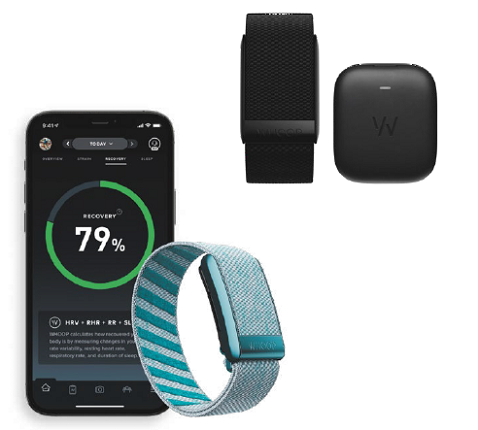
Whoop 4.0
WHOOP 4.0 is a screenless wearable designed for biometric monitoring. It can be worn 24 hours a day and tracks vital signs including heart rate, blood oxygen levels, skin temperature and heart rate variability. Thanks to continuous wireless charging, the device never needs to be removed, ensuring an uninterrupted stream of data. The WHOOP app then uses this data to provide personalised feedback on recovery, sleep and physical strain. With its minimalist design and medical-grade precision, WHOOP 4.0 is widely used by athletes and professionals seeking to optimize performance and recovery.
Neural Sleeve
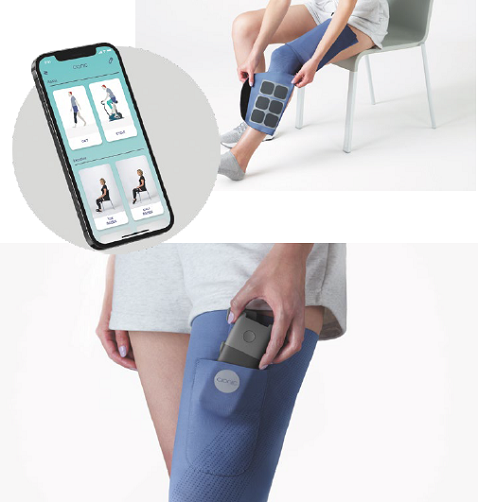
Neural Sleeve is a wearable device created by the startup Cionic in collaboration with designer Yves Béhar. It is worn on the leg like a soft sleeve and is designed to assist people with neurological or mobility conditions. The sleeve combines motion sensors and Functional Electrical Stimulation (FES) to support walking and movement in real time.
The device analyses the user’s gait, identifies where support is needed and stimulates specific muscle groups accordingly. Its goal is to enhance stability, strength and coordination without hindering natural movement, providing an unobtrusive, wearable rehabilitation system.
Lumia Health
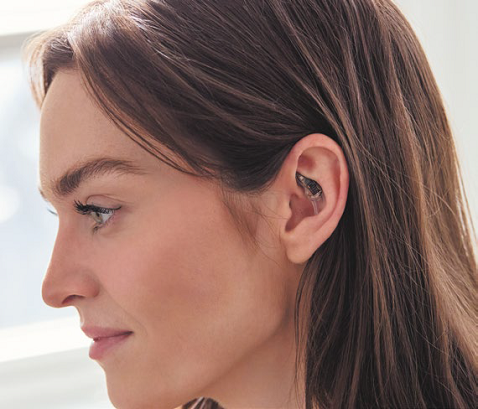
Lumia is a wearable earpiece designed to monitor cerebral blood flow. Developed to support people living with dysautonomia (a condition affecting involuntary bodily functions), long COVID and other chronic conditions, it provides data that helps users understand their symptoms and patterns. The device is linked to an app that visualises this data and provides insights into physiological responses, particularly during episodes of brain fog or fatigue. Lumia offers a non-invasive way to gain greater awareness of one’s cognitive health, helping users manage their condition more effectively.
Aktiia
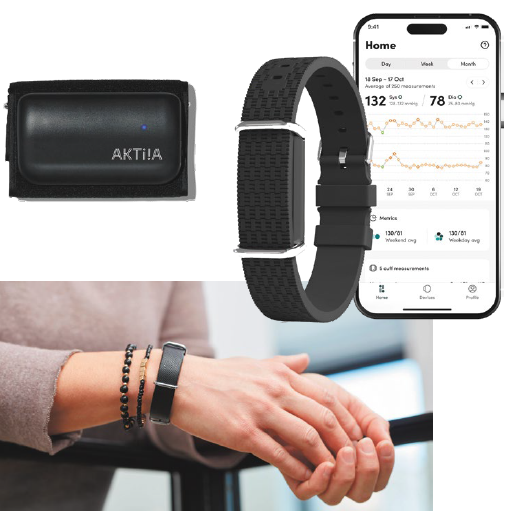
Aktiia is a wrist-worn device for continuous blood pressure monitoring. Unlike traditional systems, it does not require inflatable cuffs or active measurement by the user. It works passively, day and night, providing accurate data that can be shared with healthcare providers.
It is CE-certified and already used by more than 100,000 people in Europe. The Aktiia system is composed of a bracelet and a connected app that displays trends and alerts the user when readings are outside normal ranges, combining medical reliability with comfort and discretion.
Copyright © Homa 2026
All rights reserved