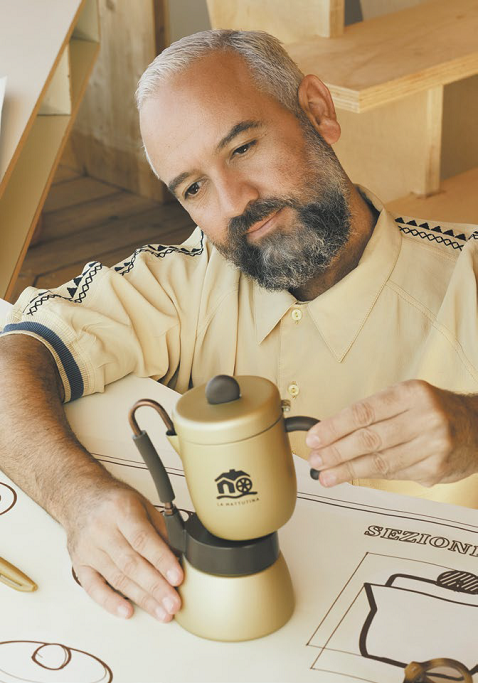












Listen to the audio version of this article. Duration: 8 minutes.
Design Magazine meets Antonio Aricò, an Italian designer renowned for merging traditional craftsmanship with modern design sensibilities. In this conversation, Aricò reflects on his educational background, the emotional narratives embedded in his creations, and the profound influence of his Calabrian roots. He discusses collaborations with world-known brands, his perspective on sustainability as a cultural concept, and his role in directing the Materia Independent Design Festival. Aricò emphasises the importance of storytelling, human connection, and the balance between heritage and innovation in his work.
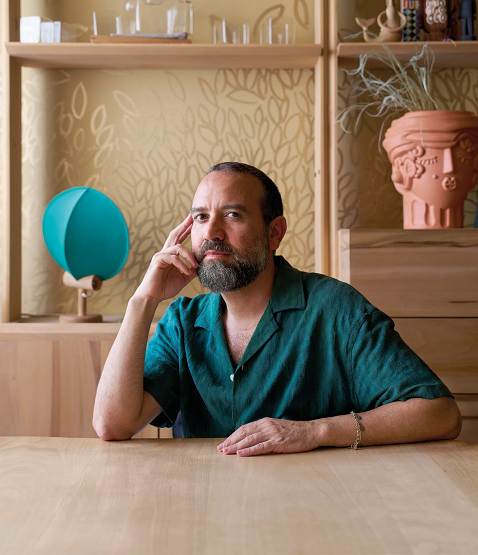
Your work merges traditional craftsmanship with contemporary design. What drew you to this hybrid space, and how do you maintain the balance between the two worlds?
I studied industrial design at the Politecnico di Milano, where functionality and a modern, rational approach were central. We were taught to focus on the user, on ergonomics, on solving problems through clarity and precision. But as I continued my studies, I began to realise that true innovation sometimes requires a reversal of these teachings, a rethinking of what you know, turning things upside down. I think that’s the oldest form of innovation. It’s not about discarding knowledge but about transforming it with a different lens.
You’ve often spoken about the poetic and emotional dimension of design. Can a chair really tell a story or hold a memory?
Emotion is the heart of what I call “humanist” design, a vision of design as a cultural, emotional, even psychological act. We often think of objects as cold or inert, but I see them as companions. A chair can hold a memory, yes. It can evoke comfort, sadness, joy, irony. Maybe, someone sits down on a chair and feels something, even if they don’t know how to describe it. That moment, that feeling, is what interests me most. In my view, the chair is not just a functional item. It’s a character that inhabits the room with us, sharing our space and perhaps even our mood.
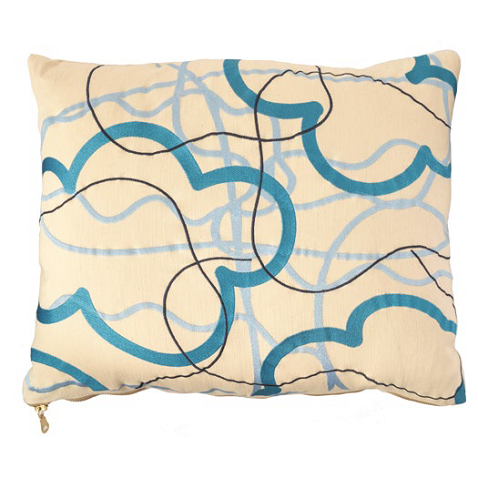
Luisa Via Roma: Nuvola Cushion
ph: Alfredo Muscatello
“It’s not about discarding knowledge but about transforming it with a different lens: that’s the oldest form of innovation”
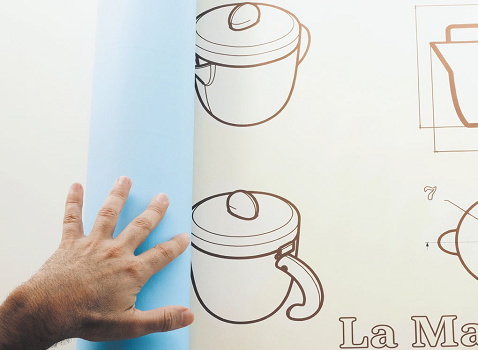
Barilla Group: La mattutina Collection
Your “Back Home” collection marked a turning point in your journey. What did returning to your roots in Calabria teach you, as a designer and as a person?
Back Home was a very important project for me, because it wasn’t just about going back to a physical place. It was about reconnecting with values, with a way of thinking, of living, of being in the world. Going back to Calabria taught me to preserve a certain spontaneity in my work, the same spontaneity I admired in the great design masters I studied in school. That genuine, unfiltered approach is what I try to keep alive in everything I do.
Design today is often closely linked to trends, to rapid changes, to the pressure of being current. But I’ve come to believe that the strongest ideas come from deeper, more primal needs. Calabria is a place where nature is still dominant, where life moves at a different pace. It’s a land of contradictions, but also of freedom. And for a designer, that freedom, the freedom to dream, to experiment, to fail, is essential.
Back Home was the purest, most personal moment of my career. It showed me that even if you can’t truly “go back,” you can carry your roots with you, your family, your upbringing, your identity, and let them guide you, without fear of contradiction.
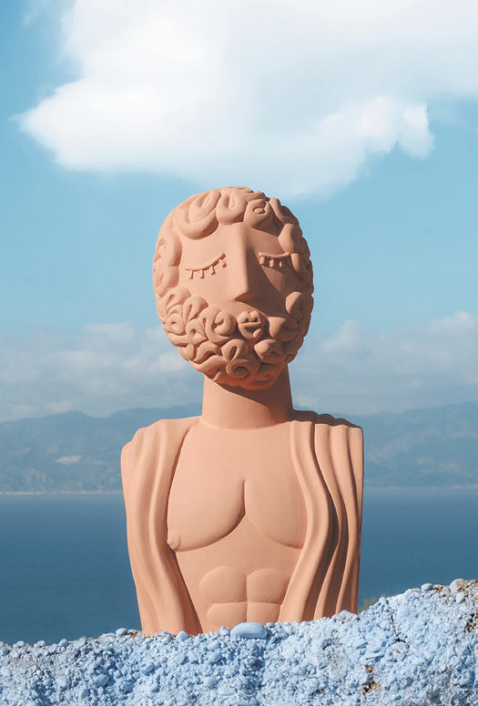
Seletti: Magna Graecia Man Bust
ph: Alfredo Muscatello
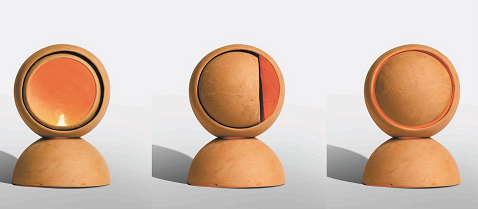
Materia Design Festival: interpretation of the Eclisse lamp by Vico Magistretti, which becomes a terracotta candle holder. ph: Alfredo Muscatello
“The most important thing when working across generations is to create curiosity.”
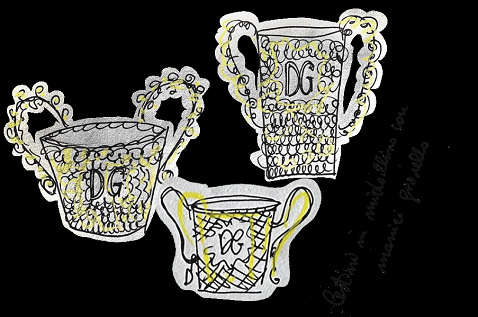
Dolce & Gabbana:
Jewel baskets in wicker
Many of your projects involve your grandfather and other artisans from your region. How does the creative process change when working across generations?
My grandfather played a fundamental role in my journey. He was a carpenter and model maker, someone who worked with his hands his entire life. When I started out, I instinctively brought him into my projects. He became the bridge between the designer and the artisan, between the idea and the object. The same happened with other artisans in my region. At the beginning, they stood at the back. I was the young designer who brought ideas, and they were the ones who made them come to life.
I soon understood that their role wasn’t just technical. It was creative. Their knowledge, their pace, their sensitivity, all of it shaped the result. So I decided to make them visible, to tell their story, to show that the artisan is not just a pair of hands, but a mind, a presence. Today, the figure of the craftsman is more central, and people are finally starting to recognise their value.
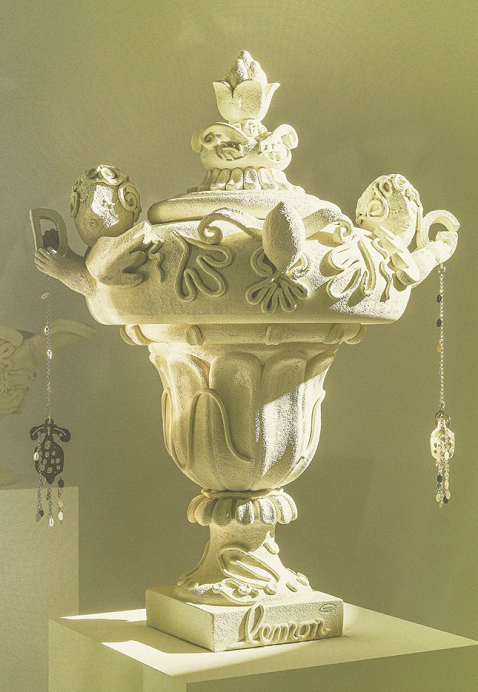
Dolce & Gabbana: Limonaia collection
ph: Mattia Aquila
From teapots to terracotta busts, your objects always seem to evoke myths, archetypes and domestic rituals. Where does the story begin, and how does it take form?
It might start with a memory, a gesture, a scene from a film, or something I’ve seen in real life. I almost never begin by thinking about the object as a fixed form. I think of it as something that moves, that acts, that tells a story. My objects are like characters, and like all characters they have a posture, a presence, a personality.
For example, in many of my pieces you can find elements that resemble a leg, an arm, a hand, a nose. These aren’t literal, they’re subtle. But they give a sense of familiarity, as if the object were alive. I like to create things that feel as though they’ve always existed, like something ancient or archetypal. Yet I also want people to look at them and feel that they’re seeing something new.
That tension between recognition and surprise is very important to me. I work with archetypes not because I want to imitate the past, but because I want to connect with something deeper. The rituals, the myths, the gestures we all repeat without being fully aware. Those are the things I want to bring into my work.
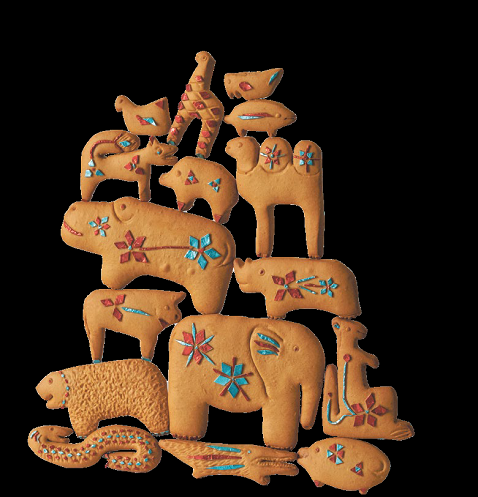
Materia Design Festival: Enzo Mari’s 16 Animals in the “Mostaccioli” version.
ph: Alfredo Muscatello
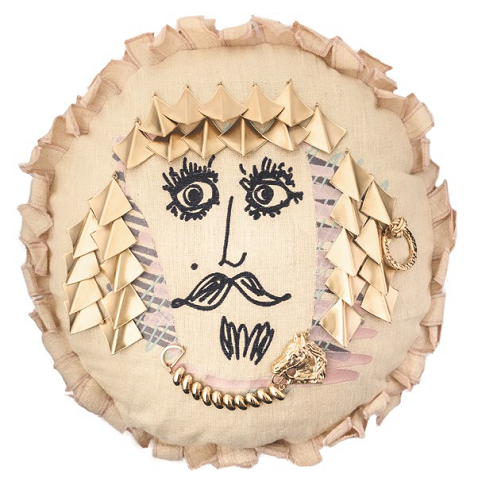
Luisa Via Roma: Aragona Basket
ph: Alfredo Muscatello
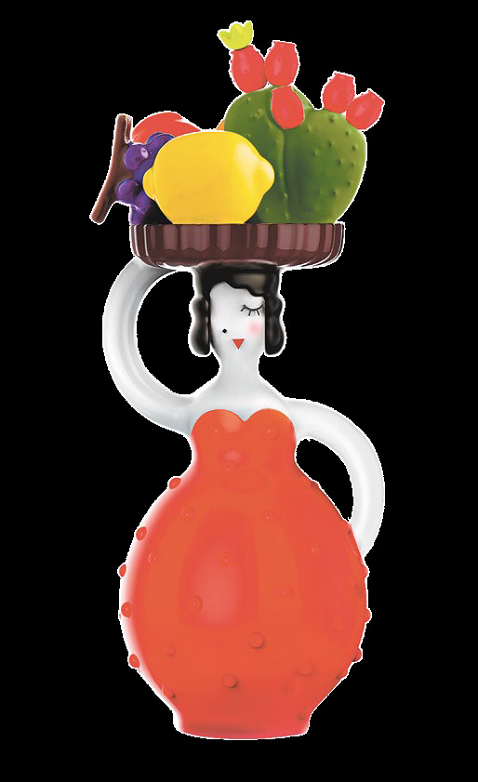
Alessi: Rosalia – la più bella che ci sia Hand-decorated porcelain figurine
Rendering: Antonio Aricò
You’ve worked with brands like Seletti, Alessi and Dolce & Gabbana. How do you navigate the shift from self-production to industry without losing your voice and identity?
The companies I’ve worked with, whether large or small, usually have a strong identity, a story behind them. These stories are important to me, because they remind me that behind the brand there are people. And I work well with people.
I always try to keep my approach the same. I don’t change who I am. I come in as a small, independent designer, with my own language, my own pace, my own way of doing things. I think that’s why they hire me. Not to make me fit into their system, but to bring a different energy into it. I believe in dialogue. I don’t see industry and craftsmanship as opposites. I think they can mutually enrich each other. And I think the human, emotional aspect of design is something that even big companies need. Maybe today more than ever.
“Brands hire me not to make me fit into their system, but to bring a different energy into it.”
Antonio Aricò
Antonio Aricò is an Italian designer known for blending traditional craftsmanship with contemporary design language. Born in Calabria in 1983, he studied industrial design at Politecnico di Milano and continued his training at the Alta Scuola Politecnica and Edinburgh Napier University. His work, often rooted in Mediterranean culture and personal memory, bridges the poetic and the functional. Aricò has collaborated with brands like Seletti, Alessi and Barilla, and served as artistic director of the Materia Independent Design Festival. Through collections such as Back Home and Magna Graecia, he explores emotional design as a form of storytelling, where objects become characters and heritage meets innovation.
Copyright © Homa 2026
All rights reserved