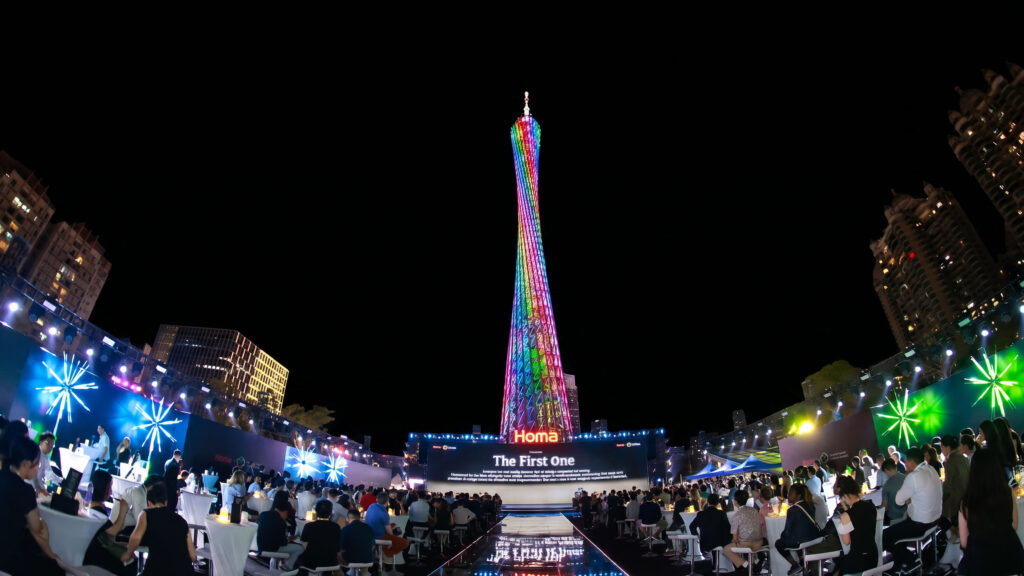












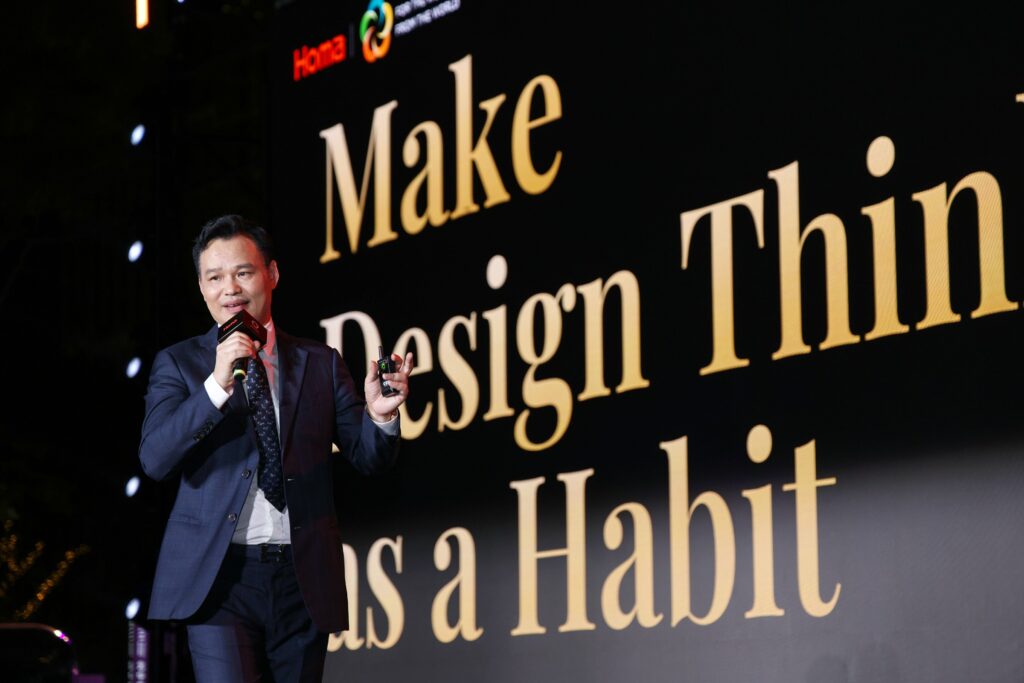
At the recent April 2026 Homa Event held at Canton Tower, we brought together partners and guests from around the world. During the event, our CEO, Michael Yao, delivered a keynote speech, with a particular focus on Design—one of Homa’s three core pillars, alongside Food Preservation and Care—sharing insights into its role in shaping our future development. Below is the full speech:
Distinguished Partners, Friends, and Colleagues,
Good day to you all.
First, on behalf of Homa, please allow me to extend our warmest welcome to each of you. We are gathered here today to explore a profound and exciting topic. Before we begin, I would like to pose a question for us all to consider: “Look 50, or even 100 years into the future. What do you think we will leave behind? What objects from our time will still be here, as loved and admired classics?”
This question guides everything we do at Homa. We deeply believe that “Masterpiece with great design will last forever.” This is not just an aspiration; it is an imperative. We are strong believers that design is truly a great power.
Today, I wish to share with you Homa’s understanding and practice of design. Our belief is: “For the World, From the World. Most important, from the Heart.”
In a world full of products, it is great design that tells the true story of a brand and creates lasting value. Design is not just about beauty; it is the quiet voice of value, speaking directly to the human heart. This leads to our core viewpoint: Why do iconic designs define great companies? Or, why do all successful companies have iconic product design?
Because great designs are more than just pretty objects. They are the perfect blend of a brand’s idea, its function, and its emotional pull. They last because they solve a real problem in a beautiful and elegant way. We can see this in several classic case studies:
• The First iPhone: It wasn’t the first mobile phone. But its design changed everything. It removed the buttons and gave us a simple, beautiful screen. It made powerful technology feel easy and personal. Its design stood for simplicity and empowerment. The value was in the magical experience it created.
• The Hermès Birkin Bag: Its value is far more than leather. Its design stands for heritage, perfect craft, and a dream. It is a timeless piece of art. The design creates a story and a deep desire, which is where its immense value comes from.
• The Porsche 911: The shape is famous for a reason. Every curve is about speed and engineering excellence, but also about a timeless look. Its design shouts passion and innovation even when it’s standing still. It turns a car into an object of pure desire.
These cases reveal a timeless truth: “A classic design is a company’s forever symbol.” It lives longer than any advertisement to tell a story of true innovation across generations. For a company, a classic design is a priceless treasure. It builds the brand, allows for a better price, creates loyal fans, and becomes a part of culture. It reminds me of the famous slogan for Patek Philippe watches: “You never actually own a Patek Philippe. You merely look after it for the next generation.”
This naturally leads to a deeper question: When products all seem the same, why is design so important?
In today’s world, the basic technology and manufacturing are often the same for everyone. Many fridges, phones, or TVs can do similar things. This is exactly why design is now the main battlefield. It is the only way to stand out. We can look at it from several dimensions:
1. Experience Over Specifications: Two refrigerators may cool the same. The winner is the one with the satisfying experience of a soft-close door, the perfect interior light, and the elegant look that belongs in a modern home. The design of the experience makes the difference.
2. Emotion Over Function: People don’t just buy a tool; they buy a feeling. A Dyson bladeless fan’s unique design isn’t just about air; it’s a statement about smart, modern living. Its different look creates huge value.
3. Identity in a Crowd: Your product’s design is a silent ambassador. It’s the first thing people see. It answers the question: “Why should I choose you?”
In short, “When products become common, design is your most powerful tool to be uncommon.”
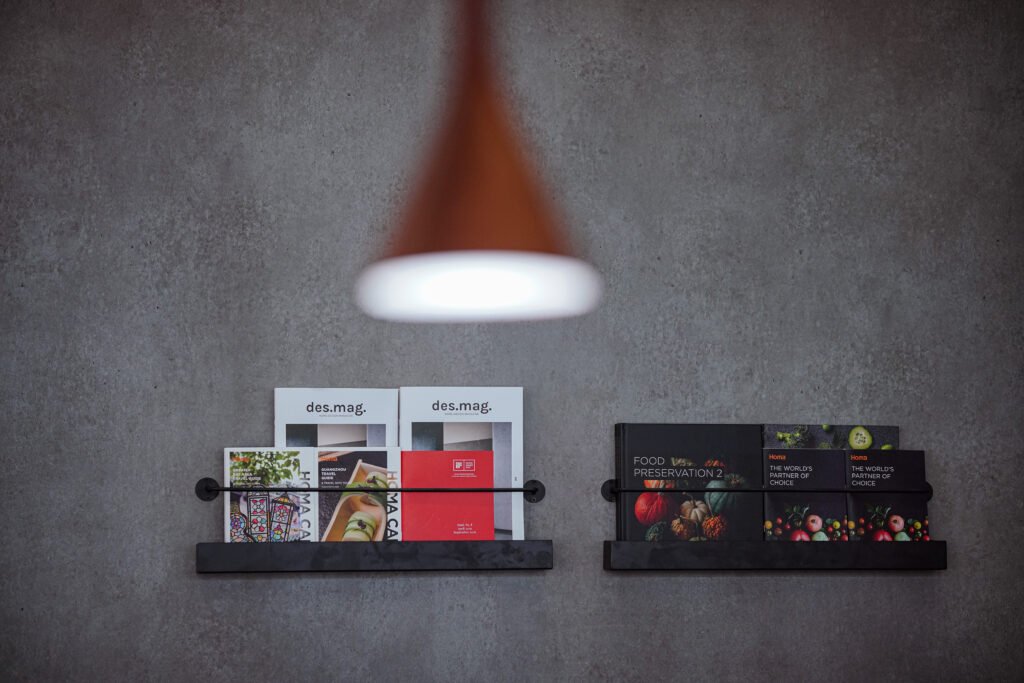
At Homa, we believe in design, we live in design. A powerful sign of this is our Homa Design Magazine. Think about that—a pure ODM manufacturer published a serious magazine about design philosophy and culture. This is not a simple brochure. It is a place for deep thinking about beauty and ideas. Winning the iF Award for it is a recognition of this path.
So, how do we build a design culture and create inspiring products?
First, Leaders Must Lead the Way. The belief must start at the very top. Leaders must not just accept good design; they must ask for it, fight for it, and understand it. At Homa, design is part of the main business conversation.
Second, Make Design Thinking a Habit. Design culture is not just for designers. It’s a way of solving problems by always thinking of the user first. It must be part of every team—from engineering to customer service. Always ask: “How will this make the user feel?”
Third, Care Deeply about the Details. We must go beyond just the task. We must care deeply about the small things: the sound a door makes, the feel of a handle, the ease of a control. Our Design Magazine helps us do this—it sharpens our eye for quality, shows us global best examples, and starts important conversations.
Fourth, Protect and Inspire Creativity. Designers need space to think, experiment, and sometimes fail. They need inspiration from art, architecture, and life. We must protect the creative process.
“A true design culture is not built on a factory floor; it grows in a garden of curiosity and bravery.” When this culture grows, amazing things happen. Teams don’t just make products. They make products that people are proud to own.
“The Value of Design is Great.” It builds the iconic products that define great companies. It is the key that helps you stand out when everything looks the same. And it only grows in a culture that is built with purpose and passion.
Our design journey continues. The iF Award for our Design Magazine is a signpost, not the finish line. It tells us that our focus on design is meaningful. It shows that even in the practical world of manufacturing, there is a vital place for beauty, thought, and art.
If we look at design through the lens of civilization, look back at the 5000-year-long river of human history. Why do we still remember the great structures above all else? Such as the pyramids, the great cathedrals, the temples, the great wall. It is because they took our breath away. Because they were audacious, they were beautiful. They were art. They were, in their highest form, design.
“We are not just building products for today. We are creating tomorrow’s legacy.”
In closing, I would like to express my deepest gratitude.
My profound gratitude to every partner here today. Because of you, Homa transcends the ordinary and becomes something truly extraordinary.
My heartfelt thanks to every colleague present. Because of you, my role transforms from obligation into purpose, from work into meaning.
Great design connects the past and the future, blends function and emotion, and defines brand and culture. At Homa, we deeply believe in this, and we are committed to practicing it with all of you.
“Design is the most powerful force in the world.”
Thank you.
Copyright @Homa 2026