












Listen to the audio version of this article. Duration: 8 minutes.
Cristina Bowerman on process, responsibility, and why design is not just about the plate.
DM talked to Cristina Bowerman about creativity, ethics, and what it really means to run a restaurant. For the Michelin-starred chef of Glass Hostaria, being a chef today means much more than cooking. It means structure, responsibility, and values. She designs every dish herself, down to the last detail, but no longer sees herself as just a cook. Her latest projects, from a seasonal restaurant in Turkey to food trucks, reflect a broader vision where aesthetics, sustainability and process go hand in hand. She also questions the uniformity of current food trends, which she sees as limiting true creativity and freedom of expression.
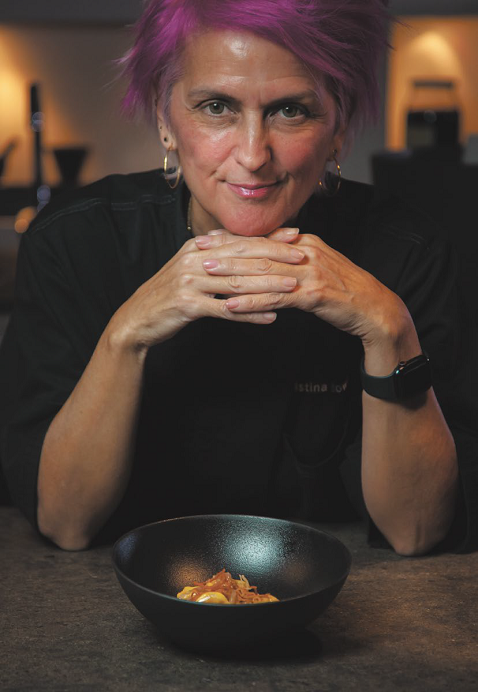
You create every dish served in your restaurants. What does your creative process look like?
It usually starts with a sketch. I realised this years ago during an interview for a book. I always begin by drawing what I want to cook. Sometimes I wake up in the middle of the night with an idea and I jot it down. I have notebooks full of drawings and folders full of ideas. Sometimes it’s a technique, sometimes it’s an ingredient. Other times, it’s a design object or even just a plate I see in a shop.
I test recipes at home, then I bring them in and present them to my team without saying anything, so they can taste it without being influenced. If the flavours work, we fine-tune the recipe. Only then do we decide the plating. For me, taste comes first. The aesthetic part is extremely important, though. I focus a lot on balance, symmetry, weight. That probably comes from my background in graphic design.
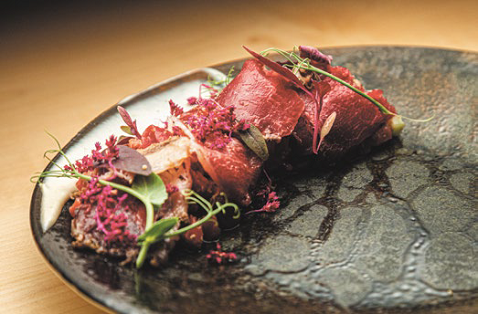
Beef tartare, capers, watermelon, anchovies and Wagyu bresaola
If you were to open a new restaurant in a completely different setting, what would it look like?
I like the idea of immersive dinners. I have been experimenting with them already eight years ago, when it still seemed absurd to people. I’d love to create a space where people could walk barefoot on warm sand in a cold room. Or the opposite. Like ice bars.
This is the same reasoning I used with Glass Hostaria. It’s an ultramodern place in the middle of traditional trattorias. Back then Trastevere [one of the most traditional and central neighbourhoods in Rome, ed.] was full of classic restaurants. It was a gamble. People would say: “I’d rather have a carbonara.” They didn’t always appreciate pink-cooked pigeon. But that’s normal. You’re working within a context that’s deeply rooted in tradition.
So if I were to open another place, I would keep working with contrast and context. I recently reinterpreted a classic French pâté en croûte using only Italian ingredients, like coppa di testa and puntarelle, to make it feel more Roman. I like this kind of dialogue.
Right now I have a seasonal restaurant in Turkey. It’s a new challenge and a different context, and I’m really enjoying the experience.
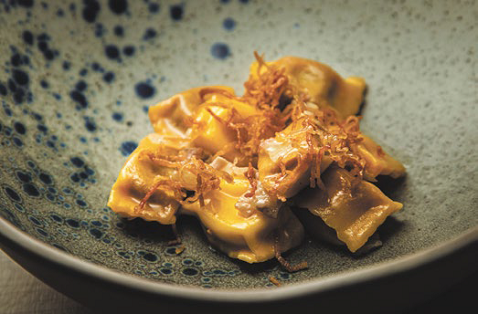
Amatriciana stuffed ravioli, crispy cured pork cheek
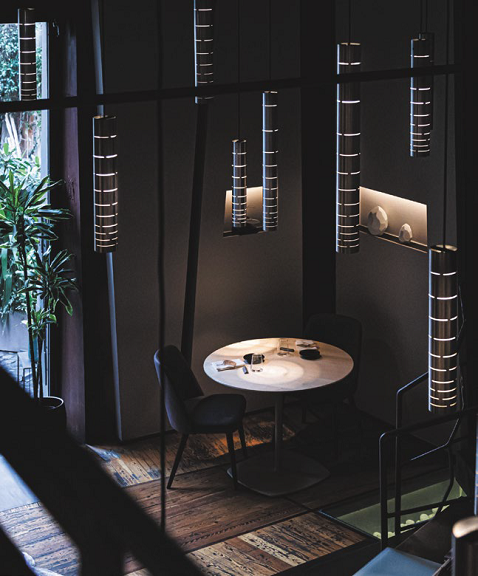
Glass Hostaria Restaurant
How important is organisation and process in your work?
It’s fundamental. A restaurant is not just a kitchen. It’s a business. If you’re a chef-entrepreneur, and not just an employee-chef, you have to know everything. you have to think about costs, margins, when to micromanage and when not to.
I’ve studied law, graphic design, and culinary arts. When I was at school in the US, we also took courses in psychology, public speaking, and restaurant management. I’ve worked with big companies as a motivational speaker. That kind of training helped me a lot.
I have no turnover in key roles at Glass. Creating a structured, trusting environment is what makes your team stay. Every evening I check the takings, and I gifted company shares to my sous-chefs and director. They behave like it’s their own place, and it is. That happens when people feel involved, appreciated and responsible.
The dishwasher is a key figure in the kitchen, right? They also handle your special plates that you pick up around the world…
Yes, if someone breaks a plate I bought in Chile, that’s it. I can’t just go back there to get another one. It’s a job I really respect. My dishwasher has been with me for 16 years (!), taking care of the most delicate things: he’s the king of the kitchen!
What is your idea of the physical plate for serving? Should it be a kind of white canvas that enhances the dish?
It should make the food stand out without overpowering it. Every dish has its specific plate. I learned a lot in the United States, where each preparation had its designated plate, and I was struck by how thoughtful that approach was.
If I’m working with an ingredient that has a distinctive colour, I look for a plate that brings it out. For me, the plate is complementary and must be in balance. That’s also why I often buy plates abroad, even inexpensive ones, as long as they’re unique, rather than follow current fine-dining trends.
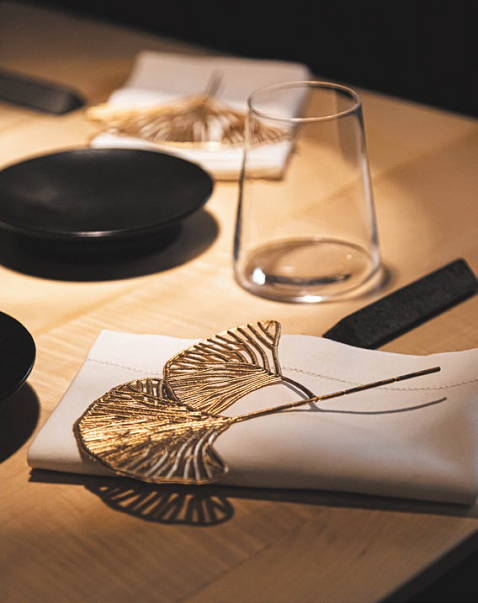
Mise en Place – Glass Hostaria
Inclusion and ethics also seem central to your work. When did you realise food could be a cultural and social tool?
Since school. My maths teacher used to call me “the champion of lost causes”. I’ve always spoken up for others. For one, gender equality is something I’ve always felt strong about.
Now that Glass has a solid team, I can travel, give talks, and be involved in charity projects. A restaurant cannot depend on one person. A chef gets tired, they get older. You need a system that works without you. That’s why I built a strong team.
When I was president of the “Ambasciatori del Gusto” [the Italian association promoting quality food, ethical practices and culinary heritage through its network of chefs, producers and professionals, ed.], I started a project called “Adopt a Producer”. The idea is to support small producers by buying from them regularly. It helps them plan and survive. To give an example, Carlo Magliarecchia [knowing producers personally is important to Cristina, ed.] grows black corn, and I include it on the menu whenever possible. I also like to work with the less glamorous cuts, such as offals. It’s a way to avoid waste at all levels, and they make fantastic dishes, like the honeycomb tripe I currently have on the menu.
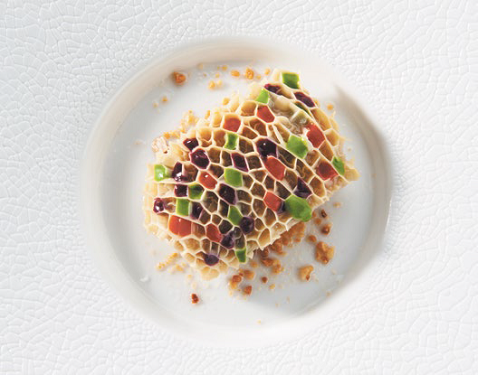
Honeycomb tripe
ph: Brambilla Serrani
So what about sustainability?
It matters a lot. I’m an ambassador for Waste Watchers and I’m part of the Chef’s Manifesto, aligned with UN goals. Waste should be avoided at all levels, that’s why I like to work with offals. We try to work with small producers. I’ve even had a go at hydroponic farming.
Sustainability is not just a trend. It’s a duty. I’ve talked about this in Davos and other places. For example, in Sicily they’re now growing avocado and finger lime. These are exotic fruits that use a lot of water in an area already struggling with drought. Meanwhile, local varieties are being abandoned. It’s a serious issue.
We chefs can’t solve everything, but we can raise awareness. We can choose what to buy and who to support.
How do you address the issue of agriculture, even of quality or niche produce, often relying on exploited labour?
It’s a question of responsibility. If something is very cheap, someone is not being paid properly. It’s the same with clothes. You can’t expect a T-shirt to cost three euros and be ethically made. I know not everyone can afford expensive products, but that doesn’t make the system right.
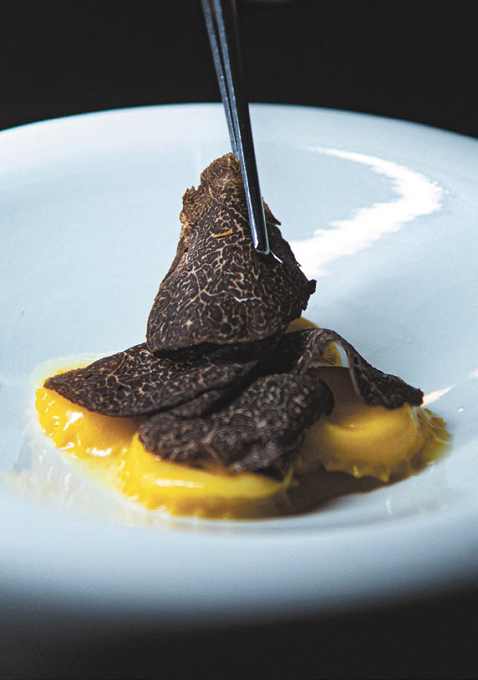
60 months aged Parmigiano Reggiano Malandrone liquid ravioli, butter by Fratelli Brazzale and seasonal truffle
Talking about technology, what’s the tool you wouldn’t do without?
The barbecue, especially Texas style. I like to smoke my food “low & slow” with various woods. It’s something I brought with me from Austin. I used it in Turkey, too, where I have a giant Kamado oven.
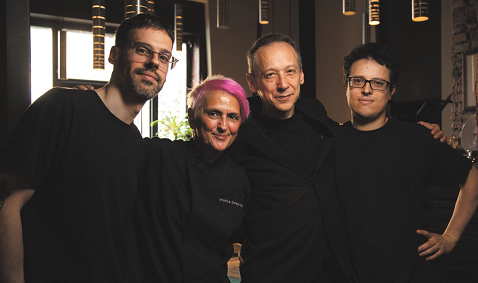
Glass Hostaria Team: Davide Grieco (Sous Chef), Chef Bowerman, Riccardo Nocera (Restaurant manager), Edoardo Fortunato (Sous Chef)
ph: struttura films
Bio
Cristina Bowerman is an award-winning chef and entrepreneur born in Puglia in 1966. After studying law and graphic design, she graduated from the Texas Culinary Academy in Austin and worked in fine dining across the United States before returning to Italy. In 2006 she took over the kitchen at Glass Hostaria in Trastevere, earning a Michelin star in 2010, the only woman chef in Italy to receive one that year. Today she oversees several restaurants and projects, including a seasonal opening in Turkey. A strong advocate for sustainability, meritocracy and inclusion, she supports small-scale producers, speaks at global conferences, and sees food as both a creative practice and a tool for change.
cristinabowerman.com
glasshostaria.it
Copyright © Homa 2026
All rights reserved