












Many users ask the same practical question when organizing frozen food: can mold grow in the freezer? From a scientific perspective, mold requires moisture, nutrients, and a suitable temperature range to develop. Freezers operate at temperatures that significantly slow down microbial activity, which means mold growth is largely inhibited rather than completely eliminated. When moisture is trapped inside poorly sealed containers or when temperature fluctuations occur, dormant mold spores may survive and become active once conditions change. This is why proper storage habits, stable cooling performance, and humidity control matter in everyday freezer use. Understanding these basics helps users maintain better food quality and reduce unnecessary waste, especially in households or commercial environments where frozen storage is frequently accessed.
Factors That Influence Mold Risks Inside a Freezer
While mold activity is limited at low temperatures, several factors still influence whether mold becomes a concern. Repeated door openings, uneven cooling zones, and condensation can create localized moisture buildup. Over time, this environment may contribute to issues that raise concerns about whether mold can grow in the freezer during extended storage. Packaging also plays a role: loosely wrapped food or damaged containers increase exposure to air and moisture. From our experience, consistent internal temperatures and efficient compartment design help reduce these risks. That is why freezer layout, airflow management, and material selection are essential elements when designing appliances intended for long-term use in different markets.
How We Address Storage Stability Through Appliance Design
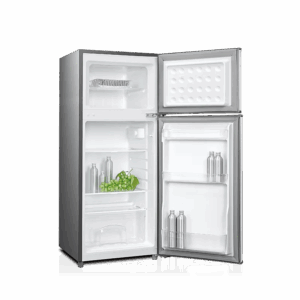
At Homa Appliances, we focus on manufacturing refrigeration solutions that support stable cold storage conditions for large-scale and customized orders. Our approach integrates structural design, compartment separation, and precise temperature control to support hygienic food storage. When users question whether can mold grow in the freezer, the answer often depends on appliance performance rather than temperature alone. Models such as DF2-16 are designed with a balanced internal layout that separates fresh and frozen zones, helping maintain consistent cooling while reducing unnecessary moisture exchange. With a total net capacity of 125 liters, including a 33-liter freezer section, this structure supports organized storage without overcrowding. Its compact dimensions—112 cm in height, 48 cm in width, and 49 cm in depth—make it suitable for various distribution and project-based requirements in overseas ODM cooperation.
Practical Storage Awareness and Long-Term Reliability
In conclusion, questions like can mold grow in the freezer reflect growing awareness of food safety and appliance reliability. Mold growth is not typical in properly functioning freezers, but storage habits, sealing quality, and internal stability all play important roles. By combining user education with thoughtful refrigeration design, we aim to support safer and more predictable cold storage environments. Our manufacturing experience allows us to align appliance performance with real-world usage needs, especially for bulk orders and customized solutions. Through steady cooling performance and structured compartment design, products such as DF2-16 represent how practical engineering supports everyday food preservation without relying on exaggerated claims.