












Freezers play an important role in food storage because they help households and businesses keep frozen products for longer periods. Different freezer structures provide different storage experiences, so users need to consider space, access frequency, and storage habits before making a decision.
At Homa Appliances, we focus on refrigeration solutions and study market needs to support global partners with practical freezer products. Our approach combines product design, storage requirements, and user experience to develop solutions suitable for different applications.
The choice between upright and chest freezers depends on daily usage. Upright freezers typically provide more built-in shelves, drawers, or compartments, while chest freezers generally offer a more open storage area. Understanding their differences helps buyers make a suitable choice based on their application.
Freezer Design Explained: Balancing Structure and Storage Requirements
Upright freezers are designed with a vertical structure similar to refrigerators. They usually include shelves, drawers, or compartments that help users separate different frozen items. This design makes it easier to find products without moving many items.
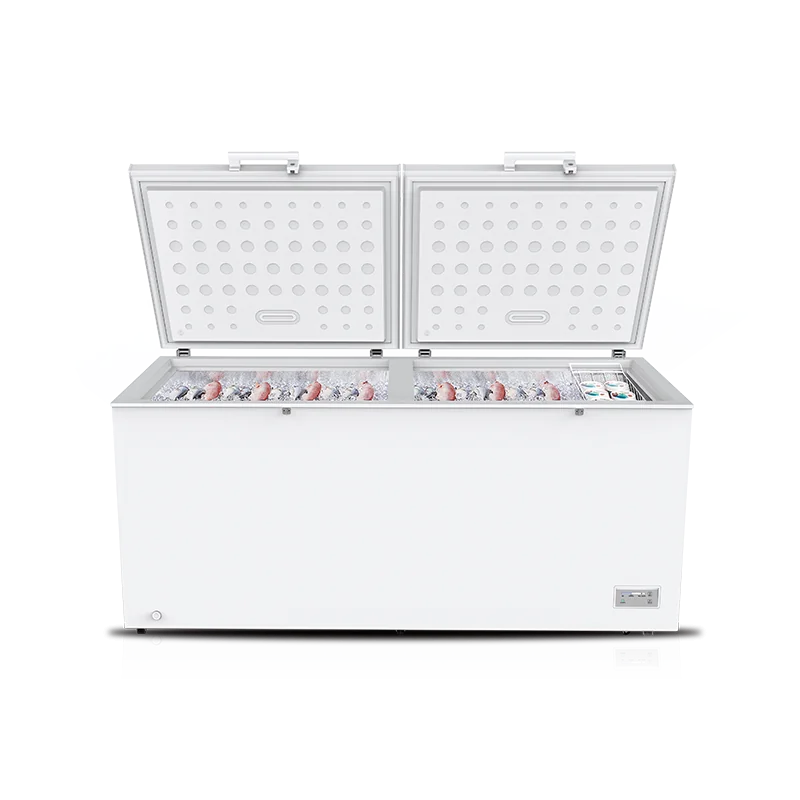
Chest freezers use a horizontal structure with a top-opening door. They are commonly used when users need flexible storage for bulk frozen food. The open interior design allows users to arrange different package sizes more freely.
The selection process should consider storage frequency and available space. A family that regularly organises frozen food may prefer a vertical design. A business or household that stores large quantities may consider a chest freezer because of its spacious interior.
Is an Upright or Chest Freezer Better for Different Applications?
When discussing is an upright or chest freezer better, users should first look at their storage environment. Upright freezers are commonly used in homes and spaces where organised storage and frequent access are important. Their vertical structure can require less floor space than some chest freezer designs with similar storage capacity and allows users to access items through shelves or drawers positioned at different heights. Their vertical design can save floor space in certain layouts.
Chest freezers are often used in places that require long-term frozen storage. Their deep storage area can hold larger amounts of products, which is useful for restaurants, food suppliers, and families who purchase frozen goods in larger quantities.
Energy usage can also influence the choice. Freezer performance depends on design, insulation, temperature settings, and operating conditions. Users should select products based on their actual storage requirements instead of focusing on one single feature.
Key Differences Between Upright and Chest Freezers
The main difference between upright and chest freezers is not only the appearance but also how they perform in daily use. Upright freezers usually require less floor space and provide easier access because products are stored vertically with shelves or drawers. Users can quickly see and organise different frozen items without moving multiple products.
Chest freezers generally have a horizontal structure that reduces the amount of cold air escaping when the door is opened. However, organising products may require additional baskets or storage systems because items are stacked together.
Defrosting methods, insulation design, temperature control systems, and operating conditions can also influence energy performance. Buyers should evaluate these factors according to their actual usage environment.
Factors That Affect Freezer Selection
Temperature control is an important part of freezer operation. Modern freezers often use electronic systems to help users manage settings more easily. Stable temperature management supports consistent frozen storage conditions.
Storage organisation is another factor. Upright models provide visible compartments, while chest models may require additional baskets or dividers for better arrangement. The right structure depends on how often users add or remove frozen products.
Maintenance requirements should also be considered. A practical freezer design should provide convenient operation and clear functions. Features such as indicators, control panels, and optional storage accessories can improve the user experience during daily operation.
How Freezer Features Support Practical Use
For buyers asking is an upright or chest freezer better, product functions can provide useful reference.
Electronic control allows users to adjust settings more conveniently. A power indicator helps users check the operating status quickly. Super freeze functions are designed to support faster freezing when needed. These functions are commonly considered when evaluating freezer products.
Storage accessories also affect usability. For example, an optional storage basket can help users classify frozen items and improve access efficiency. A suitable combination of functions makes freezer operation easier for different application scenarios.
Our Experience in Refrigeration Manufacturing
As a refrigeration manufacturer, Homa Appliances focuses on developing products that match the needs of international markets. We provide manufacturing support for global partners through our experience in refrigeration production and product development.
Our work covers different freezer and refrigerator categories. We pay attention to product structure, function design, and manufacturing processes. This approach helps us create refrigeration solutions that fit different market requirements.
Through ODM cooperation, we work with partners to develop products according to their specifications. Product planning, appearance design, and functional configuration can be adjusted based on application needs and market expectations.
Exploring the BE2-623 Freezer Features
Among our freezer solutions, the BE2-623 model includes several practical functions designed for daily storage applications. Homa Appliances developed this product with features that support convenient operation and flexible usage.
The BE2-623 includes electronic control, which allows users to manage freezer settings more easily. It also provides a power indicator to show the working status of the unit. These features help users understand the product operation process.
The model is equipped with su
Conclusion
The answer to is an upright or chest freezer better depends on storage goals, available space, and usage habits. Upright freezers generally offer easier access and built-in organisation, while chest freezers generally provide an open storage layout that can accommodate bulkier or larger quantities of frozen products.
For businesses and brands looking for refrigeration manufacturing support, selecting the right product structure is also important. We continue to combine manufacturing experience with product understanding to support different freezer applications. The BE2-623 reflects our approach to practical freezer design with useful features for daily operation.per freeze functionality for situations where faster freezing is needed. It also includes compressor on/off control and offers an optional storage basket. These features are designed to improve daily operation and provide practical storage options for households and selected light-duty business settings.