












Moving a refrigerator through a narrow doorway, corridor or lift can create a practical challenge. In some situations, removing the doors can make the appliance easier to manoeuvre. However, door removal is not necessary for every move. Before starting, check the refrigerator dimensions, available clearance and the manufacturer’s instructions.
For anyone researching how to remove doors from refrigerator, the important point is to treat the door as part of the appliance’s structure. Hinges, electrical connections, water lines and door weight can vary between refrigerator designs.
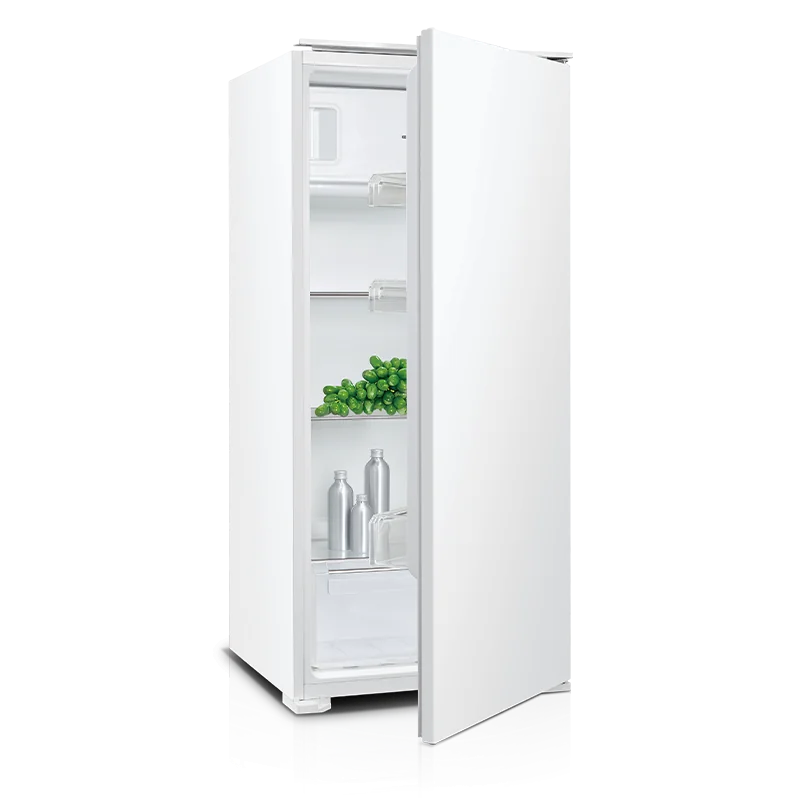
Check the Route Before Removing Anything
The first step is to measure the refrigerator and the route it needs to travel. Measure doorways, corridors and other narrow points rather than relying on visual estimates.
Also consider handles and other external parts that may affect clearance. Some refrigerator designs have fixed or integrated components that require specific procedures. The manufacturer’s installation or service documentation should therefore take priority over a general online guide.
Prepare the Refrigerator for the Move
Before working on the doors, empty the refrigerator and freezer compartments. Remove loose shelves, drawers and other removable parts where appropriate. This reduces movement inside the cabinet during transportation.
Unplug the appliance before beginning any work. If the refrigerator has an ice maker, water dispenser or another connected system, check the manufacturer’s instructions for the correct disconnection procedure.
For water-connected models, isolate the water supply before disconnecting the line. Electrical and water connections should not be pulled or forced simply to create additional clearance.
A Careful Approach to Door Removal
The exact process depends on the refrigerator design. Some models use top hinges, while others have different hinge arrangements or additional wiring connections.
In general, support the door before loosening its hinge fasteners. Refrigerator doors can be heavier than they appear, particularly when they contain shelves, bins or electronic components.
If an electrical connector is present, disconnect it according to the manufacturer’s instructions rather than pulling on the cable. The same principle applies to water tubing.
Do not force a hinge, connector or fitting that does not release as expected. If the construction differs from the available instructions, stop and consult the manufacturer’s service information.
Protect the Door and Cabinet During Transport
Once a door has been removed, protect both the door and refrigerator cabinet from impact. Use suitable protective material around exposed surfaces and keep screws and hinge components together.
A labelled bag or small container can make reassembly easier. Avoid placing loose hardware inside the refrigerator, where it can move during transport.
The appliance should also be transported according to the manufacturer’s instructions. Refrigerator orientation can matter because the cooling system contains oil and refrigerant. The correct method varies by model.
What to Check After the Move
After the refrigerator reaches its new location, inspect the doors, hinges, seals and connections before normal operation. Check that each door sits correctly and that the gasket contacts the cabinet evenly.
If the model has a water or ice system, inspect the connection points for leakage before leaving the appliance unattended. Electrical connections should also be secure.
Follow the manufacturer’s instructions regarding when to reconnect the refrigerator after transportation. The appropriate procedure can depend on how the appliance was positioned during the move.
Appliance Relocation Tips for Different Designs
Good preparation starts before moving day. Checking the route, measuring clearances and reviewing product documentation can prevent unnecessary dismantling.
Planning is particularly useful for larger refrigerator formats. Side-by-Side and Multi-Door models can have wider cabinets and more complex door arrangements than smaller designs. Their dimensions should therefore be considered before transportation is arranged.
At Homa Appliances, our portfolio includes different refrigerator formats for household and market requirements, including Combi-No-Frost and Multi-Door models.
Homa Appliances Refrigerator Configurations
Our FN2-52 Combi-No-Frost model has a total net capacity of 400 litres, including 273 litres of refrigerator capacity and 127 litres of freezer capacity. According to our official product information, it has a reversible door, LED touch display, electronic control and Total No-Frost.
The reversible-door design provides flexibility when considering kitchen layout and installation orientation. Door reversal should still follow the instructions applicable to the specific model.
Our FF4-48N Multi-Door No-Frost modelhas a total net capacity of 362 litres, including 237 litres of refrigerator capacity and 125 litres of freezer capacity. It includes 360° multi-air flow, a convertible crisper/fresh zone, a high-temperature alarm and a door-open alarm.
Supporting Refrigerator Projects Worldwide
At Homa Appliances, we provide refrigeration products for international markets and work with overseas partners through ODM cooperation. Our portfolio covers several refrigerator formats, giving customers options when considering market requirements and product configurations.
We also support wholesale and large-volume customised orders. For ODM projects, requirements can be discussed according to the target market, product format, configuration and project specifications.
Removing a refrigerator door can sometimes make a move more manageable, but it should not be treated as a universal procedure. Measuring first, checking model documentation and protecting electrical, water and hinge connections can help reduce avoidable problems. Careful preparation is an important part of relocating refrigeration equipment.