












Refrigerators are one of the most important household appliances in modern life. From preserving vegetables and dairy products to storing frozen foods and beverages, refrigerators help families reduce food waste and maintain ingredient freshness every day. Yet many people still ask the same question: how does a fridge work?
Although refrigerators have become a standard appliance in homes worldwide, most consumers are unfamiliar with the science behind refrigeration technology. Understanding how refrigerators work can help consumers make smarter purchasing decisions and better appreciate the importance of advanced food preservation systems.
Today’s refrigerators are far more advanced than traditional cooling appliances. Modern refrigeration systems now focus heavily on stable temperature control, humidity balance, energy efficiency, and long-term freshness preservation. As consumer expectations continue to rise, refrigerator manufacturers are investing in smarter cooling technologies and more flexible storage solutions for global households.
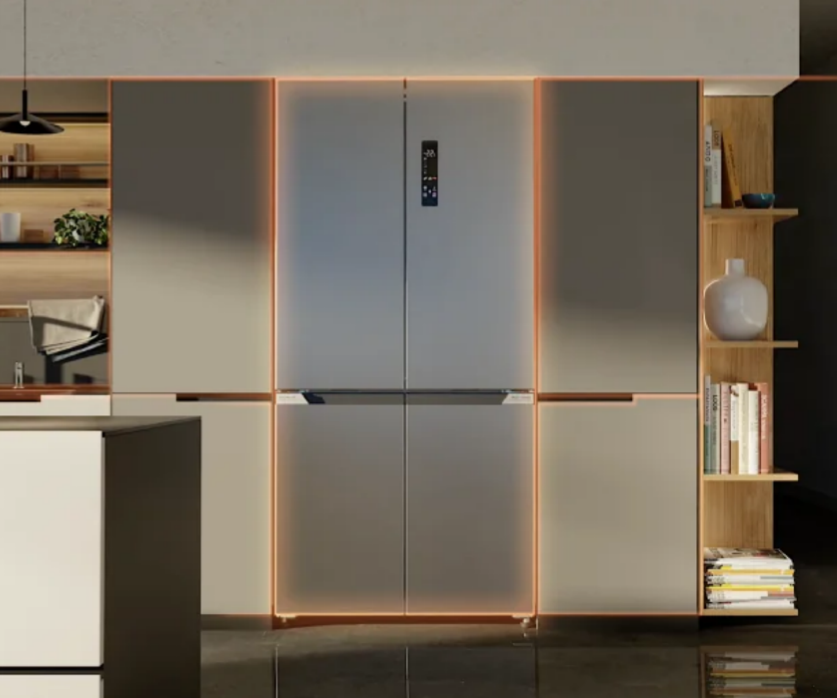
The Basic Principle Behind Refrigeration
At its core, a refrigerator works by removing heat from the inside compartment and releasing it outside the appliance. This process is achieved using a refrigeration cycle that continuously circulates refrigerant through several key components.
The four key parts of a refrigerator cooling system include: compressor, condenser coils, expansion device, and evaporator coils. In many household refrigerators, the expansion device is a capillary tube.
The process begins when the compressor pressurises the refrigerant gas. As the refrigerant moves through the condenser coils, heat is released outside the refrigerator. The refrigerant then passes through an expansion device, where its pressure and temperature drop before it enters the evaporator coils.
Inside the evaporator area, the refrigerant absorbs heat from stored food and air inside the refrigerator. This continuous cycle removes heat and keeps the internal temperature low enough to preserve food freshness.
Modern refrigerators also use circulation fans and airflow systems to distribute cold air evenly across different compartments.
Why Stable Temperature Matters for Food Freshness
One of the biggest factors affecting food quality is temperature stability. Frequent temperature fluctuations can shorten the shelf life of vegetables, dairy products, meat, and frozen foods.
When refrigerator temperatures rise too often due to poor airflow or repeated door openings, food may lose freshness faster. Moisture imbalance can also impact the texture and flavour of fresh ingredients.
This is why advanced refrigerators now focus heavily on food preservation technology rather than simple cooling performance alone.
Modern refrigeration systems often include:
- Multi-Air Flow cooling
- Independent cooling zones
- Humidity-controlled compartments
- No-frost air circulation
- Inverter compressor technology
- Rapid cooling functions
These features help create more stable internal environments for different types of ingredients.
For example, vegetables and fruits require different humidity levels compared to frozen foods or beverages. Smart compartment organisation allows users to preserve freshness more effectively while reducing unnecessary food waste.
Consumers who buy groceries weekly or store food in bulk especially benefit from advanced preservation systems.
How Modern Refrigerators Improve Daily Kitchen Life
As kitchen lifestyles evolve, refrigerators are becoming more than simple food storage appliances. Consumers now expect modern refrigerators to support convenience, organisation, energy savings, and integrates seamlessly into modern kitchens.
Combi refrigerators are increasingly popular because they combine refrigerator and freezer compartments in a practical vertical layout. This design allows users to access fresh food more conveniently while maintaining efficient frozen food storage below.
At the same time, Side-by-Side refrigerators continue gaining popularity among larger households because of their spacious internal capacity and flexible organisation features.
Advanced refrigerator designs now support:
- Better food separation
- Easier ingredient access
- Improved space utilisation
- Reduced transfer of odours
- Longer-lasting freshness
These improvements are especially valuable for families that cook frequently or purchase large amounts of fresh ingredients.
Interestingly, many consumers searching online about food storage also ask questions such as can you put potatoes in the fridge. This reflects growing awareness surrounding proper food preservation and ingredient management inside modern refrigerators.
Homa’s Advanced Refrigeration Solutions
As demand for high-performance refrigerators grows, Homa Appliances can be introduced through engineering topics such as airflow, No Frost circulation, production scale, and food preservation.
The refrigerator portfolio of Homa Appliances reflects a system engineering approach, connecting no-frost circulation, compartment layout, compressor efficiency, and user storage habits. Its Combi No Frost direction supports households needing balanced refrigeration, freezing, and practical everyday freshness management.
For appliance partners, this positioning links product planning with scalable cooling platforms and market-ready refrigerator ranges.
Homa Appliances’ FN series Combi refrigerators can be presented as an example of how modern cooling systems apply refrigeration principles, using No Frost air movement and organised compartments to support steady daily food storage.
FN series refrigerators provide separate refrigeration and freezing areas that help consumers store fruits, vegetables, beverages, dairy products, and frozen foods more efficiently.
Homa Appliances’ FF series Side-by-Side refrigerators can show how larger cabinet volume depends on controlled airflow, practical shelf planning, and cooling management across wide compartments.
Large-capacity SBS refrigerators are increasingly popular because they support bulk grocery storage while improving accessibility and ingredient organisation for modern families.
Homa’s Global Manufacturing Excellence
Homa Appliances can be introduced through its long-term focus on design, care, and food preservation. Rather than presenting refrigerators only as cooling equipment, the brand connects product development with how families store fresh produce, frozen foods, drinks, and daily ingredients in real kitchen environments.
Its product portfolio reflects this practical direction. Combi No-Frost refrigerators place the fresh food compartment above and the freezer below, supporting convenient daily access and clearer food organisation. Technologies such as Total No-Frost, Multi-Climate preservation, Metal Cooling, and Multi-Air Flow help create more stable conditions for different food categories.
Beyond Combi models, Homa Appliances also offers Side-by-Side, Multi-door, Built-in, Upright freezer, Chest freezer, and other refrigeration solutions. This broad range allows appliance brands and retailers to match different household layouts, regional preferences, and storage habits.
For global partners, Homa’s value lies not only in manufacturing scale, but also in turning everyday food preservation needs into adaptable refrigerator platforms. Its ODM support helps customers develop market-ready cooling products with practical functions, reliable quality, and flexible product planning.
Final Thoughts
Understanding how a fridge works highlights the importance of advanced cooling technology in preserving food quality and reducing waste. Today’s refrigerators combine efficient temperature management with intelligent storage design to support modern lifestyles.
Backed by years of refrigeration expertise, Homa Appliances offers a diverse range of refrigeration products, from compact built-in models to spacious Combi and Side-by-Side refrigerators, providing practical solutions for different markets and consumer needs.