












A refrigerator plays an important role in keeping food fresh by maintaining a suitable cold environment. However, users may sometimes wonder why their fridge is not cooling properly even when the appliance appears to be running. Before assuming that a major component has failed, it is useful to check several basic conditions, such as the power supply, temperature setting, Demo Mode, and whether the door is closing properly.
Persistent cooling problems may be related to airflow, food arrangement, installation conditions, or refrigeration components, while temporary changes in cooling can also occur during an automatic defrost cycle. More complex issues may involve sensors, the compressor, fans, or control components. Understanding these possible causes can help users take suitable steps and know when professional service may be required. As a refrigeration manufacturer, Homa Appliances focuses on developing practical cooling solutions for different markets and usage requirements.
Checking Basic Settings Before Troubleshooting Cooling Problems
When users ask why is my fridge not cooling, the first step should be to check whether the refrigerator is receiving power. Confirm that the power cord is properly connected and that the outlet is working. If the appliance has recently experienced a power interruption, it may also need some time to return to its normal operating temperature.
The temperature control should also be checked. Make sure the cooling function has not been switched off and that the selected temperature is suitable for normal food storage. Some refrigerators may also have a Demo Mode or similar display mode that allows the controls and lights to operate without normal cooling. If this mode is active, the appliance may appear to work while the cooling system is not operating as expected.
The door is another basic point to inspect. A door that is not fully closed can allow warm air to enter continuously. Check whether food packages, shelves, or drawers are preventing the door from closing. The door gasket should also sit properly around the frame. Frequent door opening can similarly increase the amount of warm air entering the refrigerator.
If these basic conditions are normal, users can then check airflow and other operating factors before considering more complicated causes.
How Airflow and Food Arrangement Affect Cooling
Cold air needs to circulate through the refrigerator to maintain a more consistent internal temperature. When food packages are placed directly in front of air vents, circulation can be restricted. This may cause some storage areas to become warmer than others.
Overloading the refrigerator can create a similar problem. Leaving reasonable space around vents and between stored items allows cold air to move more freely. Food should also be arranged according to the storage zones provided by the refrigerator rather than blocking the airflow path.
The surrounding environment can also affect cooling performance. A refrigerator installed close to a heat source or in a poorly ventilated area may have more difficulty releasing heat. Adequate clearance around the appliance, based on the manufacturer’s installation instructions, supports normal operation.
Users should also consider the amount of food recently placed inside the refrigerator. Adding a large quantity of warm food can temporarily increase the internal temperature. The appliance may need time to remove this additional heat before returning to its normal temperature.
Checking Defrost, Ventilation, and Cleanliness
Modern refrigerators may use an automatic defrost system as part of their normal operation. During an automatic defrost cycle, cooling may temporarily pause while accumulated frost is removed. After the cycle is completed, normal cooling resumes. Therefore, a short period without active cooling does not necessarily indicate a failure.
A No-Frost system should also be understood correctly. It does not mean that frost can never form inside the refrigeration system. Instead, the system uses automatic defrosting and air circulation to reduce visible frost buildup in the storage compartment and reduce the need for manual defrosting.
Cleanliness and ventilation around the appliance can also influence heat exchange. However, not every refrigerator has an exposed condenser that users can safely clean. If the product manual allows it, users can check and clean accessible condenser areas or ventilation openings according to the manufacturer’s instructions. They should avoid removing covers or accessing internal components without professional guidance.
If airflow, installation space, and basic settings are normal but cooling remains weak, the problem may require further inspection.
How Food Storage Functions Support Better Preservation
Food placement has a direct connection with internal temperature distribution. Different foods may require different storage conditions, so using designated storage areas can make daily organisation easier.
Fresh zones and convertible storage spaces can provide additional flexibility for different food types. Vegetables, fruits, dairy products, and frozen items may have different preservation requirements, and suitable storage areas can help users organise them more effectively.
Modern refrigerator design also includes functions that support temperature management. LED touch displays can make settings easier to adjust, while high-temperature alarms and door-open alarms can notify users when conditions require attention.
At Homa Appliances, we consider these practical functions when developing refrigeration products for different markets. Through ODM cooperation, we work with customers to develop refrigerator solutions according to product requirements, market conditions, and expected usage scenarios.
Understanding Holiday Mode and Other Refrigerator Functions
Refrigerator functions should be understood according to the specific model rather than treated as universal features. Holiday Mode, for example, should not simply be described as a general energy-saving function. Depending on the refrigerator design, this mode may increase the refrigerator compartment temperature or stop cooling in part of the appliance.
Before activating Holiday Mode, users should check the product manual and remove perishable food if the selected mode does not maintain suitable storage temperatures for those foods. This helps prevent food from being stored under inappropriate conditions during an extended absence.
Other functions can also support different storage situations. Eco Mode may provide an operating option intended to reduce energy consumption under certain conditions, while Super Freeze can help lower the temperature of the freezer compartment more quickly when additional fresh food needs to be frozen.
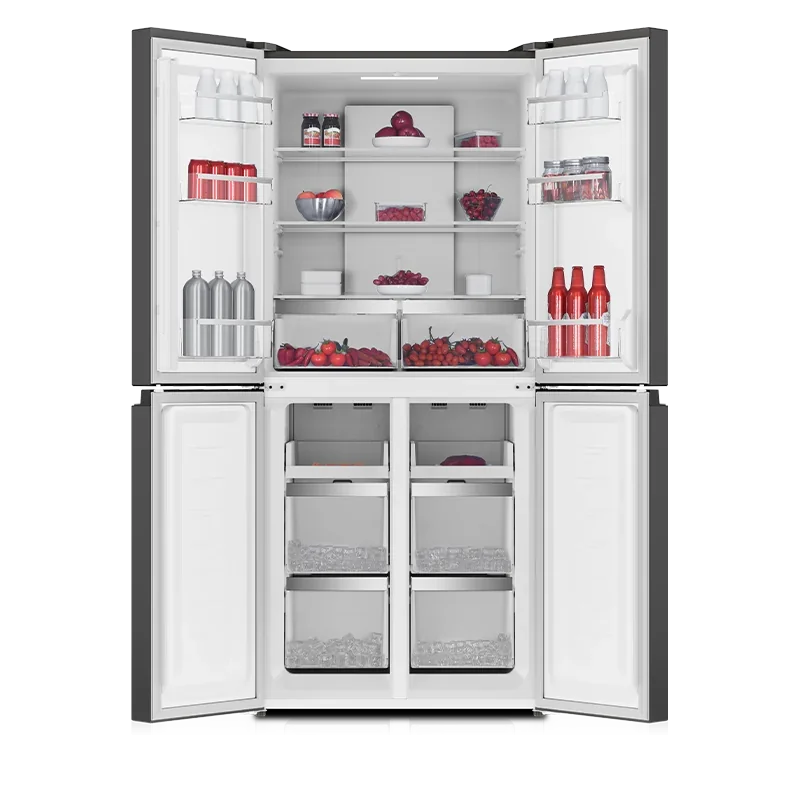
The FF4-54 refrigerator model includes practical functions for modern food storage. These include a glass door, Total No-Frost system, LED touch display, high temperature alarm, door open alarm, Holiday Mode, Eco Mode, Super Freeze, and a convertible crisper/fresh zone.
When Professional Inspection May Be Necessary
If the refrigerator has power, the cooling function is active, the door closes properly, and airflow is not blocked, continued poor cooling may indicate a more complex issue. Possible causes can include problems with the compressor, fan, temperature sensor, control system, or other refrigeration components.
Users should not attempt to repair electrical or refrigeration components without suitable technical knowledge. Checking the product manual and contacting an authorised service professional can provide a safer approach when basic troubleshooting does not resolve the problem.
From a manufacturing perspective, stable refrigerator performance depends on the interaction of multiple systems. Product design, component selection, production management, testing, and quality control all contribute to reliable operation.
Supporting Better Food Preservation Through Practical Design
When considering why my fridge is not cooling, users should begin with simple checks: confirm the power supply, make sure cooling has not been switched off, check Demo Mode if applicable, verify the temperature setting, and ensure the door is closing correctly. Airflow, food arrangement, installation conditions, and automatic defrost cycles should then be considered.
Reliable food preservation involves more than cooling capacity. It also depends on temperature control, air circulation, storage design, and functions that help users manage different conditions.
With refrigeration manufacturing experience, Homa Appliances provides ODM solutions for international customers. Our FF4-54 model combines flexible storage features and control functions to support different food preservation needs.
By understanding both basic troubleshooting steps and refrigeration design principles, users can respond to cooling problems more appropriately. We continue to develop practical refrigeration solutions based on manufacturing experience and the requirements of global appliance markets.