












When customers ask us how does a frost free refrigerator work, we understand they are not only curious about daily convenience, but also about long-term performance and maintenance. In simple terms, a frost free system prevents ice buildup automatically, removing the need for manual defrosting. Instead of allowing moisture to freeze on the inner walls, the refrigerator uses a controlled airflow and periodic heating cycle to keep the interior dry and evenly cooled. At Homa Appliances, we often explain that this process is designed to improve usability while maintaining consistent storage conditions for food.
Understanding the Core Cooling Process
The internal mechanism helps explain how the system operates. A frost free refrigerator uses an evaporator coil combined with a fan system that circulates cold air throughout the compartments. When moisture enters the unit, it may temporarily freeze on the evaporator coil rather than forming visible frost on shelves or walls. Then, at regular intervals, a defrost heater activates to melt this frost. The resulting water is directed out of the system through a drainage channel.
This continuous cycle ensures that frost does not accumulate over time. Because air circulation plays a central role, temperature distribution is more even compared to static cooling systems. In our experience, this is one of the reasons why many distributors and project buyers prefer frost free designs for modern households and large-scale supply programs.
Benefits for Daily Use and Maintenance
Another important aspect is how this technology improves daily operation. Without frost buildup, users do not need to pause usage for manual defrosting, which can interrupt storage and cause inconvenience. Shelves remain clear, and internal space is used more efficiently. Additionally, consistent airflow helps maintain stable temperatures, which supports better food preservation.
From our perspective at Homa Appliances, these practical benefits are especially relevant for overseas markets where end users expect convenience and reliability. Frost free systems also reduce the risk of ice-related blockages that may affect airflow over time. This contributes to a smoother user experience and aligns with the expectations of bulk buyers seeking dependable solutions.
Integrating Technology with Product Design
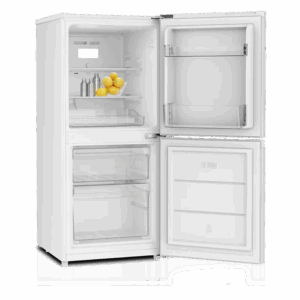
In practices applications, this technology is integrated into our specific product design. For example, in our FN2-14 model, we integrate frost free cooling with a well-structured interior layout to support efficient storage. The system is designed to maintain airflow balance while minimizing temperature fluctuations, which is essential for everyday use.
We approach product development with ODM flexibility in mind, allowing partners to adapt configurations based on different market requirements. By combining practical engineering with scalable manufacturing, we ensure that frost free functionality can be applied consistently across large-volume orders.
Conclusion
In summary, understanding how does a frost free refrigerator work helps explain why this technology has become widely adopted. By using airflow circulation and automatic defrost cycles, frost free refrigerators maintain a clean, stable cooling environment without manual intervention. At Homa Appliances, we incorporate this principle into our product development and manufacturing processes, offering solutions that align with modern usage habits while supporting bulk customization needs.