












When we talk about how does a freezer work, we are really looking at a system designed to remove heat from a sealed space and maintain a consistently low temperature. A freezer does not “create cold” but instead transfers heat away from stored items. This basic concept behind it is widely applied in both household and commercial refrigeration, ensuring food preservation and stable storage conditions across different environments.
The Core Cooling Cycle Behind Freezing
The operating principle of a freezer can be explained as a continuous refrigeration cycle. Inside the system, a refrigerant circulates through key components: the compressor, condenser, expansion device, and evaporator. The compressor pressurizes the refrigerant, turning it into a high-temperature gas. This gas then releases heat through the condenser and becomes a liquid. As it passes through the expansion device, the pressure drops, allowing it to evaporate inside the evaporator coils and absorb heat from the freezer compartment. This cycle maintains low temperatures over time through repeated heat transfer and compression.
Temperature Control and Structural Design
Another important aspect of how does a freezer work lies in temperature regulation and insulation. Modern freezers use thermostats and sensors to monitor internal conditions and activate the cooling cycle as needed. Thick insulation layers help prevent external heat from entering, improving energy efficiency and temperature stability. In commercial settings, design factors such as storage capacity, door sealing, and airflow distribution also influence performance. These structural factors are critical to ensuring consistent and reliable operation in real-world conditions.
From Principle to Application: Our Manufacturing Perspective
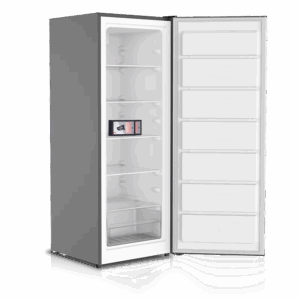
At Homa Appliances, the system is considered from both technical and manufacturing perspectives. Our company focuses on large-scale freezer production and ODM solutions for overseas partners, supporting bulk customization across different markets. For example, our DD1-26 model is designed with a practical storage layout and stable cooling structure, making it suitable for commercial and distribution scenarios where consistent performance is required. By aligning system design with user requirements, the principles of freezer are applied to products suitable for different supply chains and usage environments.
Conclusion
Understanding how does a freezer work helps clarify why proper system design, insulation, and component coordination are essential for reliable cooling. From the refrigeration cycle to real-world applications, each element contributes to maintaining stable low temperatures. At the same time, manufacturers like Homa Appliances apply these principles in product development, combining technical knowledge with production experience to support bulk orders and customized solutions for global partners.