











Rodolfo Guzmán on Chile’s culinary revolution, from foraged roots to global recognition. How Boragó’s pursuit of endemic excellence redefined Chilean gastronomy
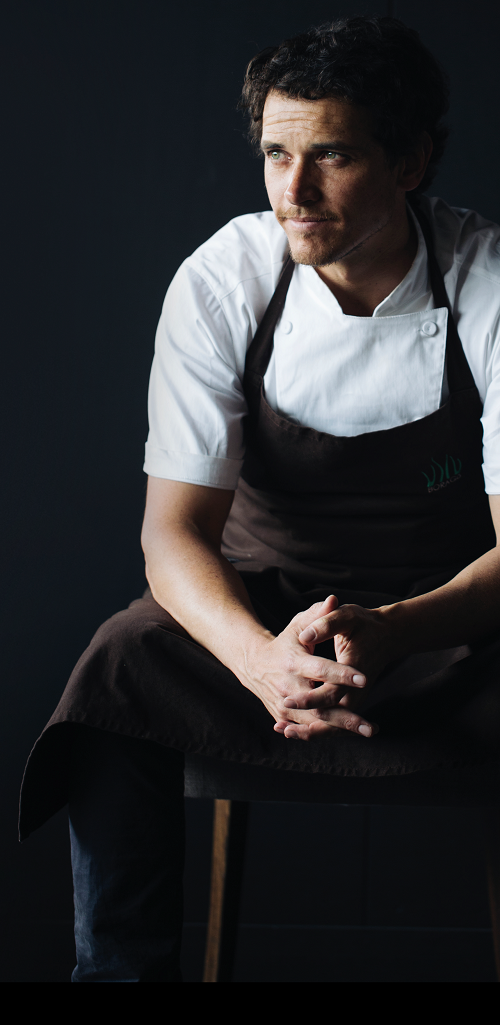
Chef Rodolfo Guzmán, at the helm of Boragó in Santiago, has captivated the culinary world with an approach to food that is as deeply rooted in Chile’s ancient landscape as it is forward-thinking. His method, which can be described as anthropological, focuses intently on endemic ingredients and traditional cuisine. In this interview, Guzmán shares the remarkable journey of Boragó, from its challenging beginnings to its current status as one of Latin America’s most acclaimed restaurants. He tells DM about how the unique geographical and cultural tapestry of Chile, the profound influence of its native foraging communities, and the relentless pursuit of culinary surprise, rather than a focus on technique, unexpectedly led to global recognition and a revolution in Chilean gastronomy.
What was the context in Chile when you started?
We started almost 19 years ago. At that time, Chile was very different. To be honest, gastronomy was never a thing to us Chileans. Chile used to be the poorest country in Latin America, 50 years ago. Then, it suddenly exploded economically, becoming the healthiest economy in Latin America.
Chile is a very long and narrow country, it works like an island without being an island. We do not share a single ingredient with our neighbouring countries, which for me, as a cook, was a pain in the beginning, because I really wanted tropical ingredients. Also, the climate here is quite different. Our ocean is very, very cold, and you have lots of snow in the mountains. Down South, it is like being in Sweden, with snow in the ocean. This year, for the first time ever, the ocean got frozen in the South, you could see the waves frozen.
During the Ice Age, some areas in Chile were not frozen. These were our ancient forests, our ecosystems. Also, what you find in our waters, you won’t see anywhere else in the world. That’s why it feels like an island, because the Andes are so high, reaching almost 7,000 metres. Talking about Argentina and Chile is like talking about black and white. Not better or worse, just completely different. The Atlantic Ocean is one thing; the Pacific Ocean is something else entirely.
What role did native cultures play in your approach?
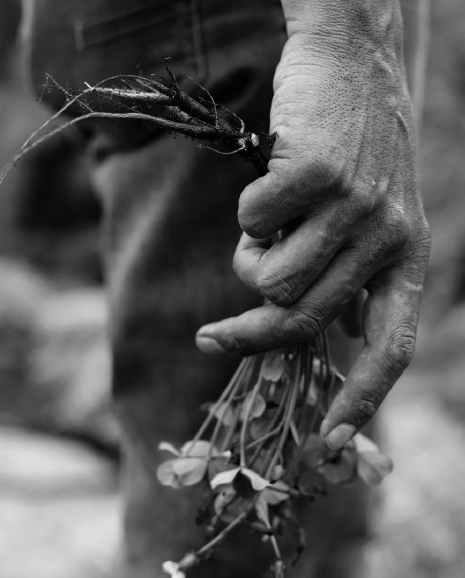
Chilean natives, who have been around for the last 12,000 years, never mixed with the rest of the Latin American Inca population. They never got mixed. They were foragers; they didn’t know agriculture and they were nomads. They were sharing everything, the mountains, the coasts, the forests, the land itself. They were gathering and sharing. That is our culture, nomadism. Also, they were warriors. That was mainly why, when the Spanish came to conquer, they could never conquer the Mapuche people.
Everything at Boragó is organic. These ingredients have been around for such a long time, amazing ingredients you have never seen before, from the ocean and from the mountains.
How did Boragó begin to work with these ingredients?
The trouble was convincing people to send these ingredients from Patagonia, from the coast, from around our country. But they’ve been very nice. I ended up learning and meeting lots of people: not only producers or foragers or other Mapuche people, but also agronomists, biologists, anthropologists, botanists. People would tell me, “Hey, Rodolfo, do you know this guy that is grabbing these ingredients from the mountain?” And I’d go for it. I felt so blessed and lucky to be able to work with these ingredients.
At that time, in every good restaurant, the best things were coming from outside the country. A famous restaurant would be importing fish from Japan, prosciutto from Italy, mozzarella from Naples, just to be considered a good restaurant.
Lots of French cuisine. The best chefs were European chefs at hotels. But at a Chilean restaurant, Chilean ingredients, nobody cared. “These are too ordinary, they do not even have a price in the market,” they would say.
“Amazing ingredients you have never seen before, from the ocean and from the mountains.”
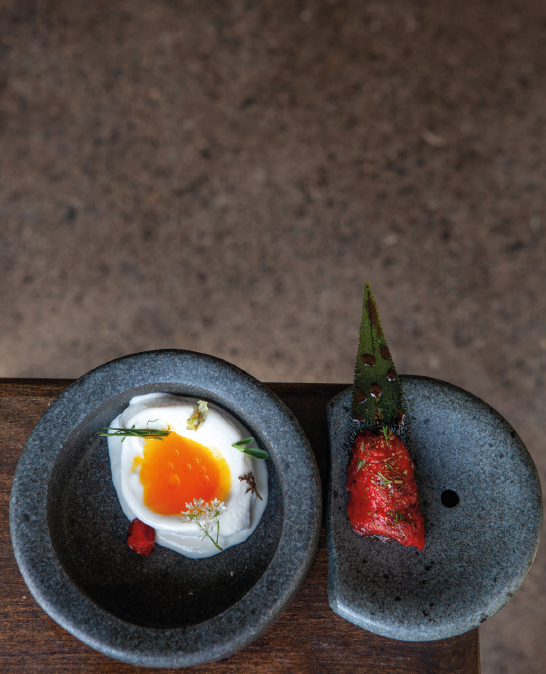
Onion and pink tomato tarte tatin
Almond cold cream on a Summer salad
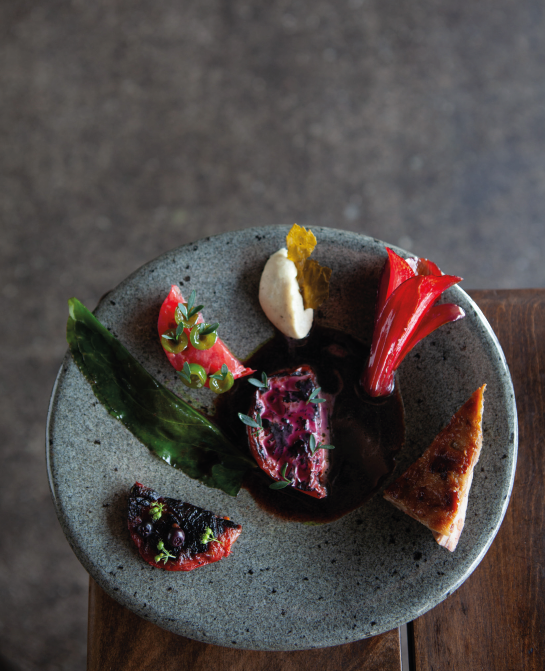
Patagonian lamb A la Inverse, fig leaf and Maule pink tomato

What made Boragó different?
I said to my Chef de Cuisine, who is one of my best friends and still works with me, “Hernán, Boragó has not to be about technique, our culture does not belong to technique.” Yet we both trained in Europe, in the best restaurants, and we loved European cuisine. What was happening in Spain at the time, that was massively amazing. But this did not belong to what we believe in, the ingredients from deep into the forest, from high up on the mountain. We looked back in time in order to move forward. That was all very simple.
Was it Chilean cuisine you were creating?
We did not want to create anything, we wanted to learn about how to use Chilean endemic ingredients. Not endemic cuisine, just Chilean cuisine, with lots of imagination and originality.
We started using many endemic ingredients. I would say 85% of the ingredients we use, come from the wild. Initially, people would send us these ingredients as a favour because it was not a business, there was no market for them. We used to be four people in the kitchen.
That is how Boragó started.
At that time, one ingredient meant one possibility.
Now, one ingredient means at least 300 possibilities. And in my mind, this was Boragò’s true revolution.
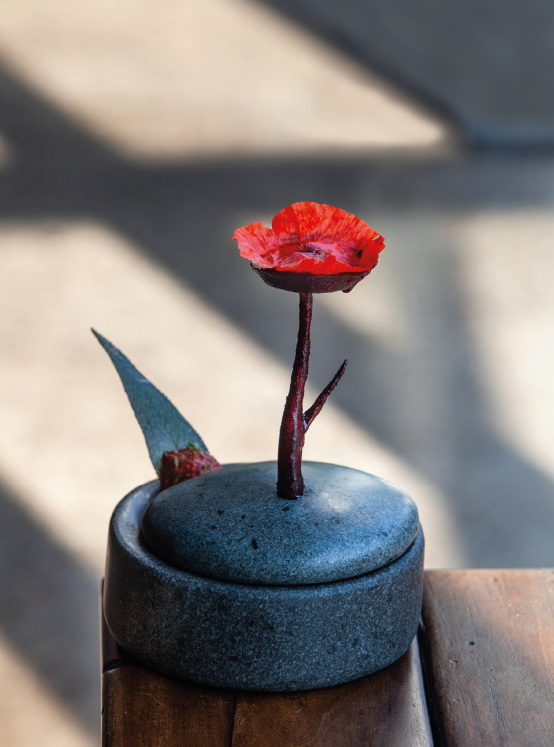
Poppy, tomato pebre and the last cherries of the Summer
So you mainly use seasonal produce?
Yes, though our seasons are very short. They are like small windows of opportunity to make the most of a fascinating array of produce. We have more than 300 different kinds of berries and wild plants, even growing under the snow in the South. But they last for two or three months, maybe even less for some of them, yet we wanted to have them all. We started making notes, not to forget for the next season, so we could move forward.
We ended up classifying and categorising the entire land according to the different types of food. I know this is very trendy in a way, documenting and exploring. But we didn’t mean it to be cool. We knew nothing. We needed… we wanted to learn. In Boragó, we now have a Dictionary of the entire land. We are going to have to publish it at some point so kids can learn it at school.
How do you define innovation?
Innovation might be something that people used to do 5,000 years ago. It could be the most innovative thing that you ever tasted or seen in your life. I like to think that humans move back and forth in time, and that is phenomenal to me.
Is there a single flavour that defines this journey?
It is the flavour of umami in general. It does not matter if it comes from the ocean, if it comes from a wild fruit, or from a tree. It does not matter if it comes from our mothers when they fed us as children. It does not matter if it comes from a cut of meat. Umami, in a way, has always guided us throughout human history, pointing at what was needed in order to survive. And then, over time, we began to find pleasure in it, too.
That journey with umami has guided us at Boragó over the years, because nothing truly great happens overnight. Like any meaningful pursuit in life, it takes time.
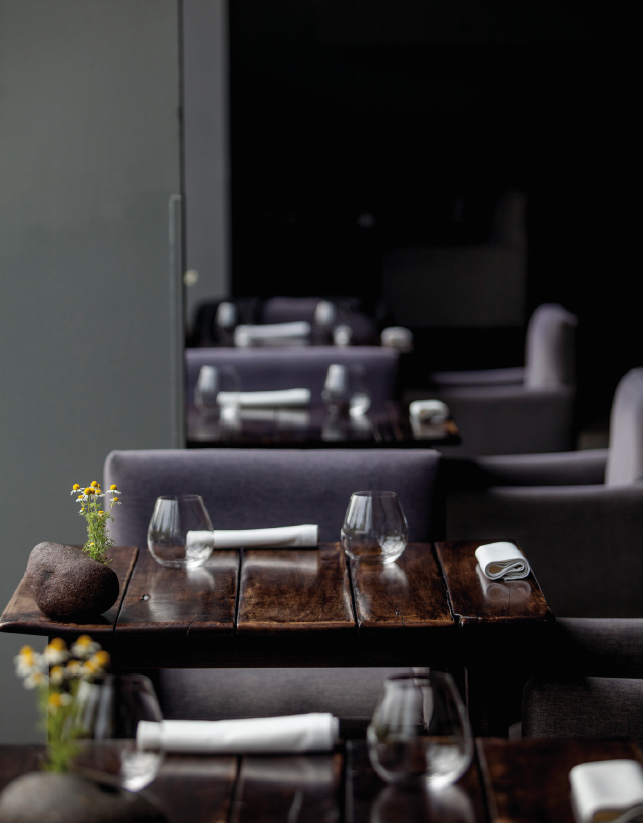
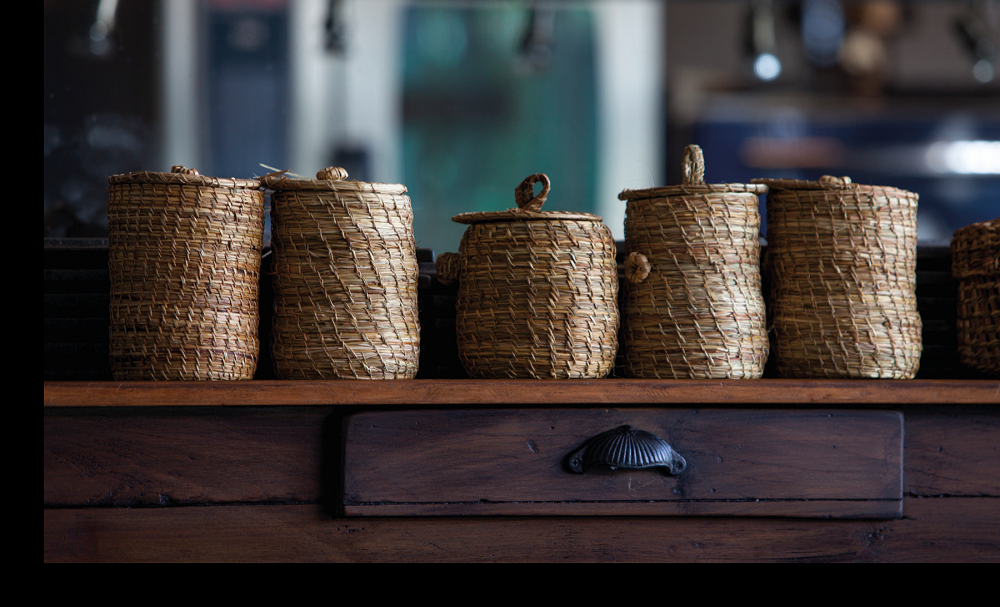
Boragó Restaurante
How do guests chose what to eatand drink at Boragò, since it’s all virtually unknown to most?
At the beginning, and until 2013, we had à la carte, of course. Then everyone wanted to try the tasting menu. We had two tasting menus, one shorter and one longer, and suddenly ninety five percent of guests chose the long menu. So we removed the other one.
Also, we didn’t have a wine list. We started searching for the most interesting Chilean projects around the country, not the most expensive wines but those that had value for us. We slowly started discovering some extraordinary producers, meeting people we never thought we’d meet. And now we have those bottles nobody else has in Chile. We created something that made sense with our food, even with the non-alcoholic pairings. We also use rainwater from Patagonia.
What is Boragó like today?
Now it’s totally different. We’re in a neighbourhood close to the mountains, near the Andes, next to Cerro Manquehue. The restaurant has a first floor, a second floor, researchers, and a food research centre. I still have no idea what we’re going to do with all this information, because Chile had never really considered these ingredients. We have more than 200 people behind the restaurant, our extended family, sending us these ingredients. They’re very well known nowadays, because every Chilean restaurant now wants to use at least some of this produce.
Bio
Rodolfo Guzmán was born in Santiago, Chile, in 1978. After an early interest in other careers, he decided to pursue cooking and studied at a culinary institute in Santiago. He later trained in Spain at Mugaritz under Andoni Luis Aduriz, where he developed a creative and technical approach to gastronomy. In 2006, he returned to Chile to open Boragó and began cataloguing the country’s endemic pantry. His cuisine, entirely based on native ingredients and ancestral techniques, initially struggled with local audiences but gradually gained global acclaim.
Boragó has since earned international recognition, including top positions in Latin America’s 50 Best Restaurants and the Sustainable Restaurant Award in 2018 and 2021. Today, located at the foot of Manquehue Hill, Boragó is supported by a network of over 200 people and houses a Chilean food research centre dedicated to preserving and celebrating the country’s unique biodiversity.
Copyright © Homa 2026
All rights reserved