












Winter changes the operating environment for a chest freezer. When ambient temperatures fall, buyers need to consider whether the selected appliance is specified for the expected conditions rather than assuming that all freezers will perform in the same way.
So, can you leave a chest freezer outside in the winter? The answer depends on the model, its climate classification and the conditions of the intended location. Reviewing these factors can help buyers make a more suitable product decision.
What Does Climate Type Tell Buyers?
Climate classification helps buyers assess whether a chest freezer is suitable for its intended operating environment. The SN-ST climate type is generally associated with an ambient temperature range of +10°C to +38°C. However, this classification does not mean that a freezer cannot operate below +10°C, nor does it establish a lower operating limit beyond the declared classification.
Can a Chest Freezer Maintain Suitable Storage Conditions in Winter?
Winter suitability should also be considered alongside the required internal storage conditions. The temperature outside the appliance and the temperature inside the freezer are not the same measurement, so buyers should not use outdoor weather alone to judge frozen-food storage.
The United States Department of Agriculture’s Food Safety and Inspection Service recommends keeping a freezer at 0°F (approximately −17.8°C) or below and advises using an appliance thermometer to monitor the temperature. Buyers can refer to its freezing and food safety guidance for further information. This is external food-safety guidance rather than a Homa product specification.
Monitoring internal temperature helps verify frozen-food storage conditions, but it does not confirm suitability for cold outdoor operation. Buyers should check the manufacturer’s guidance for the selected model.
What Should Buyers Check Before Winter Installation?
Before placing a chest freezer in a cold environment, buyers should first identify the expected temperature range and review the model’s documented climate type. The installation instructions should also be followed, particularly where the appliance will be positioned in a location with significant seasonal changes.
The physical installation remains important as well. The freezer should stand on a stable surface and have enough surrounding space for normal operation. Adequate access to the lid should also be considered because chest freezers require vertical clearance for loading and retrieval.
Electrical arrangements should comply with applicable local requirements and the manufacturer’s instructions. These checks help separate genuine product suitability from assumptions based only on winter weather.
Which Homa Chest Freezer Options Can Be Considered?
Our chest freezer range includes models such as BE1-100, BE1-101, BE1-145, BE1-200, BE1-202, BE1-251, BE1-290, BE2-536 and BE2-623. The range provides different capacities and configurations for various storage requirements.
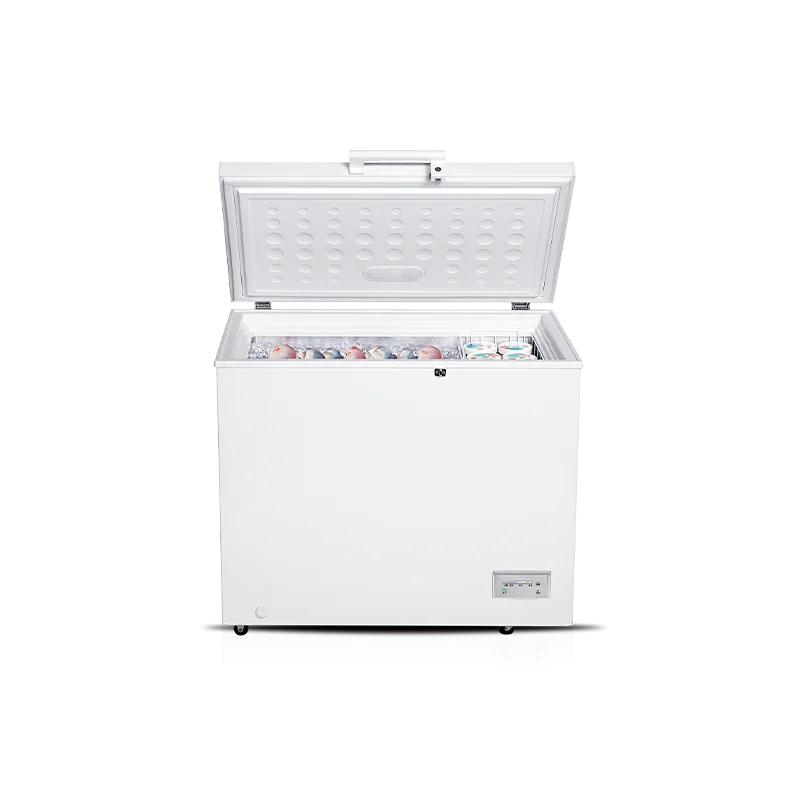
The BE1-251 has a 246-litre net freezer capacity, Super Freeze, electronic temperature control and an optional storage basket. It uses R600a refrigerant and is declared as climate class SN-ST, for ambient temperatures from +10°C to +38°C. This classification does not confirm suitability for outdoor or low-ambient installation.
These specifications help buyers compare models, but they do not independently establish a minimum ambient operating temperature or confirm suitability for outdoor winter installation. Internal low-ambient test results should be considered separately from the model’s declared climate type, and buyers should consult the manufacturer’s guidance before selecting a freezer for winter use.
Why Is Winter Capability Relevant to Wholesale and ODM Buyers?
For wholesalers and overseas appliance brands, winter suitability can be part of broader product planning. A freezer intended for a market with cold seasonal conditions may need to be selected according to the environmental requirements of that market.
This is particularly relevant to ODM projects, where product configuration, target climate, capacity and market requirements need to be considered together. At Homa Appliances, we support refrigeration cooperation for different markets and order requirements, helping buyers select products according to their intended applications and environmental conditions.
A Practical Way to Assess Winter Use
So, can you leave a chest freezer outside in the winter? The answer should come from the selected model’s documented specifications and the conditions of the intended location, rather than from temperature alone.
At Homa Appliances, we offer chest freezers in different capacities and configurations for a range of storage requirements. When evaluating a model for winter use, buyers should review its specific operating conditions and installation instructions rather than assume that every product in the category is suitable for low-temperature or outdoor environments.