











As hybrid living redefines domestic space, fitness is no longer a separate function. From single pieces of equipment to fully integrated systems, wellness is becoming part of the home’s identity. It is flexible, modular and perfectly in sync with the individual pace of its inhabitants.
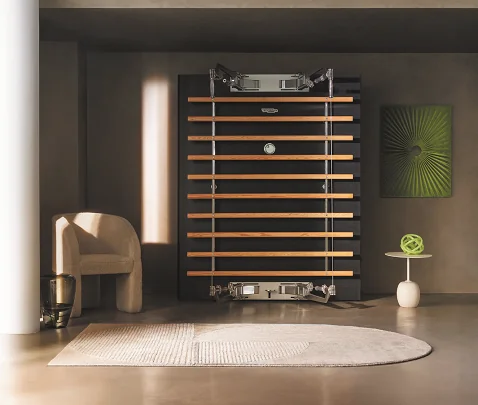
Technogym Kinesis Personal
In a society that is constantly on the move, and indeed accelerating, even the home must keep pace. It is not just a matter of necessity but the result of a deeper paradigm shift that is redefining how we see and live in our homes. Home fitness responds to increasingly tailored choices, designed to match the personal pace and needs of the individual.
Integrating different activities into a single space no longer applies only to those tasks we now see as natural companions in our daily lives. It also applies to needs that bring entirely different environments into the home, such as the gym. There are many reasons why people choose to work out at home, and just as many reasons for choosing home fitness in particular.
Whether it is a matter of privacy, distance from the nearest fitness centre, limited time during the day, a desire to save money in the long term, specific conditions such as disability, or specialised needs like having a personal trainer at home, all of these are driving the growing popularity of at-home fitness.
Integrating different needs into one adaptable space means responding with flexible design solutions. From compact tools to large-scale equipment and fully equipped training walls, the range of modular solutions available on the market is expanding. Leading design-focused fitness brands are now creating equipment that not only functions well but also fits beautifully into living spaces. These products offer adaptability, silence, elegance and efficiency.
As a result, home fitness is no longer an afterthought or a temporary workaround. It is a central part of the hybrid home and a driver of wellness-centred design. It is not simply a necessity, but part of a new identity for how we inhabit space.
Home fitness today is a reflection of lifestyle and intention, designed to follow the personal pace of the people who live there.
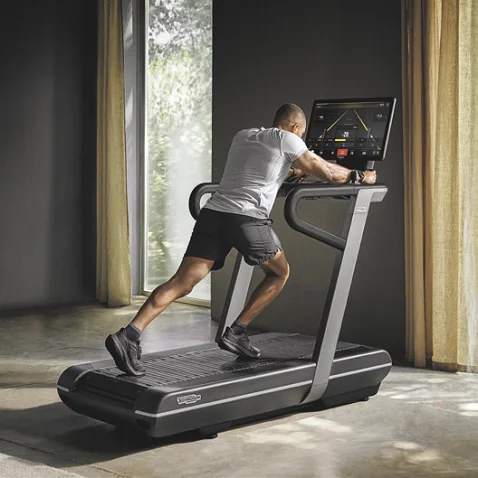
TECHNOGYM – Technogym Run
The quietest, most energy-efficient treadmill ever, Technogym Run brings professional-grade training home. Designed for every fitness level -from casual runners to elite athletes- it combines immersive on-demand workouts, bootcamp programs, and strength training in one sleek machine. With slat-belt technology for a responsive, track-like running feel and a 27” console offering entertainment and guided sessions, it’s an all-in-one platform for cardio, strength, and performance.
TECHNOGYM – Kinesis Personal
Elegance in motion. Kinesis Personal brings the philosophy of “gentle gymnastics” into the home with over 200 possible exercises in less than ten square feet. Built around Technogym’s patented FullGravity™ technology, it enables fluid, multidimensional movement with collapsible arms and a one-touch resistance dial. Precision-crafted finishes and soft-touch controls make it as pleasing to the eye as it is to the body. Suitable for homes, offices or boutique hotels, it redefines what a multifunctional fitness object can be.
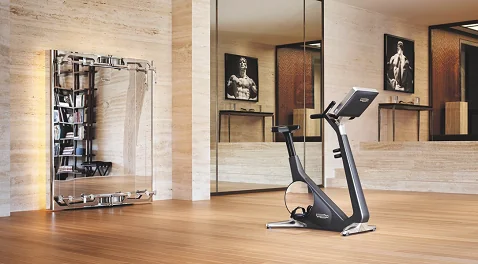
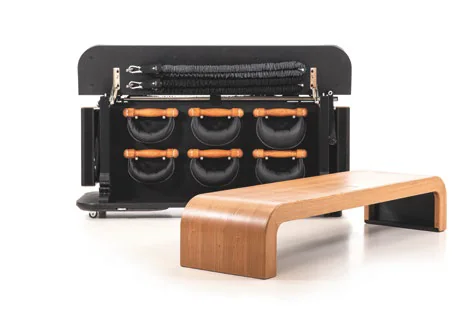
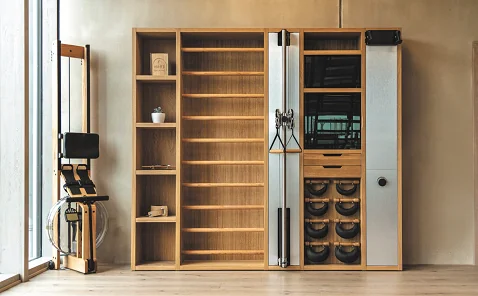
NOHRD – Walls
Five modules, one holistic concept. NOHRD Walls is a space-saving, all-in-one fitness station that reimagines home training through sleek design and digital functionality. Made from sustainable hardwood and equipped with cutting-edge technology, it includes a built-in touchscreen offering full-body workouts and daily “Workout-of-the-Day” streaming. Bluetooth compatibility allows users to connect heart rate monitors, enabling a personalised training experience that matches both physical and aesthetic demands.
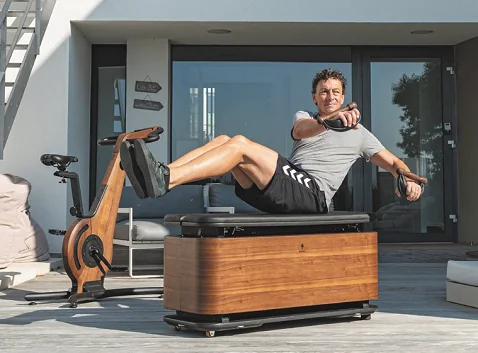
NOHRD – StepBox
A seamless blend of design and functionality, the NOHRD StepBox integrates effortlessly into the home while elevating your fitness routine. When not in use, it becomes a discreet storage unit for essential training tools: a set of NOHRD SwingBells (2 kg, 4 kg, and 6 kg), tubular resistance bands of varying tension, a jump rope with tubular handles, and a cork yoga mat (180 cm x 60 cm x 0.4 cm). During workouts, the padded top serves as a bench or seat, while the detachable wooden side panels act as sturdy supports for a wide range of exercises. Made of black-dyed real wood veneer over chipboard, the StepBox is finished with NOHRD’s exclusive hardwax oil, enhancing both the natural beauty and longevity of the wood. High-grade stainless steel pins and sleeves offer secure anchor points for a safe and stable training experience. Its minimal, curved lines allow it to inhabit the home with quiet elegance.
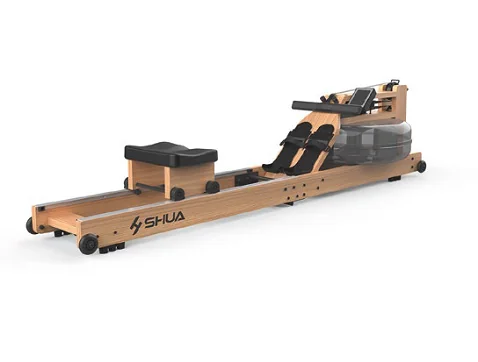
SHUA – R5 Water Rower
A masterpiece of fluid resistance and natural design. The SHUA R5 WaterRower recreates the smooth, immersive sensation of rowing on water without using electricity. Originally developed with Yale University in 1988, it became a global icon after appearing in the TV series House of Cards. Its red oak frame enhances both durability and aesthetic appeal, while the transparent ABS tank holds up to 11 litres for dynamic resistance. An ergonomic seat, non-slip aluminium handle and shock-absorbing rails ensure comfort and safety. Compact and foldable, it occupies just 0.28 m² when stored upright, the perfect solution for hybrid homes.
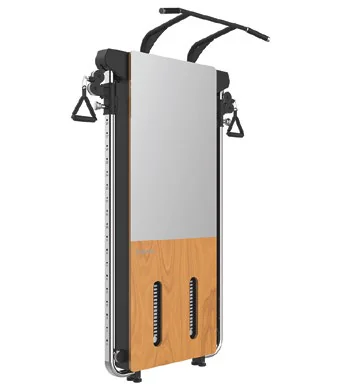
SHUA – Mounted Cable Trainer
Minimal footprint, maximal function. This wall-mounted trainer is engineered for full-body workouts in under 0.2 m² of space. Its robust frame features large rectangular steel tubing with electrostatic coating, corrosion-resistant aluminium pulleys, and thermoplastic rubber grips. The stainless-steel mirrored panel adds a premium reflective finish, while the ash wood veneer offers natural warmth. Combining elegance, strength and efficiency, it is designed for homes where aesthetics and performance must coexist.
The future of fitness: how remote training is redefining wellbeing
In an age where technology and well-being are increasingly intertwined, remote fitness is reshaping the very concept of personal training. According to PureGym’s 2025 report, interest in remote personal training has grown by a staggering 414 percent, reflecting a broader shift in preferences toward more flexible, tech-enabled solutions. But what is behind this explosion in demand, and how is it changing the way we care for our bodies in the era of the hybrid home?
The primary advantage of remote training is flexibility, making better use of time. On-demand access to pre-recorded sessions, combined with the option to schedule live, personalised workouts, makes fitness more accessible than ever. Technological innovation has also made remote training increasingly effective. The most advanced solutions now include wearables, virtual training platforms and VR tools, all integrated with AI software for full personalisation.
A wide range of users benefit from remote fitness, from professionals with irregular hours to parents who struggle to find time to commute, as well as frequent travellers who want to maintain their routine wherever they are. It also appeals to those with specific privacy needs.
Remote training represents a remarkable opportunity for personal trainers and businesses in the fitness sector. Global accessibility allows them to reach clients anywhere in the world, while significantly reducing costs related to physical premises. It also opens up new revenue streams, from subscription-based services to bespoke plans.
According to industry experts, the future of digital fitness will include increasingly advanced platforms, immersive and interactive training experiences, and deeper integration between AI and exercise. This means real-time personalised workouts, more precise wearables offering detailed feedback, and a growing emphasis on community engagement to keep motivation high through user interaction.
Remote fitness is not just a passing trend. It is a genuine revolution that will redefine how we train and care for our physical well-being. Thanks to ongoing technological innovation and the rising demand for flexibility, digital training is set to become a new standard, including in design.
Copyright © Homa 2026
All rights reserved