











Listen to the audio version of this article. Duration: 10 minutes.
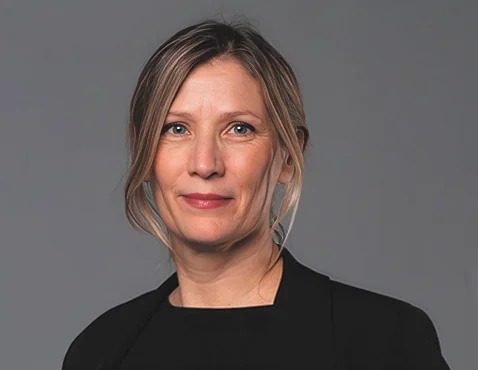
DM caught up with Marika Aakesson, Copenhagen-born and Rome-based member of the multidisciplinary design collective Kromosoma, to talk about the intersections of foodtech, sustainability, healthcare and innovation. In this conversation, she shares how design can improve quality of life, what it means to communicate circularity, and why designers must embrace empathy when working with advanced technologies.
Your work bridges very different domains, from neuroscience to foodtech. What is the driving force behind all these projects, and how do they influence your approach to design?
The goal is always the same: to enhance people’s well-being and that of the planet. That is the common thread. Every project, no matter the field, starts from that intention. Whether we are talking about health, food, materials or interaction, the process begins by asking what kind of future we want to enable, and how design can contribute to that. I have worked in different countries and sectors, from industry to education to consultancy. These experiences have shaped the way I understand design. Context matters. You have to observe, listen, and adapt. The design process may be similar, but the way it’s applied depends on the people and environment. What remains constant is the human being at the centre.
“Context matters: you have to observe, listen and adapt”
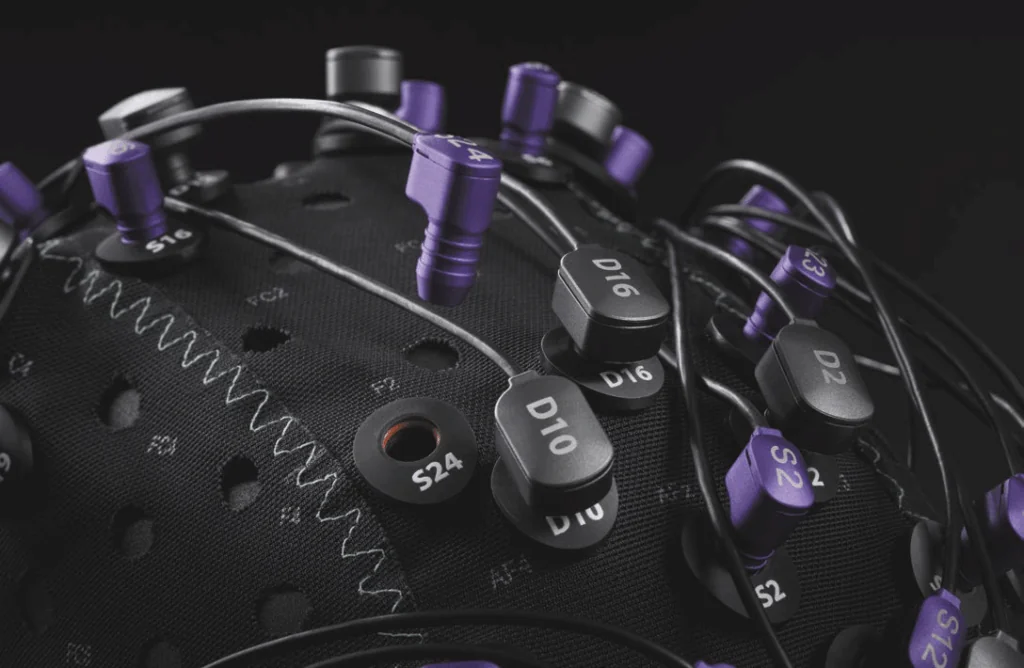
Spectrum C23 fNIRS system for Cortivision
Circular design is often discussed in theory. What is missing in practice?
Few people realise it, but designers are the first link in the circular economy chain. If we don’t enter the process early, including the design of the product’s end-of-life, the system just won’t work. That’s why it’s crucial we take responsibility from the very beginning. We must consider how something is made, how it will be used, and what will happen to it after that. But there’s another key element: communication. If users are unaware that a product is recyclable or designed to be reused, then the whole idea of circularity fails. The message has to be clear. It’s not just about sustainable design, but also about helping people make informed choices. As designers, we’re not just creating objects. We’re also shaping awareness.
Do designers have an ethical duty? How do you personally address this in your work?
Designers carry a big responsibility. I believe design has the possibility, and the duty, to influence how we live, beyond simply shaping the objects we use. I often go back to Viktor Papanek, who wrote Design for the Real World in the 1970s. Many of its ideas are still relevant today, and we’re still not applying them enough. As designers, we have tools, methods, and knowledge to contribute to more equitable societies. We need to be involved in public discourse, and in policymaking. That’s what I try to do through my work with ADI and BEDA, speaking with local and European institutions to make the role of design visible, not just in industry, but also in the social domain. We can design not only products, but also services for citizens, helping create systems that support wellbeing and fairness.
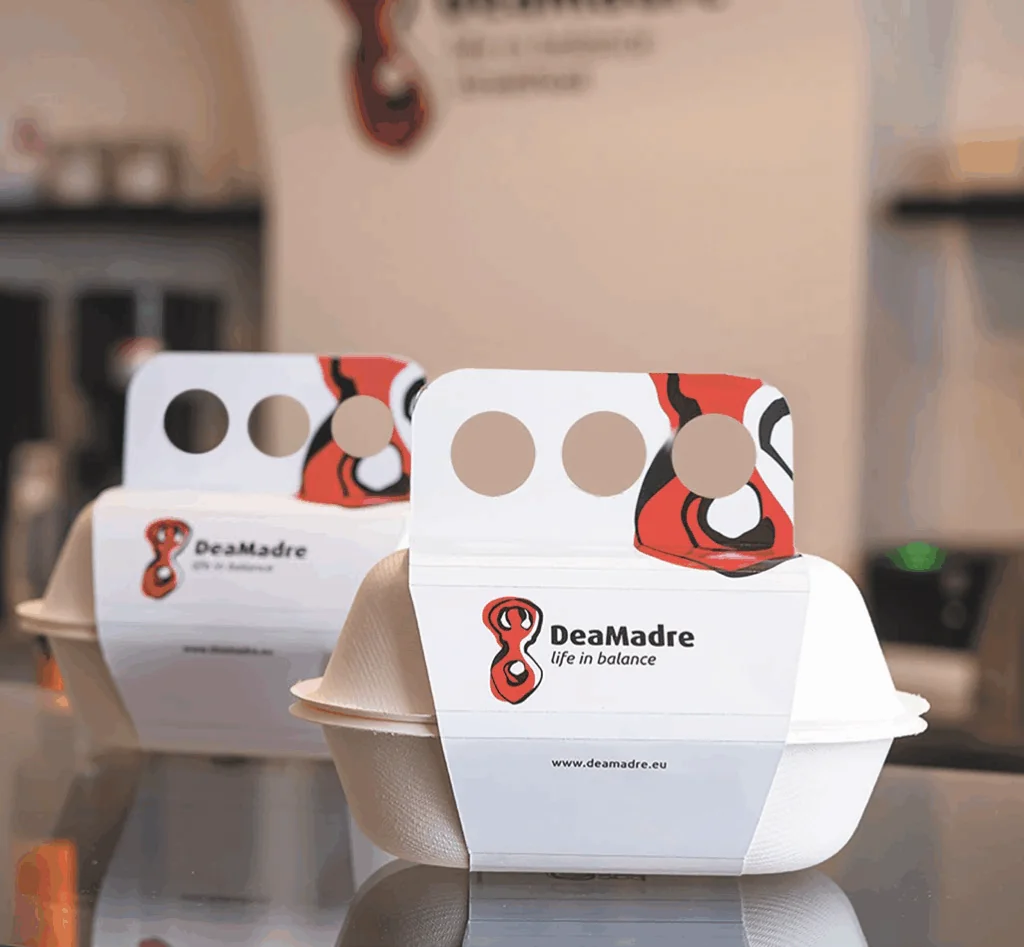
Take away bag for the healthy street food-format by DeaMadre
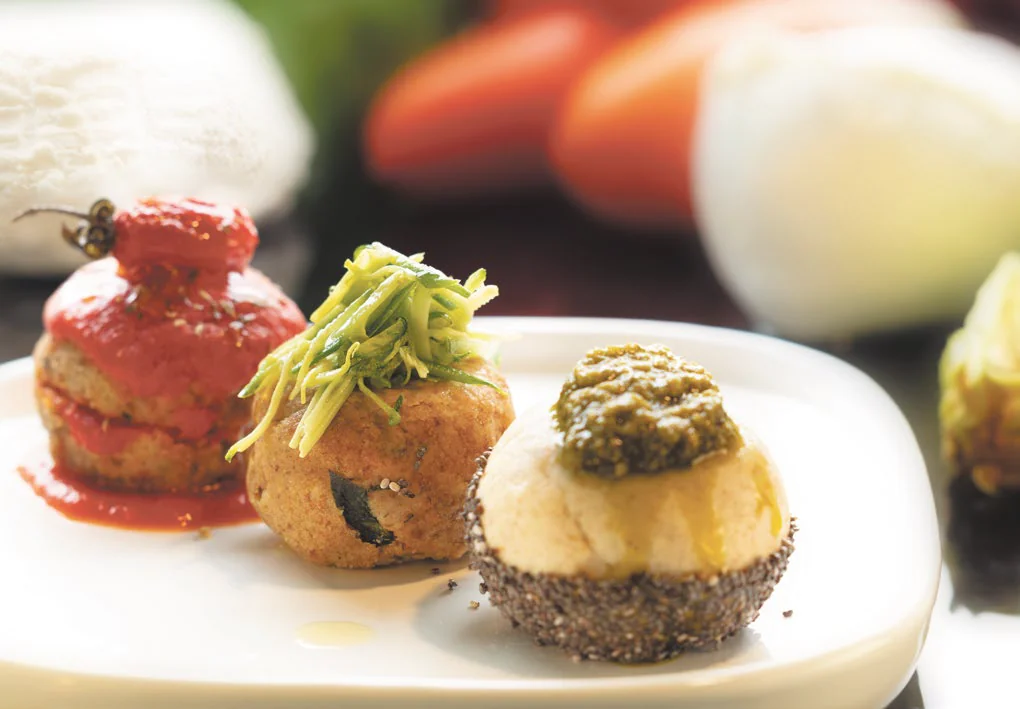
DeaMadre – polpette piatto unico healthy eating plate.
DeaMadre is a project that explores the future of food. What did you learn from it?
DeaMadre was a truly multidisciplinary experience. We collaborated with chef Stefano Polato, who designed and prepared meals for Italian astronaut Samantha Cristoforetti’s mission aboard the International Space Station. He brought his knowledge of nutrition and cutting-edge preservation technologies, which we applied to food designed for everyday life on Earth. The aim was to create meals that are healthy, balanced and sustainable. We used seasonal fruits and vegetables that were immediately deep-frozen and then regenerated through a controlled process that preserves nutrients and taste. This made it possible to reduce food waste from the start: you prepare only what you need, when you need it.
The dishes we created were based on the Mediterranean diet, using the “single-dish-meal” approach: a single, complete plate that meets your nutritional needs. It was the first time I worked with someone so deeply involved in food transformation technology. With Kromosoma and Francesco Subioli, we also looked at the cultural and emotional aspects of cooking: it is not just nutrition, but memory, ritual, pleasure. We wanted people to reconnect with food, not as a chore, but as a moment of wellbeing and reflection.
“We wanted people to reconnect with food, not as a chore, but as a moment of wellbeing.”
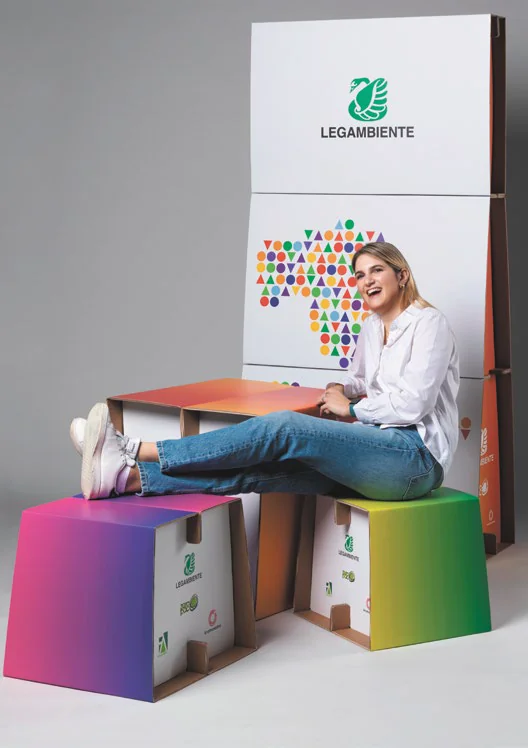
4Expo – pop up corner in 100% recycled cardboard designed for Legambiente. The complete set fits into one box that can be carried by hand.
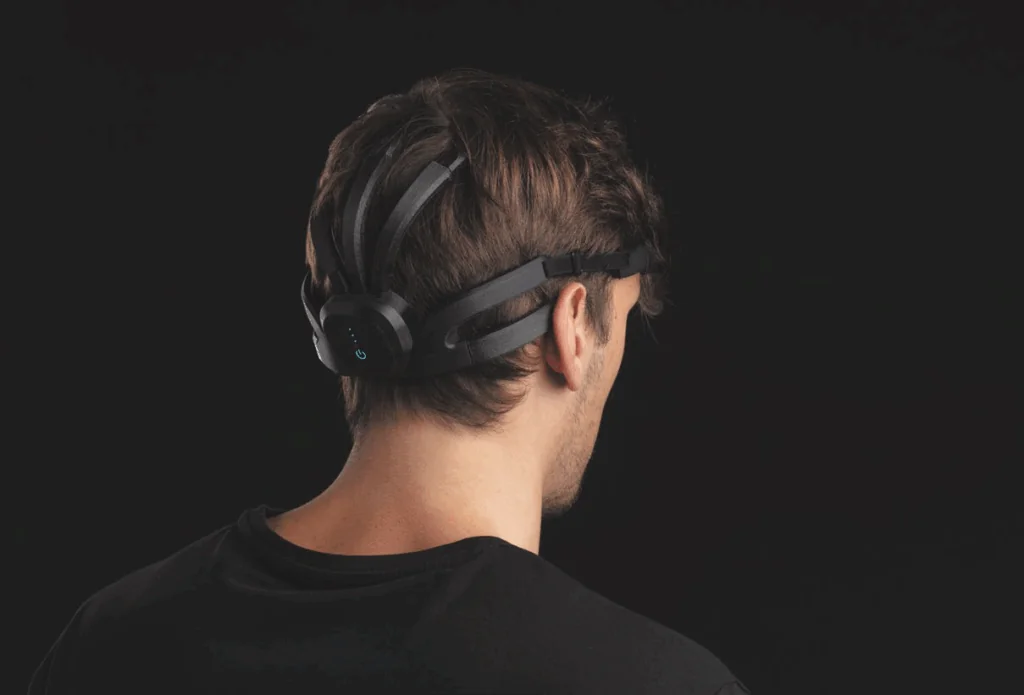
Mindtooth Touch for BrainSigns – The system provides real time indicators of cognitive or emotional states by processing cerebral signals used in education and training.
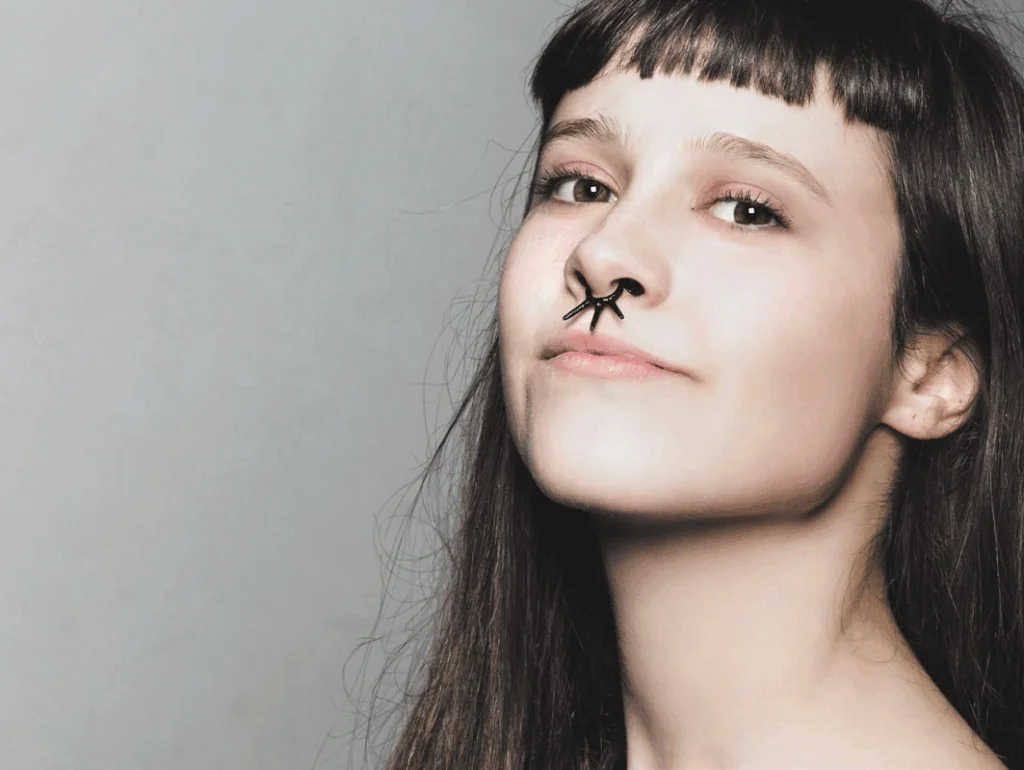
A per Atipico! – a IED students project for young people on the autism spectrum. One of the projects: a nose plug to keep all smells out.
You also worked on MindTooth, a neurotech wearable. What was your approach to such a technical subject?
MindTooth was a very special project for me. It was developed with BrainSigns, a spin-off of La Sapienza University in Rome. Everyone involved, from neuroscientists to marketing experts and flight trainers, brought a unique perspective. Our goal was to create a headset for pilot training that would be functional but also pleasant to wear. Before our design intervention, the equipment looked like a swimming cap with wires sticking out everywhere. It was uncomfortable and distracting, which negatively affected users’ performance. So we redesigned it to be ergonomic, wearable and, why not, even a bit “cool”. The pilots said it made them feel like superheroes. We worked carefully on shape, materials, and wearability: how it touches the scalp, how it feels after hours of use.
What I loved most about the project was the collaboration. I got to work with people from very different worlds: engineers, scientists, flight instructors. We laughed and learned together. The headset itself was later used in surgical settings too, for the same reasons, to monitor performance in high-pressure environments. One of the most interesting features is its ability to measure the level of collaboration between users. In aviation, for instance, it helps instructors detect at what point communication between two pilots might be breaking down. That allows them to refine the training. And yes, the device received an Honourable Mention at the Compasso d’Oro. That kind of recognition means a lot when you work with empathy and rigour, even in highly technical fields.
Another neuroscience project I worked on was Cortivision, in collaboration with a Polish company that develops cognitive technologies. This also involved a headset, designed to measure attention, and currently used by Polish astronauts in space testing. Our work focused on improving the ergonomics and wearability of the device.
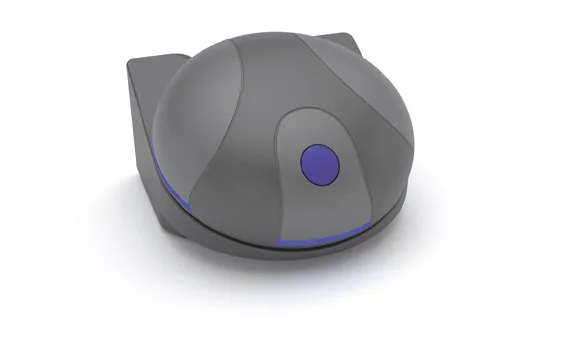
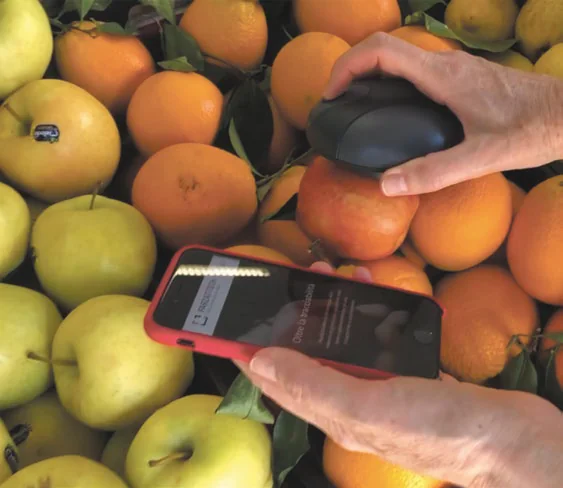
BluDev® – a device that exploits the power of AI and is able to recognize the certain origin of the product and its quality, making the product its own label.
You teach and mentor young designers. What do you try to pass on to them?
First of all, empathy. I always tell my students that as designers, we need to truly understand who we are designing for. We have to step into their shoes, see the world from their perspective. This is not optional, it is the foundation of our work. I also insist that sustainability is no longer a plus, it is a duty. Every project must take environmental impact into account. That’s something I try to instil from day one. Our goal must always be to do good for people and for the planet.
At IED, where I coordinate the Product Design course, we often work on social projects. For instance, we developed design solutions to help young people with autism live better daily lives. These collaborations with local institutions and associations are incredibly enriching. But I often say that the biggest challenge is getting these good ideas out of the “micro” dimension, where it’s just us and the NGOs, and into broader adoption by public authorities. If local governments embraced these solutions and invested in scaling them, the impact could be enormous. That’s why I believe that designers must also engage with public discourse, advocating for systemic change.
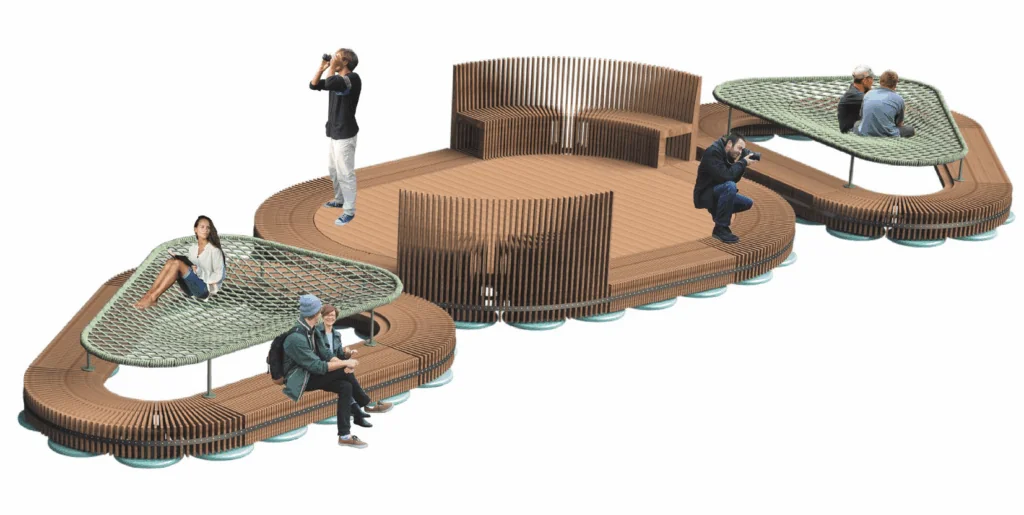
Limen – A thesis project for Regenerative Tourism developed by IED students. Targa Giovane Honorable Mention 2024
AI is becoming more common in design. How do you see its role?
I see AI as a tool. It can help in research, analysis, rapid prototyping. But it does not replace design. It does not have empathy. It does not know how to ask questions. Even data is not neutral. So the designer has to be aware of that and decide how to use it consciously. We must always ask ourselves who is behind the algorithm, what are the criteria, what kind of future it promotes. That is part of our job.
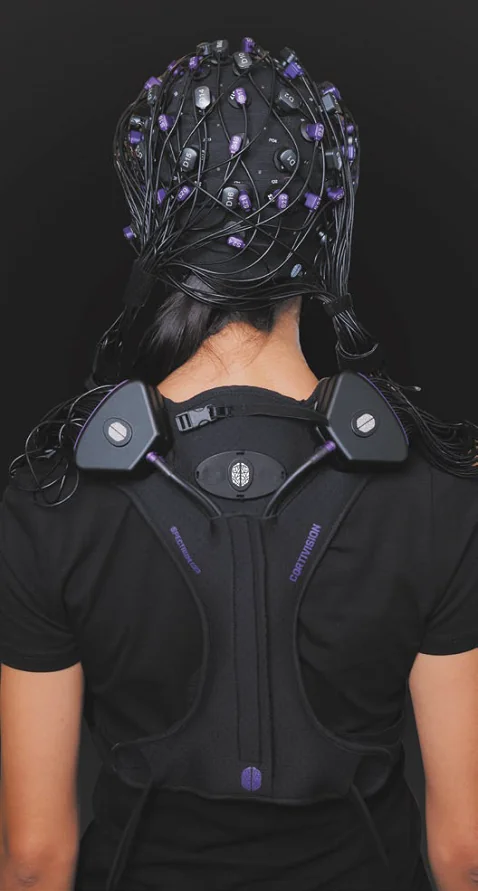
Spectrum C23 fNIRS system for Cortivision – headset for fNIRS Functional Near-Infrared Spectroscopy, a non-invasive neuroimaging technology that measures changes in oxygenation levels in the brain. Design of the optodes, breakoutboards and of the harness making the technology wearable and comfortable for full portability and comfort of use both in a stationary setup or in non-laboratory conditions.
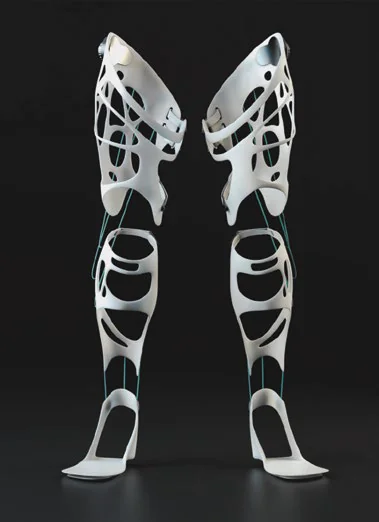
GalactyGym – A device designed to train astronauts’ leg muscles on the upcoming lunar base developed by IED students.
“AI is a tool: it can help but it does not replace design.”
BIO
Marika Aakesson is a Danish-born designer and educator based in Rome, where she coordinates the Product Design course at IED. She is part of the design collective Kromosoma and serves on the boards of ADI and BEDA, promoting design’s role in public policy and social innovation. Her work spans food-tech, health, sustainability and neuroscience, including the award-winning neurotechnology project Mindtooth, which received an Honourable Mention at the Compasso d’Oro.
Copyright © Homa 2026
All rights reserved